Table of Contents
In brief
- The Press relied on PPTA chair Paul Stevens for its “Trump boys” scare story without disclosing his long activist background.
- A follow-up piece was more balanced but did not correct the original omission.
- Critics say Stevens offered no evidence for claims of extremism while ignoring ideological extremes from the left.
- The paper’s selective disclosure shows how a favoured narrative can be sanitised while the flip side faces much more scrutiny.
The sin of omission
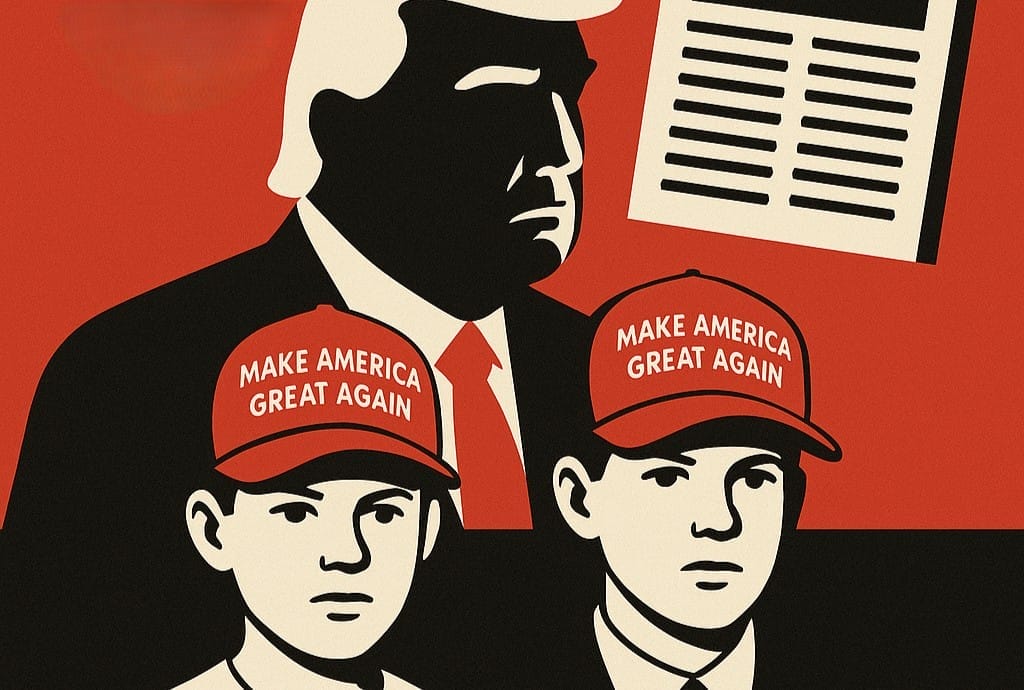
When The Press ran a story warning about “Trump boys” and “trad-wife” ideology in New Zealand classrooms, it leaned entirely on Paul Stevens, an art teacher and regional chair of the Post Primary Teachers’ Association (PPTA).
Readers were told Stevens had presented a paper at the union’s annual conference, claiming adolescent boys were at a “tipping point” of radicalisation.
What the article did not disclose is that Stevens is not simply a teacher and union official. He is also a long-time LGBTQ activist and political campaigner. That context, easily found online, was absent.
The problem is not that Stevens campaigned against conversion therapy or is openly gay. The issue is that The Press concealed his background while presenting him as a neutral authority.
The two-step feint at balance
A follow-up article, “Student extremism not just a school problem, principal says” (27 September 2025), offered a softer framing by quoting principals who argued the concerns were real but not new. But this did not correct the omission.
This two-step is familiar: first run a dramatic piece with a progressive activist as the authoritative voice, then temper it with a “balanced” sequel quoting establishment figures. By then, the narrative is already set.
Journalistic standards demand disclosure when a source has clear ideological ties. If a climate scientist affiliated with Greenpeace was quoted on emissions, or a business leader with ties to the National Party was quoted on tax, readers would expect disclosure. Why not here? The omission gave Stevens the weight of neutrality he did not deserve.
Consider Stevens’ remark on young women wanting to be traditional wives raising children: “…the argument is effectively about a traditional wife, arguing that a woman’s role is meant to be in the household raising children.” Is this really evidence of extremism, or simply a personal choice?
A dominant voice, no evidence
Critics quickly pointed out that Stevens had little quantifiable evidence for his claim that “fascist” white Christian nationalism was reaching crisis levels in classrooms. Others noted he showed no such concern when trans ideology swept through schools, with puberty blockers widely prescribed. To many middle New Zealanders, that looked extreme.
Yet The Press gave Stevens uncritical prominence. Neither writers nor editors seemed interested in checking whether his alarm had substance.
Selective disclosure as narrative-building
By sanitising Stevens’ political identity, The Press bolstered what seems to be its preferred narrative. This does not seem like just a small oversight. It is one more example of how media can tilt their coverage.