Table of Contents
“The, uh, city has just passed... another tax on puffy directing pants.”
“But I don’t wear puffy pants!”
“I meant a, uh, tax on not wearing puffy pants” – The Simpsons.
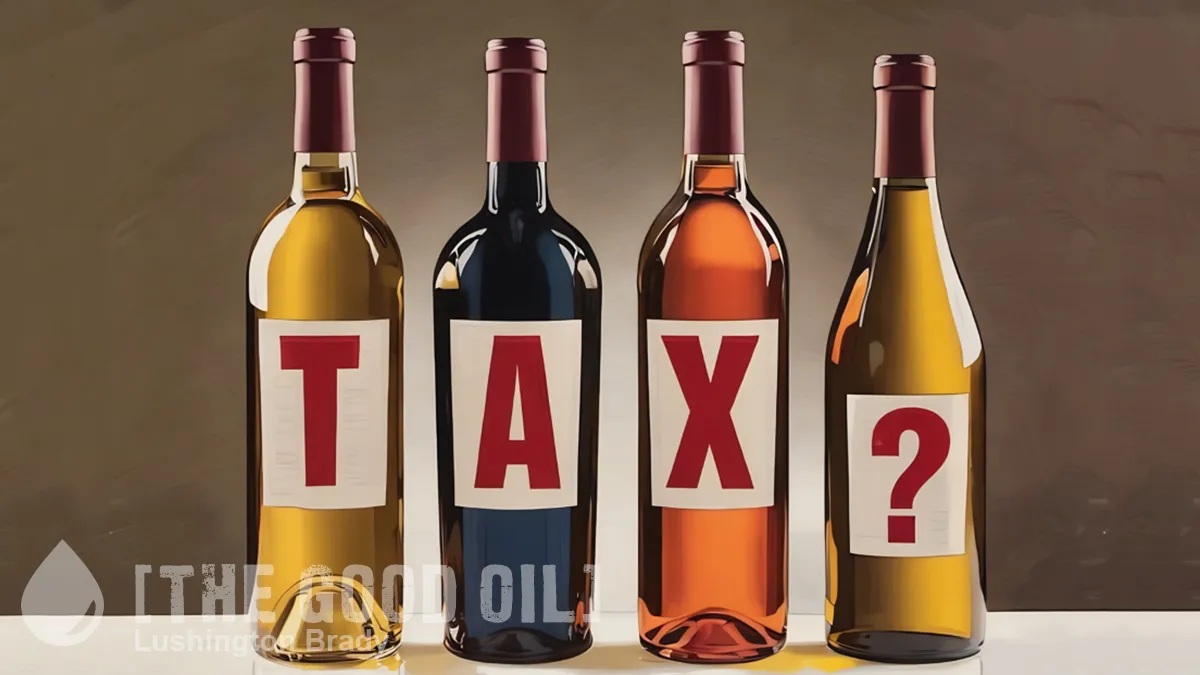
I call them “Puffy-Pants Taxes”: those opportunistic taxes that greedy, grasping political leaners slap on anything and everything they can. The quote comes from The Simpsons episode “Radioactive Man”, in which sleazy Springfield Mayor Quimby tries to milk a visiting Hollywood production for every cent he can squeeze out of it. Even when the production packs up and leaves, Quimby imposes a “Leaving Town tax”.
Australia’s politicians and bureaucrats make Mayor Quimby look like a Friedmanesque champion of laissez-faire libertarianism.
After encouraging producers like grape growers to diversify their businesses, the state is now taxing the life out of them for following that very advice.
Third-generation winemaker Jacob Stein has recently learned he is no longer considered a primary producer, and is now facing the prospect of a yearly land tax bill of $150,000.
Australia has for at least a decade had a glut of wine grapes: no small part of that caused by government incentives, such as managed investment schemes, encouraging rapid expansion of vineyards. Even 20 years ago, smarter producers were realising that the only way to survive was to diversify: adding a cellar door, restaurant and hosting so-called ‘agritourism’ ventures. Once again, government was there, egging them on.
Wineries across regions such as Mudgee, the Hunter and the Central West have been investing in agritourism, encouraged by the Destination NSW Tourism Strategy.
And then punishing them for doing just what the government told them to.
“We have a 600-acre [243-hectare] farm … we have wine, grapes, cattle, sheep, free-range pigs.
“We also have a winery where we produce wine, we have a cellar door and also a restaurant on site.”
Enter the Puffy-Pants Taxes.
NCAT ruled that where wine sales generated more revenue than grape sales, the predominant purpose shifted from primary production (grape cultivation) to manufacturing (wine production), disqualifying the property from the land tax exemption […]
Land tax is a New South Wales levy usually applied to properties that are not the owner’s primary place of residence.
Property used for primary production is exempt from the tax, but a recent decision by the NSW Civil and Administrative Tribunal (NCAT) has shifted the goalposts for some farmers.
Damned if they do, damned if they don’t.
NSW Wine chief executive Matthew Jessop said […] “Destination NSW and the Minister for Tourism, one of their strategic pillars is diversified agritourism businesses, because they know they create jobs and they create vibrant regional businesses.”
And then the government will tax the living daylights out of it.
Revenue NSW has denied any reinterpretation of the Primary Production Land tax exemption.
And then they issued an Asking Questions of a Bureaucrat tax notice.
NSW Small Business Minister Janelle Saffin said it sounded as though wineries had diversified into other business areas.
“It also sounds like the primary producers’ grant – if you get over 50 per cent of your income off farm, then you’re not eligible for certain things and it’s in that same category,” she said.
“A lot of people diversify within their industry, and it depends where they get it.”
Ms Saffin said she would “look into” the situation.
No doubt to figure out if there’s another way they can tax it.