Table of Contents
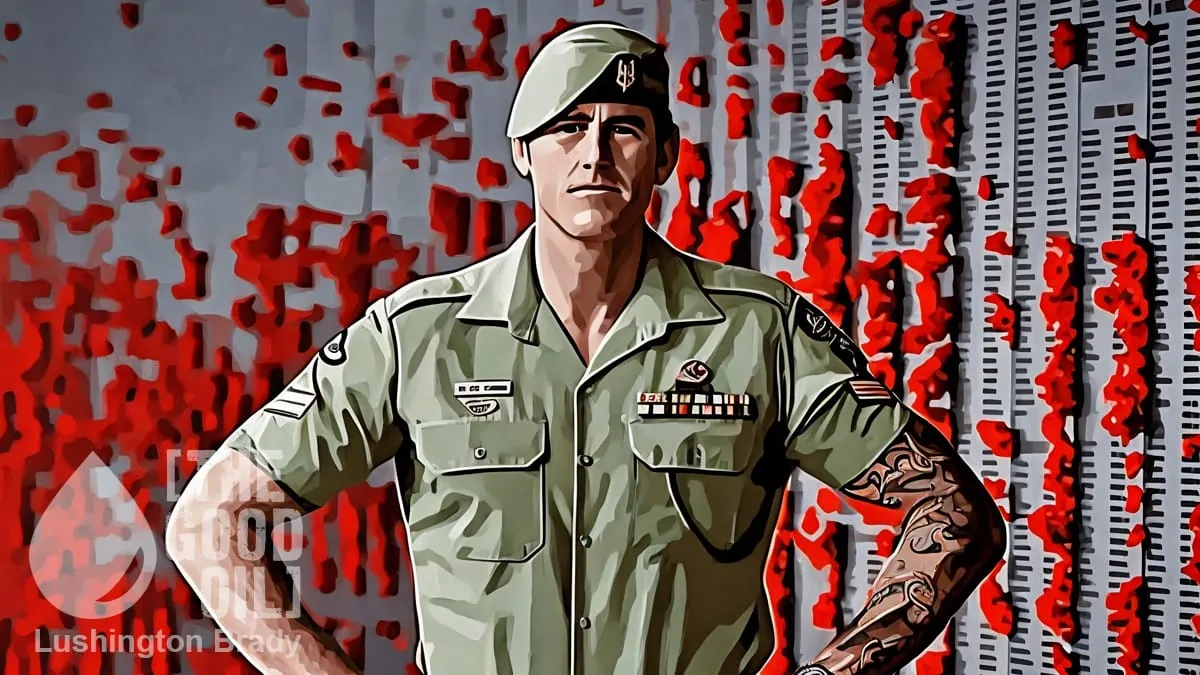
As the furore over this year’s Anzac Day dawn service at Melbourne’s Shrine of Remembrance has thrown into sharp relief, the ‘Welcome to Country’ is a hot and divisive topic in Australia. In just over a decade, ‘Welcome to Country’ and ‘Traditional Acknowledgement’ have exploded from seemingly nowhere, to a ubiquitous, many-times-daily experience in Australia.
From the opening of parliament to sporting matches, to a simple school assembly, there’s no escaping it. Catch a plane flight anywhere in or into Australia, and you’ll have to endure the monotone ‘acknowledgement’ of ‘elders past, present and emerging’. The school and business day is punctuated with endless repetitions of the dreary ritual. Even visiting a government website will mean having to click through a ‘traditional acknowledgement’ splash page.
As the Anzac Day drama and its aftermath made clear, many (if polls are to be believed, a significant majority) Australians hate it. Even more just wish we didn’t have to put up with it so damned much. Even many prominent Aboriginal Australians and organisations have begged to call time on the stuff.
The elite class and progressives, on the other hand, love it. They can’t get enough. To the point that, it’s emerged, some university courses literally grade students on their ability to deliver a ‘sincere’ rendition. For certain people, it’s a lucrative living: from hundreds to thousands of dollars a hit, ‘Welcome to Country’ is a big-money industry. Federal public servants in Canberra alone spent over half a million on it last year. Big sporting events like AFL matches can expect to shell out tens of thousands.
But where did it all come from? Is it, as its proponents insist, an ancient Aboriginal custom? If so, why did no one ever hear of it until the last decade or two?
Like so much that plagues us today, it’s all the Boomers’ fault. Them and their bloody ‘festivals’ and slavishly aping every left-wing trend from America.
In 1973, the Aquarius Festival, dubbed ‘Australia’s Woodstock’, took place at Nimbin, Australia’s epicentre of hippies, weed and spreading STDs by rolling naked in the mud. The other American imitation on offer was the Australian Black Power movement, represented in this case by Gary Foley and Dennis Walker.
The pair took the festival organizers to task over their failure to ask permission from the traditional Aboriginal owners of the land to hold their festival on their turf. Recognizing their concerns, the organizers sought out the local tribe elder Uncle Lyle Roberts. Lyle agreed to welcome the festival goers and had them split by gender. Men sat on one side of him and women on the other as he welcomed them to the land amidst the psychedelic dreams of peace and love.
Still, it wasn’t called a ‘Welcome to Country’, yet.
The next step took place three years and the other side of the country later. At a 1976 ‘Yartz’ (as Sir Les Patterson would call it) beano. A troupe of visiting Māori and Islander performers threatened to throw a spanner in the programme by refusing to perform without receiving something akin to a pōwhiri. Two young Aboriginal musicians also on the bill, Ernie Dingo and Richard Walley, did a bit of panicked quick-thinking and concocted a performance piece of ‘asking the ancestral spirits of the land to watch over the guests and the visitors while they were in the country’.
From there, the idea of a bit of theatre of local Aboriginal Elders welcoming visitors to the locality began to get picked up by tourism agencies. One of the first public ceremonies was performed at the 1979 Miss Universe Pageant, once again in Perth.
The term ‘Welcome to Country’ was coined in the 1980s by Lyle Roberts’ great-granddaughter, artist and performer Rhoda Roberts. Roberts also began to incorporate the now-familiar ritual of the ‘smoking ceremony’, claiming it “cleanses” the spiritual atmosphere and “awakens those spirits”.
But it remained a strictly fringe bit of cultural theatre until 2008. Enter, Kevin Rudd. So you know this is going to be bad.
In 2008, Rudd launched the 42nd federal parliament with a public apology to the ‘Stolen Generations’. Rudd opened the parliament with a Welcome to Country, pushing the notion into the public consciousness for the first time in the nation’s history. From there, it evolved into a ritualised, two-tier system: ‘Welcomes’ are formal and can only be conducted by Aboriginal Elders (for the requisite fee, of course). ‘Acknowledgements’ are informal, and can be recited by anyone who wants to put on a bit of ‘cultural’ swank (or just has to, on pain of losing their job or failing their course).
So, it’s all just a complete fabrication, cooked up by dirty hippies and grasping activists?
The answer is not entirely. It didn’t completely come out of thin air. The welcome is a modern appropriation of territorial customs found in traditional Aboriginal practices. When we dive into the history, many Aboriginal tribes had ways of granting permission and welcoming foreigners to their land. These welcomes were essentially verbal visas and were spoken, sung, performed, and sometimes there’d be a smoking ceremony depending on the traditions of the local group.
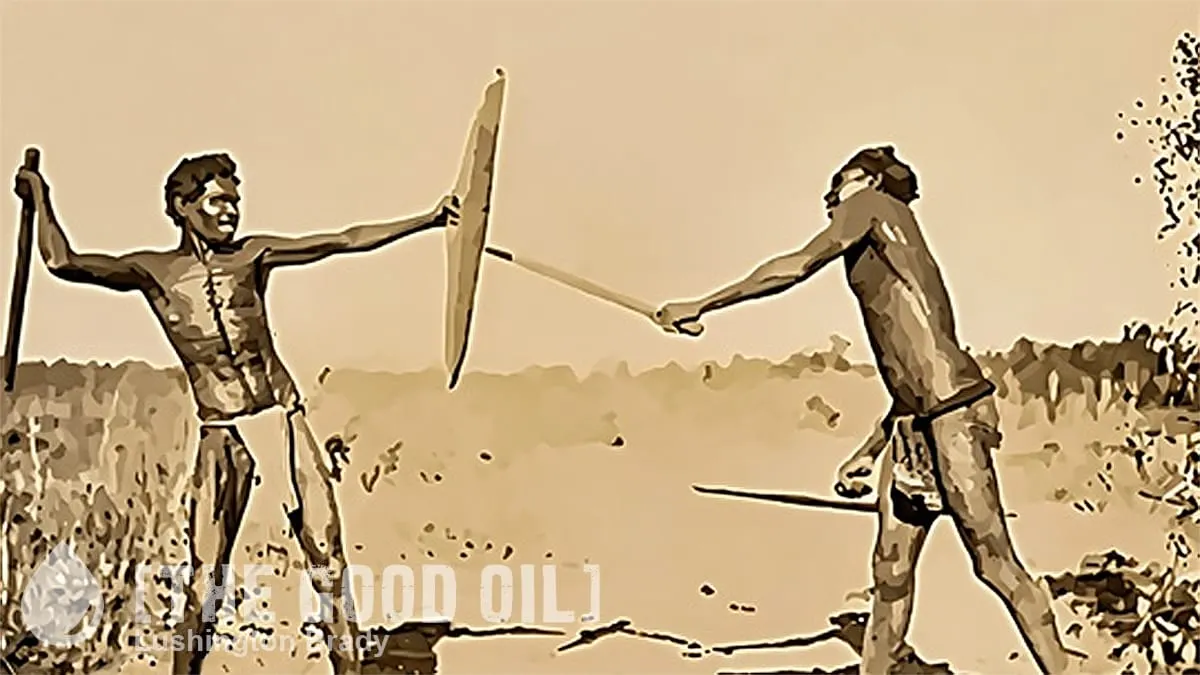
These practices, as the pōwhiri illustrates, are quite common in tribal societies. Mostly because tribal societies are characterised by frequent mutual hostility. Traditional Aboriginal society was most often divided into small, closely related bands. For ceremonial purposes, or in times of especially plentiful food in a particular area, larger gatherings up of to several hundred people might take place. Naturally, it was important for such groups meeting, especially if some were straying onto another’s territory, to establish peaceful or violent intent.
The manner of such meetings, and the established rituals pertaining to them, varied hugely across Australia.
Some involved the exchanging of gifts. Others watered their visitors heads from local water holes. Some rubbed underarms sweat on them, and others spoke to deceased forbears at spiritual locations to make the newcomers known.
In one particular tribe, wrote the Aussie anthropologist M J Meggit, the men would place their penises in their host’s hands as a sign of respect and willingness to engage. To refuse a penis was a sign of hostility.
Nonetheless, scholars question the existence of anything like actual ‘Welcome to Country’ ceremonies. Early explorers and anthropologists make no mention of them.
But dick-shaking? That’d be a sight to see: opening parliament with the Lord’s Prayer followed by a quick shake of the Leader of the Opposition’s dick by the PM.
Hey, it’s an ancient tradition!