Table of Contents
Damon Hayhow
Billionaire, philanthropist, playboy, international man of mystery. I was on track to this childhood career goal until I made one tragic mistake: I joined a gym. Now I rant a lot about food, weight training and body recomposition.
Tax on unrealised capital gains, which the Labor government plans to implement, is among the most intellectually bankrupt of concepts, even for economically illiterate socialists.
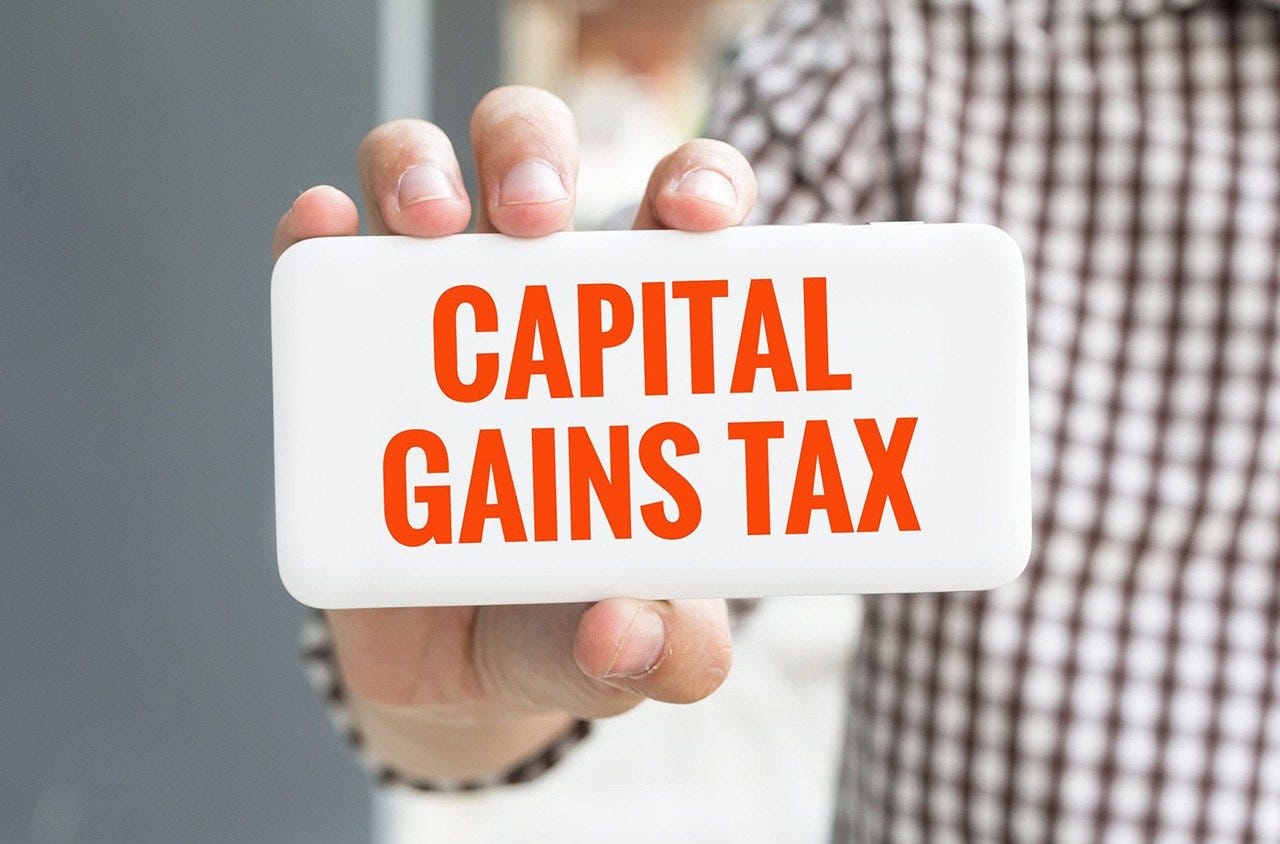
“Unrealised” literally means money does not exist. It is pixie dust. Pure fantasy. A hypothetical thought experiment. No money has been ‘realised’ with which to pay a tax bill .
But it gets worse.
Guess who is going to come up with the imaginary, ‘unrealised’ profit figure upon which a 30 per cent tax will be levied? That’s right. The same people to whom the tax will be paid.
But it gets worse.
The ‘compounding effect’ – generating returns on reinvested gains – is a fundamental principle underpinning the building of wealth. It results in an investment growing exponentially instead of linearly. Albert Einstein (allegedly) called the compounding effect “the eighth wonder of the world”. The trick is simple: do not withdraw the gains.
This gives bureaucrats the ability to reward their friends, and crush their enemies.
An unrealised capital gains tax (UCGT) takes a sledgehammer to Einstein’s “eighth wonder”. It withdraws the gains that would have built the wealth. It literally destroys wealth creation and, ironically, reduces tax revenue.
But it gets worse.
Destroying wealth while generating less tax revenue is not just a potentially negative outcome of a UCGT. It is the best outcome possible.
Imagine an idyllic investment of shares that increases by 10 per cent in value each year. In 20 years, a $1million investment would be worth $6.7 million. But with a 30 per cent UCGT, that same $1million investment would be worth only $3.9 million.
Though a UCGT would slash $2.8 million (half) from the investment’s potential value, the government would receive less than $0.9 million in tax revenue. The other $1.9 million would simply be destroyed, thanks to the lost compounding effect. That is, the UCGT would destroy over twice as much wealth as it generates in revenue.
If instead, the government allowed the investor to accumulate the $6.7million, then sell the shares and pay 30 per cent in regular CGT, the government would receive over $1.7 million: double the UCGT.
With the UCGT, everybody loses. Even the government is dramatically worse off.
But it gets worse.
If unrealised capital gains are to be taxed, there also needs to be a mechanism to claim and offset unrealised capital losses. However, this essential mechanism for true and accurate accounting is ripe for exploitation when fictional valuations enter the equation.
For example, let’s say you have a substantial portfolio of art in your superannuation fund. With a UCGT, you would actually want your art to lose value each year; an outcome that your professional valuer is sure to accommodate. These ‘unrealised losses’ in your portfolio will be offset against all profits and gains in your other investments, realised and unrealised. That is, with a UCGT, some creative people will be able to pay even less tax than they would have otherwise.
But it gets worse. Or, perhaps this is where it gets better, depending on your perspective?
By its very nature, a UCGT is an almost perfect vehicle for near undetectable fraud and corruption. It gives bureaucrats the discretion to approve or deny completely fictional numbers – valuations – with virtually no possibility of failing an audit.
Former president of Georgia, Mikheil Saakashvili, who eradicated corruption in the Georgian government, opined that corruption is all but guaranteed wherever bureaucratic discretion exists. When a bureaucrat decides whether a box gets ticked, or a number approved, there is no way to know whether that decision was legitimate, or based on bribery, blackmail or bullying?
Destroying wealth while generating less tax revenue is not just a potentially negative outcome of a UCGT: it is the best outcome possible.
This gives bureaucrats the ability to reward their friends, and crush their enemies. People viewed favorably by the bureaucracy will, ‘coincidentally’, enjoy frictionless agreement on valuations which ‘coincidentally’ result in extraordinarily low tax bills.
People viewed less favorably will ‘coincidentally’ suffer regular, expensive, extended legal battles over valuations, often resulting in forced asset sales, real capital losses and extortionate tax bills.
Feasibly, the government could even perform retrospective reassessments of valuations that ‘coincidentally’ result in massive tax bills. The government could then feasibly accuse those people of being ‘evil tax cheats’, damaging them professionally or politically.
Approximately 75 per cent of Australian taxes cost more to collect and administer than they generate in revenue. A UCGT would be among the most profoundly net-negative taxes of all. That makes it a bureaucrat’s fetish fantasy: a tax so preposterously ill-conceived that it requires ever more bureaucracy to administer ever more problems.
It is almost inevitable that a UCGT applied to superannuation will be expanded to also cover investments held by other entities, including individuals, potentially culminating in private homes. It will keep getting worse.
A UCGT is not an effective tax: it is an ideological tax. The fact that it is an unworkable abomination almost guarantees that it will be implemented. It is the perfect tax for the age of woke.
This article was originally published by Liberty Itch.