Table of Contents
Travis Karnes
Travis A Karnes is a strategic analyst who was the former lead editor of the Peace Through Strength Institute.
In the unforgiving arena of 21-century great-power competition, Iran stands as the fulcrum upon which American resolve will either hold firm or fracture irreparably. The regime in Tehran pursues nuclear breakout capability, proliferates advanced ballistic missiles, orchestrates proxy warfare across the Middle East, and deepens strategic entanglements with Moscow and Beijing. These actions threaten not only regional allies but the stability of global energy markets and the broader Western-led order.
The United States now confronts a two-front Cold War dynamic – simultaneous strategic rivalry with a revanchist Russia in Europe and Eurasia, and a rising, economically potent China in the Indo-Pacific – where Iran’s role as a disruptive proxy amplifies the authoritarian axis and tests American capacity to manage multiple fronts without overextension.
Maximum pressure – combining economic isolation, diplomatic isolation, and credible military threats – has previously demonstrated the capacity to compel concessions from even the most intransigent adversaries. Complacency has allowed reconstitution and escalation. Prevailing requires a technically sophisticated, multi-domain strategy that integrates rapid global strike, precision standoff weaponry, layered deterrence, and aggressive containment of supporting powers. This blueprint channels concepts of strategic air dominance, robotic strike platforms, and hypersonic precision to neutralize asymmetric threats without protracted ground engagements, while sequencing efforts to avoid simultaneous escalation across the two-front Cold War landscape.
Precision SOF-Led Network Disruption with Cyber-Kinetic Integration
Special operations forces serve as the primary instrument for dismantling the regime’s proxy ecosystem. Elite units conduct high-tempo, intelligence-fused missions targeting senior commanders and critical logisticians within the principal paramilitary organization and its expeditionary arm. Technical support includes real-time signals intelligence from airborne platforms, persistent surveillance from medium-altitude long-endurance unmanned systems, and offensive cyber operations that degrade command-and-control nodes prior to kinetic action. Hybrid missions employ electronic warfare for cover, man-portable directed-energy systems, and next-generation non-lethal disruptors to neutralize targets with minimal collateral effects. The objective is measurable degradation – aiming for 60 per cent reduction in proxy command integrity and operational tempo within 90 days – achieved through persistent, low-visibility pressure that precludes large-scale conventional escalation.
Advanced Air and Missile Deterrence: Strategic Strike Dominance
The adversary’s missile inventory – exceeding 3,000 ballistic and cruise variants, including emerging hypersonic glide vehicles – demands a deterrence posture that renders offensive use strategically suicidal. This architecture fuses multi-domain defense with rapid, precision counterforce. Deploy an integrated shield incorporating terminal high-altitude interceptors, Patriot advanced capability-3 missile segment enhancement for lower-tier threats, Aegis Ashore for mid-course engagement, and space-based infrared detection linked to ground-based X-band radars for early cueing and fire control. Offensively, field next-generation stealth bombers optimized for deep penetration, armed with air-launched hypersonic weapons capable of Mach 5+ speeds and ranges beyond 1,000 nautical miles, alongside conventional prompt global strike munitions. Incorporate robotic strike platforms – modified heavy bombers or unmanned derivatives – as expendable standoff launchers for swarms of low-observable, extended-range cruise missiles with advanced multi-mode seekers. Routine high-altitude combat air patrols over international waters, combined with allied upper-tier interceptors, target near-perfect probabilities against salvo attacks. The strategic effect: any missile employment invites near-instantaneous, precision retaliation against fixed launch infrastructure, storage sites, and hardened command facilities, compelling rapid de-escalation, or unsustainable attrition.
Naval Supremacy with Integrated Anti-Access/Area Denial Countermeasures and Strait of Hormuz Control Strategy
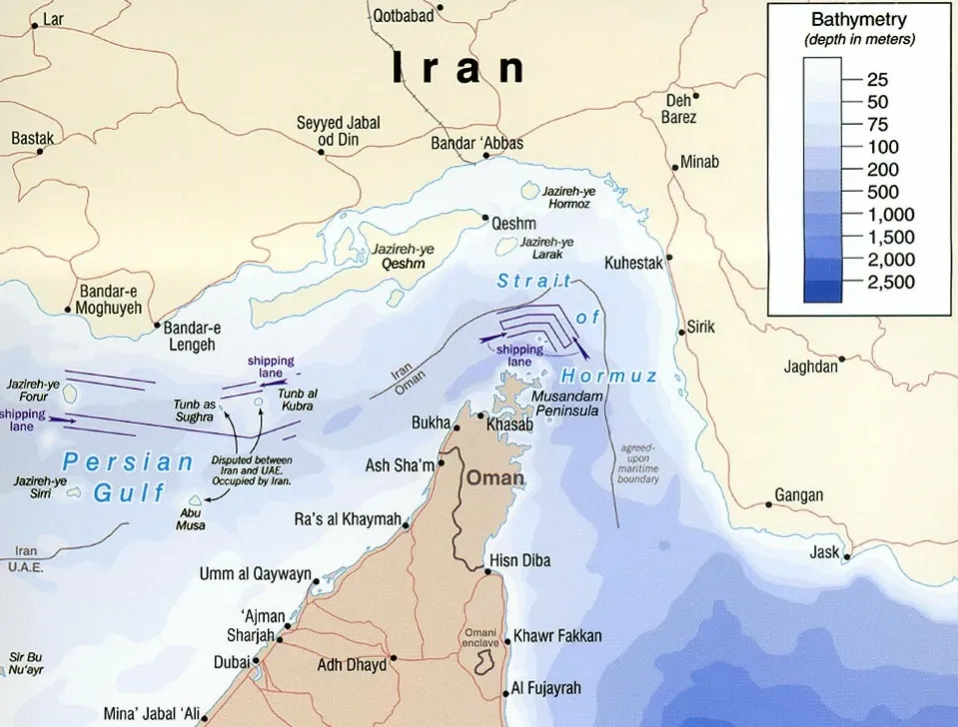
Control of the critical maritime chokepoint – the Strait of Hormuz, through which approximately one-fifth of global oil and a significant portion of liquefied natural gas transit – requires a comprehensive, phased maritime campaign to enforce freedom of navigation, defeat asymmetric threats, and deny the adversary leverage over global energy flows.
Phase I: Preemptive Degradation – Conduct sustained, multi-domain suppression of enemy anti-access/area denial (A2/AD) capabilities. Prioritize destruction of coastal anti-ship cruise missile batteries (including mobile launchers with over-the-horizon variants), shore-based radars, command nodes, and fast-attack craft/swarm boat bases using precision standoff strikes from carrier-based aircraft, submarine-launched cruise missiles, and long-range hypersonic systems. Target minelaying vessels, submarines, and drone facilities preemptively to minimize mine threats.
Phase II: Mine Countermeasures and Clearance – Deploy specialized mine countermeasures task forces comprising unmanned surface vessels equipped with advanced sonar and influence sweep systems, autonomous underwater vehicles for mine detection and neutralization, and helicopter-borne magnetic/acoustic sweeps. Integrate high-resolution synthetic aperture sonar and laser mine detection to achieve rapid clearance corridors. Establish mine-free transit lanes with persistent unmanned surveillance to detect and neutralize re-mining attempts.
Phase III: Sustained Escort and Presence – Form multinational escort groups centered on carrier strike groups (advanced nuclear-powered carriers with multi-role air wings) and amphibious ready groups for rapid response. Provide layered protection using electronic attack aircraft to jam incoming threats, high-energy directed-energy weapons for close-in swarm defense, vertical-launch systems for area air defense, and nuclear attack submarines for subsurface barrier operations. Implement convoy operations with armed merchant vessels, political risk insurance guarantees, and real-time intelligence sharing to restore commercial confidence and reduce war-risk premiums.
Phase IV: Deterrence Dominance – Maintain forward naval presence with rotational carrier deployments, freedom-of-navigation operations, and joint exercises with Gulf allies to signal irreversible commitment. Develop rapid response protocols for any renewed closure attempt, including proportional strikes on supporting infrastructure while avoiding escalation thresholds that invite broader involvement from external patrons.
Technical countermeasures include unmanned mine-hunting vessels, high-energy laser systems for swarm defense, and land-attack cruise missiles launched from guided-missile destroyers targeting over-the-horizon anti-ship batteries and supporting infrastructure. Multinational task forces conduct persistent presence and freedom-of-navigation operations, intercepting illicit shipping while deterring closure attempts. This posture secures global energy transit routes, economically isolates the adversary, and prevents leverage through maritime blackmail.
Strategic Containment of Russia: Financial, Kinetic, and Nuclear Pressure
External support – drones, surface-to-air systems, and advanced fighters – sustains the adversary’s capabilities and requires decisive countermeasures against the principal supplier in this two-front Cold War. Escalate financial isolation through designation of additional financial institutions under sanctions authority, termination of remaining international payment conduits, and application of high-percentage tariffs on strategic commodities while accelerating substitution with alternative energy supplies to allied markets. Militarily reinforce eastern alliance commitments with additional theater missile defense assets, expedite development and fielding of hypersonic strike systems, and sustain materiel support to ongoing resistance efforts that consume adversary resources.
To restore credible extended deterrence and counter Russian nuclear coercion in support of Iran, implement a forward nuclear posture adjustment: redeploy tactical nuclear gravity bombs (B61-12 variants) to additional NATO forward bases in Eastern Europe (Poland, Romania, Baltic states) under dual-key arrangements; accelerate life-extension and modernization of sea-based W76-2 low-yield warheads on Ohio-class submarines for theater delivery; increase rotational deployments of strategic bombers (B-52H and B-2) carrying nuclear-capable cruise missiles during heightened alert periods in the European theater; and expedite fielding of the Long-Range Standoff (LRSO) weapon to ensure survivable, standoff nuclear options against hardened Russian command infrastructure. This measured reconstitution of theater nuclear presence signals unambiguous resolve, raises the threshold for Russian escalation on behalf of Tehran, and compels prioritization of internal survival and strategic restraint over external adventurism.
Economic and Technological Warfare Against China
The primary economic enabler – through large-scale commodity purchases and dual-use technology transfers – demands calibrated, escalating pressure in the Pacific theater of this two-front Cold War. Implement aggressive secondary sanctions on financial entities facilitating prohibited transactions, with penalties including large-scale asset freezes. Apply tiered tariffs on critical supply-chain components – semiconductors, rare earth elements, advanced electronics – conditioned on verifiable cessation of support. To amplify economic leverage against the Russia-China axis, unleash massive, sustained US oil production surges to flood global markets and crush Russian oil revenues.
Invoke the Defense Production Act to prioritize and accelerate domestic exploration, drilling, refining, transportation infrastructure, and associated supply chains in key basins such as the Permian, designating crude oil production capacity as essential to national defense and energy security. This authority enables prioritization of contracts, allocation of critical materials, expedited permitting, and targeted investments to drive output toward or beyond record levels – projected near 13.6 million barrels per day or higher – overwhelming market dynamics, driving down global prices, and eroding Moscow’s war-sustaining export income. Combine with intensified freedom-of-navigation operations in contested waters to deter broader opportunism. This multi-domain economic-military campaign isolates the adversary, fractures the authoritarian alignment, and creates conditions for a negotiated settlement that eliminates breakout nuclear capability on verifiable terms.
This doctrine transcends contingency planning: it constitutes a grand strategy for an era defined by great-power competition and a two-front Cold War. By integrating strategic air power, robotic systems, hypersonic precision, layered defenses, nuclear signaling, and economic leverage, it delivers decisive superiority while avoiding the resource drain of prolonged ground conflict or simultaneous escalation across fronts. History demonstrates that credible strength compels negotiation and deters aggression. Prevailing here reaffirms the principle that retreat is unacceptable and surrender unthinkable. The strategy is mature: the requirement is action.
This article was originally published by RealClearDefense and made available via RealClearWire.