
Table of Contents
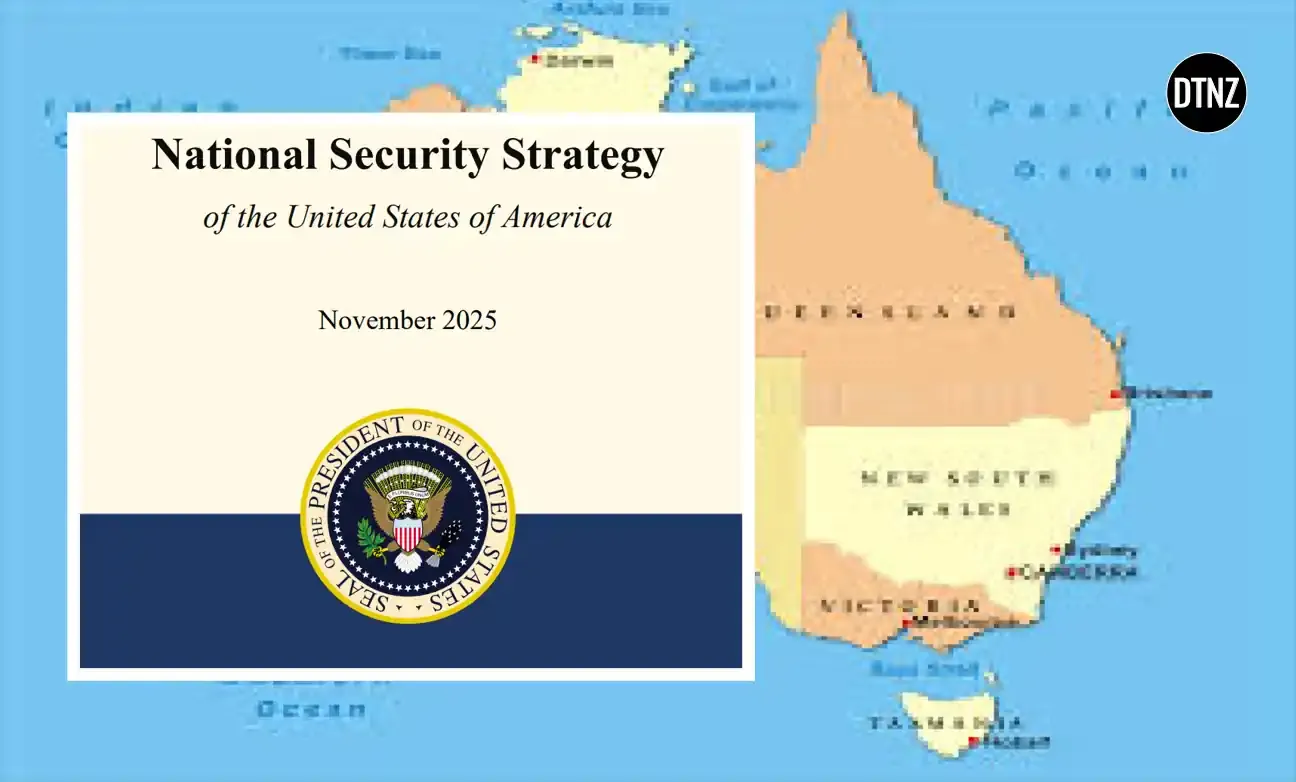
Australia has been bluntly criticised in a sweeping new US national security strategy that accuses Canberra of failing to spend enough on defence while pointedly omitting any reference to AUKUS, the centrepiece of Australia-US military cooperation.
The 33-page document released by the Trump administration outlines a more restrained and inward-focused vision of American power that is likely to unsettle ‘allies’.
The strategy declares that the US will intervene abroad only when its direct interests are threatened, adding that “the days of the United States propping up the entire world order like Atlas are over”. Europe receives a harsh assessment, accused of sliding toward “civilisational erasure” and lacking the resolve to remain a reliable partner.
Australia is mentioned only three times – and not favourably. Washington praises the Quad (the Quadrilateral Security Dialogue, a strategic partnership between the United States, Australia, Japan and India), but warns that Australia is not investing enough in its own security. The document states that the US is maintaining “determined rhetoric on increased defence spending” with both Taiwan and Australia. American officials want Australia to lift defence spending from two per cent of GDP to as high as 3.5 per cent, a level Canberra has not indicated it can meet.
More concerning for Australian officials is the complete absence of the word AUKUS.
Reports suggest some senior US defence figures remain sceptical of the pact, fearing submarine transfers could weaken America’s own readiness. Although Trump has personally supported the deal, internal resistance in Washington raises questions about its long-term stability.
This article was originally published by the Daily Telegraph New Zealand.





![[The Good Oil] April 2026 Political Poll](https://images.unsplash.com/photo-1540910419892-4a36d2c3266c?crop=entropy&cs=tinysrgb&fit=max&fm=webp&ixid=M3wxMTc3M3wwfDF8c2VhcmNofDk1fHx2b3Rpbmd8ZW58MHx8fHwxNzIyMzkxNTI4fDA&ixlib=rb-4.0.3&q=80&w=1304)

