Ani O’Brien
Like good faith disagreements and principled people. Dislike disingenuousness and Foucault. Care especially about women’s rights, justice, and democracy.
READ THE LITERARY ABOMINATION ONLINE HERE. It was published in the most recent edition of Debate magazine, which is the student magazine at AUT.
What makes this poem so grotesque is not merely that it is objectively bad poetry. Very bad poetry that tries awfully hard to be irreverent and absurdist. Universities have published bad poetry forever. Earnest, self-indulgent young writers discovering revolutionary fervour is hardly new. Anger and outrage expressed through cosplay is practically a rite of passage for young people who are privileged enough to attend university. However, what makes this publication noteworthy, and what has triggered me to write this, is that it combines artistic incompetence with naked hatred, and then wraps both in the language of liberation politics. It is aesthetically barren, talentless, and morally ugly all at the same time.
The first failure of this piece is literary. P Walters mistakes assertion for profundity and believes that if words are capitalised aggressively enough and arranged in sufficiently fractured lines, they become poetry by default. But poetry requires discipline. It is about choice and it is deliberate, even when it appears messy. Chucking words at a wall and calling the splatter poetry is cute. But it reads like a pile of activist Instagram slides emptied onto a page and padded out with what Winston Peters might call “sociology department claptrap”.
The poem is one long shout and the emotional register never changes. Everything is declamatory and hysterically important. There is zero tension building and no contrast, because it is all angry sludge. It just rants.
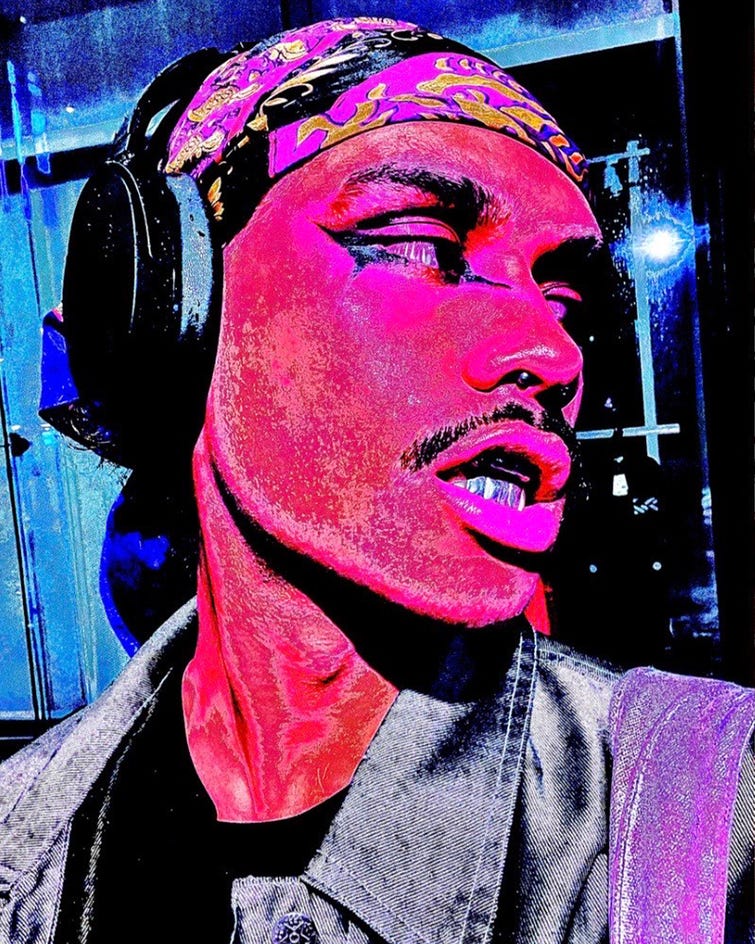
“Death to whiteness.” “Death to Zionists.” “Death to colonisers.” “Death to the Crown.”
The repetition is intended to create a punctuating effect, but, because the language itself is so flat and sloganistic, the result is less incantation and more like someone yelling through a megaphone at a student protest. There is nothing meditative about it nor spiritual. Walters is just yelling.
The references scattered throughout only highlight the intellectual emptiness. Audre Lorde and Tema Okun are invoked and Lady Gaga and Lana Del Rey lyrics are inserted as if on a middle-class teen girl’s 2012 Tumblr page. “White supremacy culture” is treated as self-evident truth rather than the contested and divisive pseudo-academic concept that it is. None of these references are made into something original or interesting by the words that surround them. They simply sit there like ideological badges proving the author has completed the required reading list for contemporary activist orthodoxy. Pronouns in bio.
And then there is the extraordinary self-seriousness of it all. Every line is desperate to convey cosmic significance. Depth. Wokeness. Enlightenment. Walters is not describing personal alienation or cultural confusion which can be interesting in art. Instead he is positioning himself within a mythological struggle against practically everything. Birth certificates, laws, contracts, passports, diplomas, archives, and written records are all framed as manifestations of oppressive “white supremacy culture”. One almost expects the next stanza to denounce plumbing and wastewater systems as colonial violence. And no one point out that his condemnation of the written language rings hollow when using the written language to express it.
The whole thing is terribly adolescent. It is anti-everything and Walters clearly wants to define himself by what he considers he is not. The world is his mum and he objects to everything she says. He seems also to think that incoherence signals depth and that the more fragmented the writing, the more aggressively abstract the language, the more moral authority it possesses. He is wrong.
Yet however dreadful the poetry is, and it is truly dreadful, the ugliness of its subject matter is even worse.
The repeated use of “Zionist” is the usual dog-whistle-so-loud-it-turns-into-gaslighting. We are now expected to participate in a collective fiction that “Zionist” is always a narrowly political term entirely detached from Jewish identity. In reality, particularly in activist discourse like this, “Zionist” functions as a socially permissible proxy for “Jew”. It is a euphemism that is intended to grant plausible deniability. It is pathetic, weak, and totally transparent.
When a piece repeatedly chants “Death to Zionists”, while simultaneously framing the world through apocalyptic binaries of purity and evil, it is impossible to ignore historical reference points. Especially given that the overwhelming majority of Jews worldwide either support Israel’s existence in some form or are automatically understood by antisemitic activists as tainted by association regardless.
That is why so much contemporary “anti-Zionist” rhetoric slips so effortlessly into classic antisemitic patterns. One simply replaces one word for the other and the sentence remains the same. The hatred directed at the same people. Jews become collective agents of corruption, colonialism, finance, manipulation, blood libels, and spiritual contamination.
Let’s pause this review for a moment and play a quick game of ‘would this apply if it were about another group’. If a student magazine published a poem chanting ‘Death to Muslims’ while insisting it merely opposed ‘Islamism’, would anyone accept that distinction?
Of course not. In fact, I would be worried for the magazine staff’s safety. Je Suis, Charlie.
But “Zionist” now occupies a protected space in elite progressive environments where almost any level of dehumanising rhetoric is tolerated so long as the correct code word is used.
This poem is unlikely to inspire revolution. Nobody is storming the barricades after reading this drivel. But it does reveal something ugly about the culture producing it.
The repeated invocations of “whiteness” operate similarly. Defenders will inevitably insist this refers only to systems, structures, or hegemonic norms rather than actual white people. But this distinction too has become dishonest in practice. The trick is that the word stays vague enough to sound academic while still obviously pointing at actual people. It allows the writer to flirt with openly racial hostility while maintaining a defence of academic analysis and conceptualisation.
Once again, the asymmetrical thought experiment tells the story. No institution in New Zealand would tolerate pages of repetitive invocations calling for ‘death to blackness’ or ‘death to brownness’ while pretending these referred merely to abstract concepts. Everyone understands why that would be obscene.
There is also something deeply sinister in the poem’s casual flirtation with political violence. The invocation of “death to billionaires” exists in a cultural moment where parts of the affluent progressive class have become disturbingly comfortable romanticising violence against people they have reduced to symbols of oppression. Think of the grotesque online deification of figures like Luigi Mangione, whose murder of UnitedHealthcare executive Brian Thompson was treated in some corners of the internet less as a horrifying act of political nihilism and more as edgy revolutionary justice. Thompson was a husband and father who was gunned down in the street. Yet vast numbers of educated young people seemed capable of discussing the killing only through the language of memes, systems, and class revenge.
Walters’ poem drips in the same dehumanisation and reductiveness. His targets cease to be human beings and become categories onto which resentment can be projected theatrically. “Billionaires”, “Zionists”, “colonisers”, “whiteness”, “the Crown”. These groups of people have been transformed into avatars of pure evil and the normal restraints of human empathy therefore do not exist for activists. And these activists so often emerge not from the classes of the genuinely dispossessed, but are highly educated, socially prestigious young people who themselves belong to the most globally privileged strata of society. They are frequently members of the professional-managerial class, furious not that they are oppressed, but that they remain merely elite rather than ultra-elite. There is a peculiar bitterness in parts of modern progressive culture that feeds the resentment of the five per cent toward the 0.1 per cent.
The inclusion of “rapists” and “paedophiles” in the poem is a purposeful tactic. They function as moral anchors because everyone agrees they are among the most reviled humans imaginable. By placing them alongside “Zionists”, “billionaires”, “whiteness”, “Israel”, and the poem’s other ideological enemies, Walters performs a deliberate guilt by association manoeuvre. He positions the political targets of the poem not merely as oppressive, but as fundamentally evil to the same degree as people who prey sexually on children. Once that association is established emotionally, the repeated calls for “death” begin to be implicitly justified.
This is one of the oldest mechanisms of political radicalisation. First dehumanise, then moralise the hatred. If your enemies are not merely wrong but monstrous, then ordinary ethical restraints no longer need apply. Walters’ poem creates a psychological permission structure in which rage becomes virtue and violent fantasy is a justified cleansing ritual. After all, nobody objects to hatred directed at rapists or paedophiles. The poem borrows the visceral disgust attached to those figures and transfers it onto ideological and racial enemies through proximity and repetition. It is disturbingly primitive and effective in the way all dehumanising propaganda tends to be effective. Propagandists have forever sought to train the reader emotionally to see the out-groups not as fellow citizens within a shared society, but as contaminants deserving eradication. We know where that train stops.
And of course, because no contemporary piece of activist performance art would be complete without it, Walters eventually arrives at gender ideology. Apparently even the term “third gender” is now oppressive because the numbering itself supposedly creates hierarchy. At this point, it can only be concluded that the writer of the poem is someone who has spent catastrophically too much time online. The overwhelming instinct reading passages like the ones about gender is not so much outrage as exhaustion. I just want to scream at this brat to get out more. Go to the beach. Touch grass. Spend less time obsessing about your own identity and how to centre it in every conversation you have. For the sake of his long term happiness, and to make him appear less like an antisocial school-shooter profile, the best thing is for him to get off the internet and get some perspective.
Self-obsession saturates the poem even more than hatred does. Endless, suffocating self-regard. Every word is filtered back through the lens of personal identity and psychic grievance. The modern activist milieu encourages people to treat themselves simultaneously as fragile victims, virtuous visionaries, and protagonists of a struggle worthy of a movie trilogy. It is an incredibly unhealthy way to move through life. Every feeling acquires political significance and every discomfort is literal violence inflicted as an oppressive act. And perhaps this is oppressive too, but I just want to tell Walters “you are not that special, mate”.
He is a guy with long hair and silly politics. Human civilisation has encountered this archetype, believe it or not, many, many times before. Men with long hair have existed since we lived in caves. Male rock musicians were into it. So were hippies. There was even a fairly famous historical figure wandering around the Middle East with long hair a couple of millennia ago, though perhaps we should not mention him too loudly, given Walters’ apparent hatred of the “white false god” which, judging by the rest of the poem’s bingo card of fashionable ideological resentments, one assumes refers to the Christian God.
Christianity, Western civilisation, “whiteness,” capitalism, liberal democracy, all are treated not as imperfect inheritances to be improved upon, but as spiritually corrupt systems to denounce. Yet there is remarkably little evidence that replacing them with online identity radicalism produces happier, kinder, or more psychologically stable people. In fact, the anecdotal evidence here suggests quite the opposite. The worldview expressed is depressingly alienated from ordinary human life. The piece is actually deeply sad. Beneath all the rage and theatrical certainty is a person who appears trapped inside constructed anti-reality, interpreting the entire world through the prism of self and grievance.
Now, as is common knowledge, I am involved with the Free Speech Union, and as I read this awful diatribe, I pondered about where the rhetoric sits in terms of existing New Zealand law and my own free speech principles. Where exactly is the line between political expression and incitement? Is this legal speech? Should it be legal speech?
New Zealand’s Human Rights Act contains provisions dealing with incitement of racial disharmony. Section 61 prohibits publishing or distributing material that is “threatening, abusive, or insulting” and likely to excite hostility against or bring into contempt any group on the basis of colour, race, or ethnic or national origins. Section 131 goes further by criminalising intentional incitement of racial disharmony in more serious circumstances.
New Zealand courts have long recognised Jewish people as an ethnic group for the purposes of racial disharmony law. So in my unqualified legal reading that suggests repeatedly publishing chants of ‘Death to Zionists’ in a context where ‘Zionist’ functions as a thin euphemistic stand-in for Jews potentially engages sections 61 or even 131 of the Human Rights Act. Like wise “Death to Israel”.
The key authority is the Court of Appeal case King-Ansell v Police (1979), which concerned antisemitic publications distributed by a neo-Nazi figure. The court held that “Jews in New Zealand” fell within the concept of an ethnic group protected under the legislation. The court adopted a broad understanding of “ethnic origins”, encompassing shared history, traditions, customs, and cultural inheritance, not just biological race.
Whether this particular publication would meet the threshold is ultimately a matter for proper legal interpretation by actual lawyers. New Zealand courts have traditionally set a very high bar, rightly recognising the importance of free expression even when speech is offensive or hateful. I am not advocating either way. I am simply observing that it appears to breach the law as it is currently.
Personally, as I have said many times before, I am generally in opposition to expanding state power around speech regulation because those powers rarely remain confined to the people one dislikes and it does nothing but screw us all over.
In any case, as I say, that a young activist wrote something hateful and self-indulgent is not really that astounding. It is the judgement of the editors of the magazine that I question. This is a time of intensified hatred of Jewish people. Jewish kids have to have armed police outside their schools regularly. The Bondi Beach massacre could easily happen here or elsewhere in the West.
Universities have always produced angry young ideologues convinced they are overthrowing civilisation between tutorials and sushi dates. But what exactly possessed the editors of this magazine to publish repeated chants calling for the death of broad categories of people and apparently conclude there was no ethical problem whatsoever? At what point does “supporting free expression” become indistinguishable from institutional cowardice and moral abdication? Free speech principles exist so controversial, offensive, and difficult ideas can be aired without fear of state punishment. But organisational judgement is a separate matter entirely. An editor is not a passive conduit through which every ugly impulse must flow unexamined. Editorial discretion is not censorship. It is the entire point of having editors. They are meant to filter out the poor quality work (fail) and make decisions as to whether what they publish is conspiratorial antisemitic rubbish.
And there is a difference between publishing something provocative and publishing something that reads, in large part, like incitement to hatred and violence. Repeated calls for the “death” of ideological, racial, and national groups are not made profound simply because they are arranged in free verse and padded out with references to Audre Lorde and gender bending. One genuinely wonders what conversations took place between those working at the magazine. Did nobody pause and say perhaps screeds of racialised death chants are not actually a sign of literary brilliance? Did nobody possess the basic moral instinct to recognise that this was not courageous art but ugly, performative resentment? Or are parts of academia now so ideologically captured that hatred itself becomes invisible provided it is directed at trendy targets?
More fundamentally, though, legality is not the same as wisdom and decency. Just because we can do something legally does not mean we necessarily should. Just because you can legally scream obscenities at your grandmother across the dinner table does not mean doing so is wise, decent, or socially healthy. Even if she is a right old cow.
And so, even if we assume that P Walters has the right to write poetry that is truly atrocious in both quality and substance, we can pass judgement as to whether that makes him a decent person or not. Additionally, a university publication should possess at least some minimal editorial judgement. It should distinguish between provocative art and ideological silage. There is an actual difference between expression that offends with artistic purpose and base performative hatred. It appears that like many academic institutions nowadays, AUT has mistaken activist aggression for intellectual heft. The editors of this student magazine should be embarrassed that they are clearly unable to spot a charlatan poet with an ugly agenda.
Why publish something so spiritually empty? For all its revolutionary posing, the piece feels emotionally dead. Nobody in it is recognisably human any more. Everything is reduced to contamination and domination. Just categories. Enemies. Everything must be dismantled because coexistence itself is treated as an unacceptable compromise.
Ironically, this makes the work profoundly conservative in the worst sense of the word. It reproduces the oldest and ugliest human instinct of tribal essentialism. The belief that people inherit collective guilt through identity. That some groups embody corruption while others embody authenticity or purity. History has seen this impulse before and it has never led anywhere good.
This poem was a tedious piece of activist resentment masquerading as art, infused with racial hostility, dripping with antisemitism, and elevated only because contemporary institutions have become terrified of applying consistent moral standards when the hatred arrives wrapped in fashionable ideological language.
This article was originally published by Thought Crimes.