Table of Contents
David Leyonhjelm
David Leyonhjelm was elected to the Senate in 2013 and 2016, resigning in 2019.
In psychology, a phobia is defined as a type of anxiety disorder: an intense, persistent, and irrational fear of a specific object, situation or activity that is disproportionate to the actual danger.
Because they are irrational, phobias are typically not amenable to facts or reason. Someone who is terrified of flying or spiders, for example, is unlikely to overcome that fear by reading facts about how safe they are.
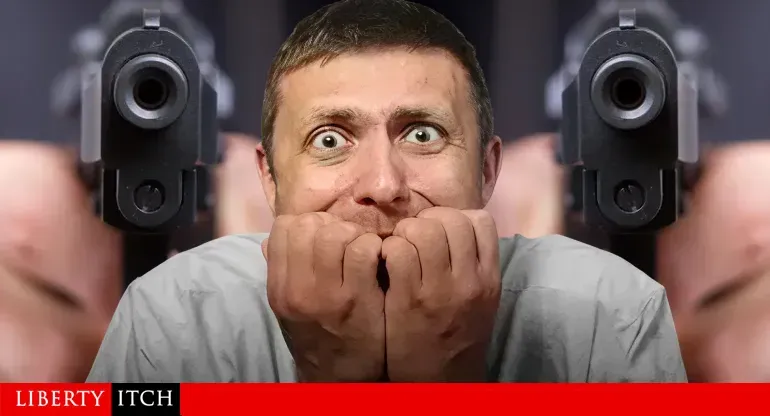
An intense, irrational fear of firearms is known as hoplophobia. The word stems from the Greek word hoplon (weapon) and is distinct from a healthy caution around guns.
Many Australians, including quite a few policy makers, politicians and the media, suffer from hoplophobia. Like the fear of flying or spiders, their fear is not founded in knowledge or facts: it is irrational, instinctive, and self-reinforcing.
Australia has never had a strong gun-culture. For the first 190 years of European settlement, guns were tools to remove pests, kill for food, euthanise injured livestock and, rarely, protect property and personal safety.
Unlike Switzerland, Australia is not surrounded by other countries that might be tempted to invade. Unlike the Czechs, Australians have never endured a communist government at the barrel of a gun. And unlike the Americans, we never had a war of independence, a civil war, or a wild west scramble for land in the face of Indian opposition. Each of these three countries has a much stronger gun culture than Australia.
Whenever there is a series of plane crashes, fear of flying increases. It is the same with guns. Australia’s hoplophobia can be traced to five mass shootings.
The murder rate had been slowly declining prior to the introduction of the gun laws, and continued to decline at the same rate.
The first was a gunfight between rival motorcycle gang members at Milperra in 1984. The firearms used were mostly shotguns, with no semi-automatic rifles involved.
Then came Hoddle Street and Queen Street, both in Melbourne in 1987. Of three firearms used in Hoddle Street, one was a semi-automatic rifle. In Queen Street the firearm was originally semi-automatic but had been sawn-off, which meant it had to be cocked between each shot.
The fourth was in 1991 in Strathfield, Sydney. One death and a wounding were from stabbing with a knife – the rest were shot with a semi-automatic rifle.
Then came Port Arthur in 1996, in which 35 people were killed and 23 wounded using semi-automatic rifles. The prime minister was John Howard. He had strong views about guns and famously declared:
I hate guns. I don’t think people should have guns unless they’re police or in the military or in the security industry. There is no earthly reason for people to have … ordinary citizens should not have weapons. We do not want the American disease imported into Australia.
Howard used his political capital and control of the purse strings to coerce his party, coalition partners, the media, and each state and territory government, to cooperate with a plan to restrict firearms, particularly semi-automatics. The details were helpfully supplied by a group of anti-gun activists who had been waiting for just such an opportunity.
Post hoc assessments were classic truthiness – people wanted to believe the new gun laws made a difference, and it sounded like it ought to be true, so they began with that conclusion. Some claimed there had been no more mass shootings, until there were.
Data from the ABS told a different story – the murder rate had been slowly declining prior to the introduction of the gun laws, and continued to decline at the same rate. But the conclusions were repeated so often they were rarely questioned. Hoplophobia had set in: facts didn’t matter.
Three decades later, hoplophobia is now deeply entrenched among policy makers, opinion leaders, politicians and the media. This is manifest in various ways.
Tougher gun laws are said to result in fewer guns ‘on the streets’, although most guns on the streets belong to the increasingly heavily armed police. Legally owned private guns are locked away, as the law requires.
Advocates calling for ‘tougher’ gun laws cannot nominate what that means. Some propose restrictions that already exist, or bans on guns that don’t exist (e.g., semi-automatic revolvers or belt-fed shotguns). They think black guns are assault rifles.
Driven by their phobia, what they really want is a total ban. But don’t mention police weapons or the Beau Lamarre-Condon case.
Completely harmless guns are banned merely because they look like military weapons. That includes water squirters and gel blasters.
Bureaucrats encourage police to use minor transgressions (e.g., non-compliant storage) to cancel licences and reduce the number of guns in the community, and there are pointless limits imposed on the total number of guns that can be owned.
While claiming nobody living in a metropolitan area needs a gun, politicians and the media celebrate the success of Australian shooters in the Olympic Games. Most sporting shooters and hunters live in cities.
Australians have never endured a communist government at the barrel of a gun.
People are taken seriously when they claim they feel safer knowing there are no guns in a house, a street or a suburb, as if the guns are plotting something bad.
A national firearms database is claimed to be desperately needed, although gun registration only affects the law-abiding and has probably never saved a single life.
In WA, merely having the wrong opinion is sufficient for your firearms licence to be revoked and guns seized, with no evidence of violent intent or advocacy needed. But only sovereign citizens need be concerned – radical Islamists are fine.
Hoplophobic Australians regularly assert that our gun laws are an example to other countries, yet cannot name any. Policies motivated by a mental condition are not a model for anyone. Indeed, there is no objective reason why they should be: countries with more liberal gun laws and more guns per head of population, such as Switzerland, Czechia and even New Zealand, have firearm homicide rates that are as low or lower than ours.
Australia cannot even explain what its gun laws are intended to achieve. If they are to reduce the criminal use of firearms, or lead to fewer firearm homicides, there was no obvious need for change even in 1996. Firearm homicides were already low by international standards and falling.
If they are to keep guns out of the hands of people who are likely to misuse them, there’s no point prohibiting certain types of guns. Someone who is not safe with guns, whether due to criminal intent or mental instability, is obviously not safe with any kind of gun.
If the billions that Australia devoted to bans and buybacks had instead been used to understand and treat mental health, including phobias, perhaps we would have something other countries would be interested in.
This article was originally published by Liberty Itch.