Table of Contents
Political popularity isn’t always the measure of a politician’s consequence. Richard Nixon might be near-universally traduced today, but his legislative record is one of the most consequential in US political history. Bob Menzies was and is hated by the chattering elite, but is both Australia’s longest-enduring and possibly most consequential leaders.
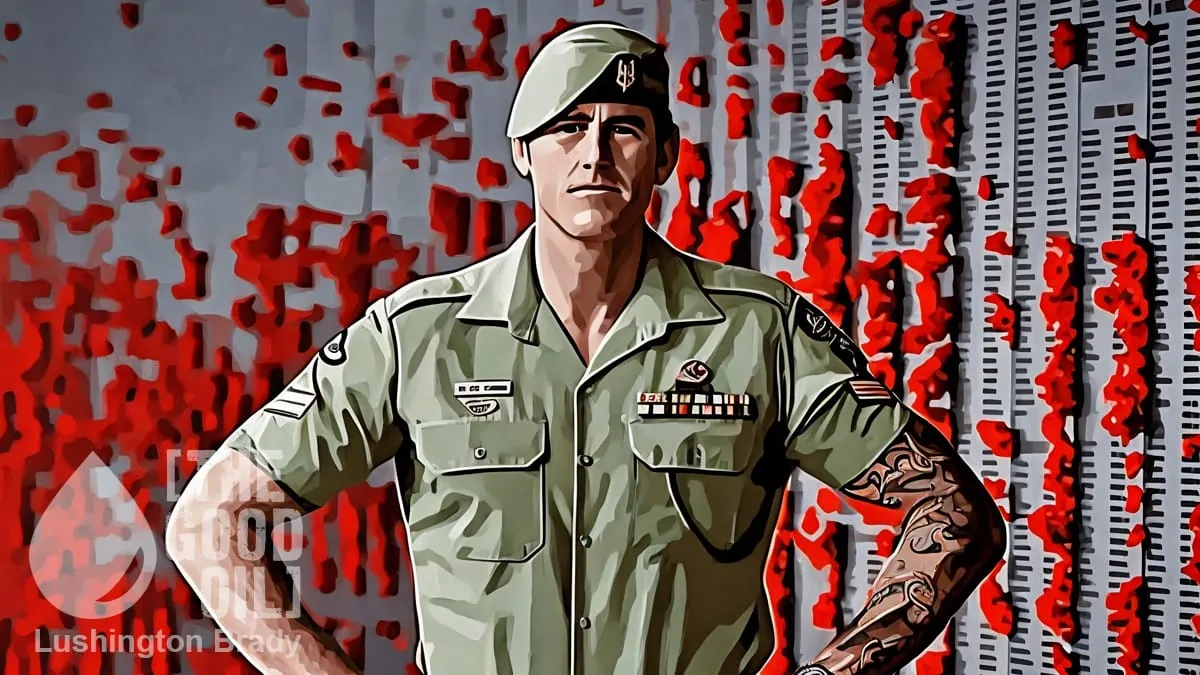
Of course, most elite chatterers today would barely know who Menzies was, but they hate Scott Morrison almost as viciously. Morrison was a ‘curate’s egg’ PM: mostly awful, due to his tendency to stand for nothing and treat every issue as a marketing exercise. But, in one very important respect, he was hugely consequential.
Morrison not only made a fair start on weaning Australia’s suicidal dependence on China – and infuriating the communist regime by daring to publicly question the lying narrative on the virus’ origins – but helped steer the genesis of one of the most important security pacts to date of the 21st century: AUKUS.
Of course, China’s Labor lapdogs the Albanese government have done everything in their power to put Australia deeper in China’s pockets. But, while they’ve trashed Australia’s defence capability in almost every respect, not even Labor are venal enough to trash our most important alliance.
In a rare post-politics public statement, Morrison is urging that AUKUS be extended into the emerging battlefield of the 21st century: space.
The former prime minister said he would support a new AUKUS “Pillar 3” aimed at helping Australia develop a stronger space capability that could complement US, Japanese, as well as European and UK systems.
‘Pillar 1’ is Australia acquiring its own fleet of conventionally armed, nuclear powered submarines. ‘Pillar 2’ is the development and sharing of highly advanced technologies and capabilities between the UK, the US and Australia.
It makes sound strategic sense to develop a ‘Pillar 3’ in space.
Too often, generals and politicians fight the last war rather than the next one. This is partly unavoidable – the only war we can have direct experience of is the last one – but that doesn’t mean we can’t, or shouldn’t, plan for the next one. Anyone who doesn’t plan for space-based warfare is as foolish as anyone who didn’t plan for nuclear warfare after WWII.
This would bolster deterrence, with Mr Morrison noting that space was “now a frontline in US-China strategic rivalry.” But he also said it would send a valuable signal to the private sector about the important role it had to play.
“The blurred lines between civil and military domains created by the dual use space technologies makes this even more challenging to contest,” he said.
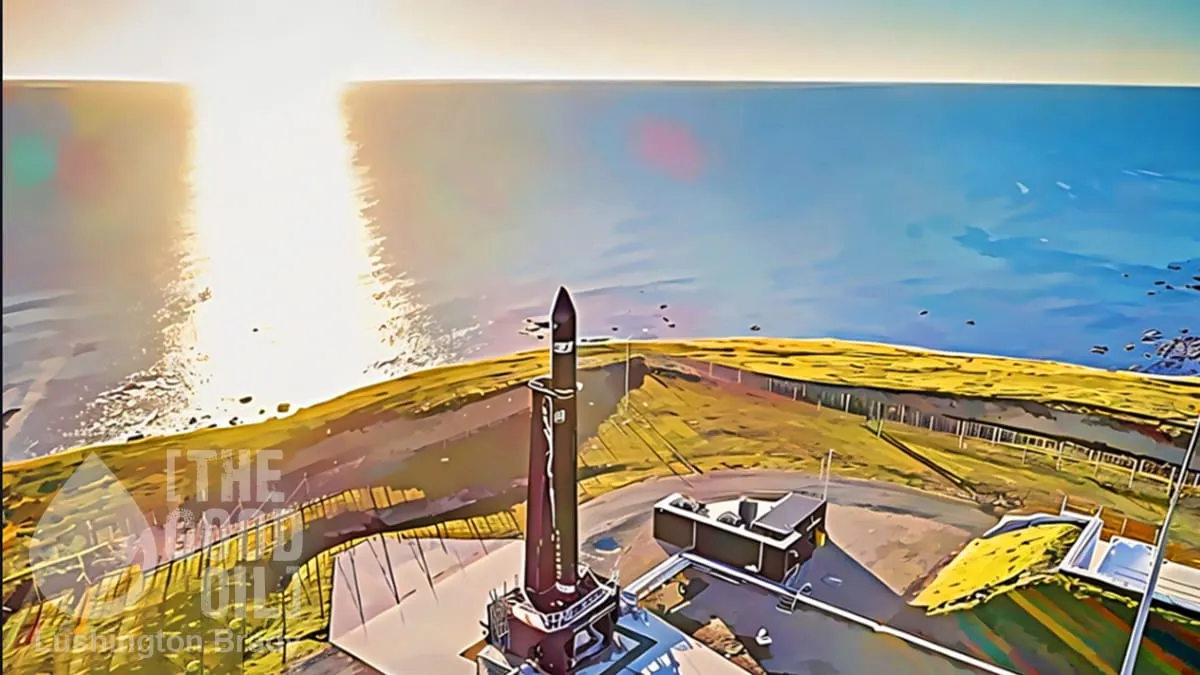
Morrison is not entirely disinterested here, of course. He is currently the non-executive chairman of Space Centre Australia, a body dedicated to opening a major international space port in Cape York, in Australia’s far north. The idea of a space port in Cape York is not new: Joh Bjelke-Petersen floated the idea decades ago. Despite the sneering of the chattering classes, even then it wasn’t as far-fetched an idea as it sounds. With its proximity to the equator and vast empty spaces, bordered by water on three sides, and in a geologically and politically stable nation, Cape York is an ideal location for a space port. An equatorial location takes advantage of the higher rotational speed at the equator compared to higher latitudes.
Space Centre Australia has already entered an agreement with NASA to test a ‘horizontal launch capability’. That is, deploying a rocket mid-air from a military transport plane, rather than launching from the ground.
Speaking on Tuesday, Mr Morrison sketched out his vision for “multi user private space port near Weipa,” likening it a “Cape Canaveral at Cape York.”
“There is no other space port in a secure jurisdiction planned or existing, at this scale, closer to the equator,” he said.
In his address on Tuesday, Mr Morrison said that management consulting firm McKinsey had estimated that the global space economy was now worth US$630bn and would grow 9 per cent annually to US$1.8 trillion by 2035 – “double the growth rate of the global economy and faster than semiconductors.”
In case you’re not interested in space, be assured that other powers such as China and Russia very much are. Both nations are testing various space warfare capabilities, especially anti-satellite capabilities. Technologies include either manoeuvring ‘killer’ satellites close alongside a target satellite, to destroy it with the debris from a self-destruction, or using space-based nuclear weapons to destroy delicate electronics with the electro-magnetic pulse from a nuclear detonation.
As space became “more enmeshed in geopolitical rivalry,” Mr Morrison said the allied network needed to function as a “cohesive whole, just as it has in all other domains for decades.”
“By 2030, with deliberate development, Australia can offer unique contributions: southern-hemisphere sensors watching the skies, a strategic location for space operations, and additional resilient satellites and launch options,” he said.
“An allied operation in the Indo-Pacific in 2030 could count on Australian satellites for communications and surveillance, Australian sensors to warn of enemy ASAT (anti-satellite weapon) moves, and even Australian launch pads to rapidly deploy new assets,” he said.
“All of this augments the strengths of the US, Japan, and Europe/UK, creating a more robust collective space posture that deters aggression.”
Good luck with that, though, with numb-nuts like Anthony Albanese and his defence minister, Richard Marles, steering the ship.