Table of Contents
Victoria in the 1990s was a hell of a place to be. A concatenation of financial collapses – mostly public, including the State Bank, as well as one big regional private financial institution – and government scandals had put an end to the reign of Labor premier John Cain Jr, and his hapless successor, socialist Joan Kirner, was pathologically ill-equipped to fix any of it. The state’s credit rating was downgraded.
The effects were felt at every level. Suddenly, nobody you knew seemed to have any money. It took the brutal spending cuts of Jeff Kennett, elected in a landslide that wiped Labor off the map everywhere but, with one exception, inner and western Melbourne. Kennett was a bastard, but he was the bastard Victoria had to have.
Where’s the Jeff Kennett of today? Because Victoria sure as hell needs him or her.
Treasurer Jaclyn Symes has assured Victorians state debt will not crash through the symbolic $200bn barrier in Tuesday’s budget amid signs the state’s annual interest bill is in danger of hitting $10bn.
Ahead of releasing her first budget on Tuesday morning, Ms Symes insisted the Allan government was “fiscally responsible”, and refused to rule out significant job cuts to the public sector.
She could slash Victoria’s public service by half and still have more leeches sucking the taxpayers’ blood than before Dictator Dan Andrews was merely a lowly MP running over teenage cyclists. Victoria’s public service growth has outstripped even Queensland’s, where former premier Annastacia Palaszczuk was notorious for stuffing future Labor voters on the public payroll. Victoria’s public sector wages bill has outstripped growth in the state economy by three times.
Victoria currently employs nearly 400,000 public sector ‘workers’: one-tenth of the state’s total workforce. Cutting the public sector by 2000, as Symes hints, is laughable.
No wonder Victoria has the lowest credit rating of any Australian state. Back in the ’90s when it was downgraded to AA+, it was regarded as an economic badge of shame that had to be rectified as soon as possible. Today, the Jacinta Allan Labor government shamelessly wears its AA rating and is indifferent to threats of further downgrades.
Well, they should. The lower the credit rating, the more it costs to borrow money. If Victorian taxpayers are already forking out nearly $10 billion a year, just in interest payments, they ain’t seen nothing yet.
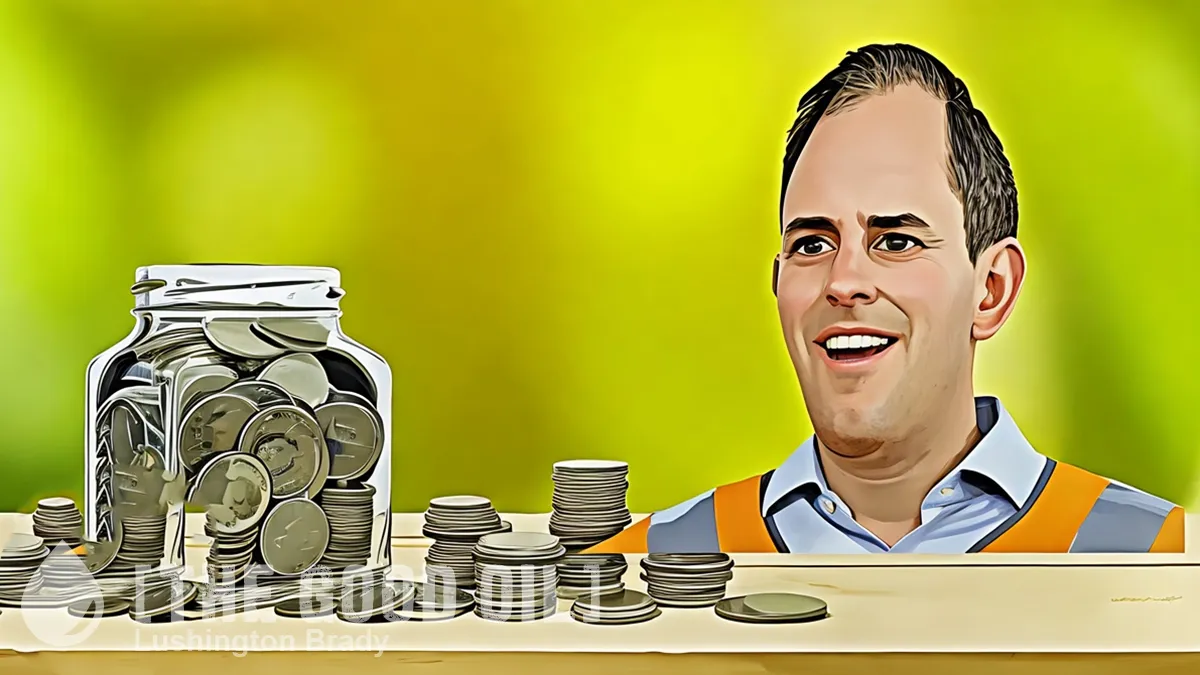
Budget figures reveal that as the state’s debt has spiralled off the back of the government’s blown-out and unfunded mega-infrastructure projects and pandemic-related spending, the interest bill to service it is devouring more and more revenue that could be used for basic services.
The 2019–20 budget reveals just $2.2bn was spent servicing the state’s debt and by 2023–24 this had risen to $5.7bn, with last year’s budget forecasting a rapid rise to $6.5bn, $7.5bn and $8.4bn over the next three years, before reaching almost $9.4bn in June 2028.
Adding to concerns that the annual interest bill will be forecast to reach $10bn in Tuesday’s budget is the prospect Victoria faces a debt cliff in 2029 when about $14bn in debt is due to be refinanced. With debt becoming more expensive on global markets it’s likely the new rate applied to this $14bn will be substantially higher than at present, sending the state’s interest bill soaring.
Yet still a socialist government keeps throwing out the ‘free’ stuff. Now, it’s ‘free’ rides on trains, trams and buses for under 18s.
Judo Bank economic adviser Warren Hogan questioned whether the state could afford the measure and whether they would lead to increased taxes […]
Opposition Leader Brad Battin echoed the economists’ concerns and said the cash splash was “irresponsible”.
“Anything that supports the cost-of-living crisis in our state is always going to be something that many families would welcome … but you can’t do this at the expense of putting a tax on every single household, every single business, every single farmer,” Mr Battin said.
“Money doesn’t grow on trees, and nothing’s for free.
“It comes out of the pockets of hard working people here in Victoria.”
Taxes that are choking enterprise in the state. A paper unsurprisingly not previously released by the Parliamentary Budget Office paper shows there are 33 state-based taxes, levies and duties on Victoria’s books, including 18 separate but overlapping imposts on property ownership, investment and transactions. The cumulative effect of those taxes, plus skyrocketing energy costs, has seen 223 manufacturing businesses close in Victoria in 2024 alone. The highest of any state.
Well, Victorians voted for all this.