Table of Contents
Steve Holland
Broadcaster, commentator, media consultant, libertarian and former mayor of the Mornington Peninsula.
Ayn Rand famously wrote that we can ignore reality, but we cannot ignore the consequences of ignoring reality.
Try as they might, the Australian government’s attempt to tax and regulate tobacco and nicotine out of existence has failed spectacularly. Unsurprisingly, politicians and bureaucrats have buried their heads in the sand and refuse to admit defeat.
Exorbitant taxation and overbearing regulation have resulted in less safety, less freedom, a burgeoning black market, organised crime, collapsing tax revenue, poorer health outcomes, and – literally and figuratively – the torching of small businesses. Add to that: unreliable data because our population has now been trained to lie about their consumption habits.
A legal 20-pack now costs over $50, largely because Canberra skims around $1.50 in excise on every single cigarette, plus GST and the myriad of other taxes and levies that businesses pay. That price signal doesn’t make smokes disappear: it makes honest retailers disappear. Consumers respond the way any first-year economics major says they will, they substitute and evade.
The result? Illicit tobacco now commands a huge share of the market. As high as 40 per cent according to some sources. At least 20 per cent according to the ATO’s more conservative estimate. Customs is seizing record tonnages, but it’s just a sliver of what’s being imported.
There’s a common misconception among non-smokers that illicit tobacco is akin to other illicit substances. It’s not. For the most part, contraband cigarettes are manufactured legally, by legitimate companies, under strict regulatory supervision. They’re identical to legal cigarettes, it’s just that they’re imported and sold illegally – dodging the government’s taxes and regulations (including ridiculous plain packaging laws).
Prohibition doesn’t work, nor does the quasi-prohibition approach of high taxes and endless red tape.
The black market has accelerated in recent months after the government proceeded with its plan to impose a further five per cent increase in excise and banned the sale of aromatic tobacco, including menthol cigarettes. Even if smokers could afford their favourite brand or flavour, they now cannot legally buy it.
Criminal syndicates took advantage of the marketing opportunity that the recent tax hike presented by advertising prices as low as $7 or $8 per pack, down from $20 a year ago. The black market is now the market.
Legal cigarette sales have plummeted more than 20 per cent in the last 12 months, and the federal government has just revealed a $7.1 billion tobacco excise revenue forecast for this financial year, a 57 per cent collapse since 2020. Just like last year, their revenue predictions are laughably optimistic – they’ve killed the golden goose. I can’t think of a more stellar recent example of the Laffer curve in action.
Meanwhile, legitimate tobacconists are hitting the wall, crushed by government over-regulation including a new licensing scheme that small businesses will pay for and criminal cartels will ignore. As legal sales continue to plummet, government doesn’t just lose tobacco excise revenue, it also misses out on GST, company tax, payroll tax and the rates and levies from shuttered shopfronts.
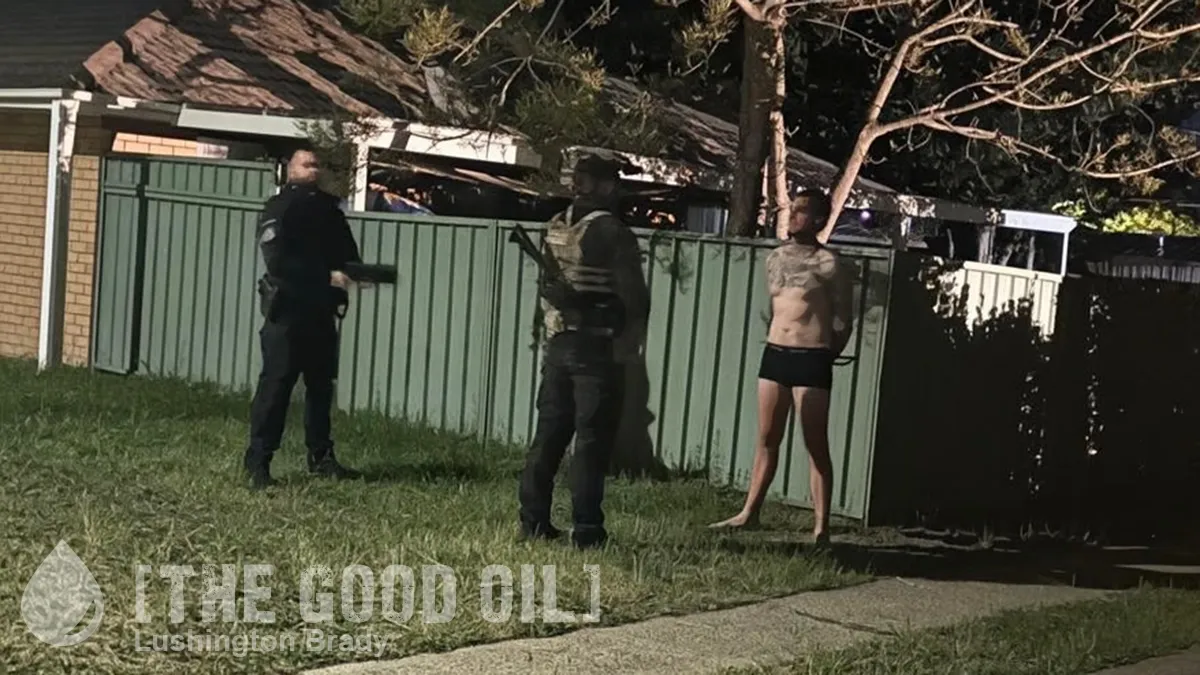
Prohibition doesn’t work, nor does the quasi-prohibition approach of high taxes and endless red tape. This approach breeds violence. Across Australia we’ve seen a surge in arson, armed robberies and extortion as crime syndicates engage in a turf war. Sadly, innocent lives have been lost. Because the risk is so acute, insurers are now refusing to cover stores in the vicinity of tobacco retailers, let alone the retailers themselves. State governments have struggled to get ahead of the crime wave.
The tragedy is that none of this was inevitable. Other countries have driven down smoking without criminalising consumers. Sweden is about to become the first “smoke-free” nation with reported rates of smoking now closing in on five per cent. They achieved this not by punishing consumers, but by legalising alternatives including nicotine pouches and vapes. That’s what happens when the state gets out of the way of safer substitutes.
In Australia, we’ve told smokers to quit or pay more than $50 for a pack, which may not even be their favourite brand or variety. We told would-be quitters they can only access (arbitrarily limited) alternatives by jumping through prescription hoops. Once again, consumers will substitute and evade. The illicit vape market now supplies the overwhelming majority of devices, while police and border agencies play whack-a-mole. Politicians and bureaucrats have handed a lawful market to organised crime gangs, and none of them want to admit they’ve got it catastrophically wrong.
So, what would a liberty-first approach look like?
Exorbitant taxation and overbearing regulation have resulted in less safety, less freedom, a burgeoning black market, organised crime, collapsing tax revenue.
1) Decriminalise adult nicotine choices. Legalise and deregulate vapes and nicotine pouches for adults. Set limited but sensible standards, enforce age limits, and stop treating consumers as patients or perps. When safer alternatives are easily available, the black market withers, and quitting gets easier.
2) Cut cigarette excise to a rational level and tax by risk. If the aim is to reduce crime and raise revenue, stop pricing the legal product out of reach. Slashing excise will allow licensed tobacconists to recapture the market. If the government wants to promote healthier alternatives, don’t tax all nicotine products as if the health risks are identical. They’re not. Sweden’s success flows from a risk-proportionate model, let’s copy it.
3) Drop the nonsense regulations. Tyrannical licensing regimes, onerous reporting requirements, and absurd retail controls (like plain packaging and regulating the maximum number of cigarettes in a packet) must go. All this red tape has only made it easier for criminal syndicates to capture the market from authorised tobacconists.
4) Target criminals, not customers. Shift enforcement to smuggling and violent turf wars. Stop wasting government resources fining someone for carrying an unauthorised vape, or a small business owner for failing to correctly display a health warning poster.
Australia doesn’t have a tobacco problem. It has a government problem. Time to snuff it out.
This article was originally published by Liberty Itch.