Table of Contents
In brief
- Courts in Canada and New Zealand found parts of COVID-era emergency powers unlawful, but with limited practical consequences, after the fact.
- Canada’s Federal Court ruled the Emergencies Act was wrongly used against the Freedom Convoy, years after the fact.
- New Zealand’s High Court found the first lockdown unlawful for nine days, yet allowed it to stand.
- Together, the cases show how emergency powers can move faster than the courts meant to check them, if and when they do.
Canada: unlawful means unlawful
Both the Canadian and New Zealand governments unlawfully expanded emergency powers during COVID. Courts later acknowledged the breaches, but the timing and limits of judicial remedies meant little real constraint on executive power.
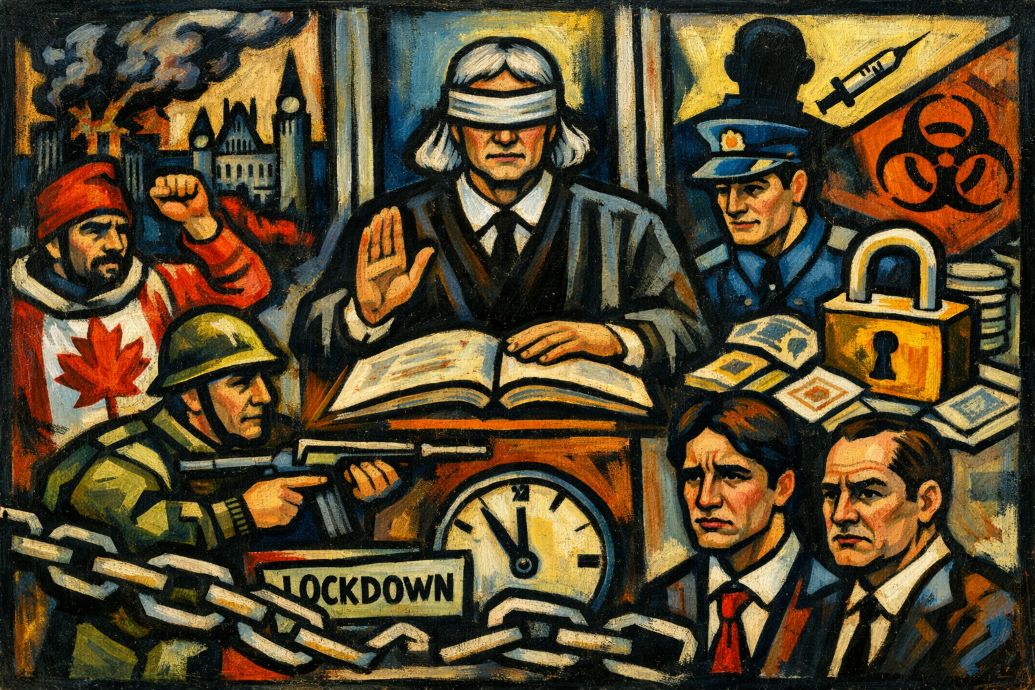
The Freedom Convoy was a Canada-wide protest against COVID vaccine mandates. Its demonstrations in Ottawa prompted the first-ever use of Canada’s Emergencies Act.
Canada’s Federal Court later ruled that Justin Trudeau’s decision to invoke the Act was unlawful.
The court did not rule on the protesters’ views. It focused on something narrower and more consequential: whether the government was entitled to reach for its most extreme legal powers when existing law was still available.
The answer was no.
There was no national emergency as defined by Parliament. Ordinary policing powers existed. Financial regulation already existed. The legal threshold for invoking the Act had not been met.
The ruling directly rejected the government’s claim that extraordinary measures were necessary or proportionate.
Freezing bank accounts linked to the protest, compelling financial institutions, and suppressing lawful dissent crossed a legal line.
The court said so plainly.
But the ruling came years later. By then, accounts had been frozen, protests broken, and a precedent quietly set.
New Zealand: unlawful but allowed
In New Zealand, the courts reached a similar conclusion, but with an even softer landing.
In Borrowdale v Director-General of Health, the High Court found that the country’s first COVID lockdown lacked a lawful basis for nine days.
During that period, New Zealanders were instructed to stay home. Businesses were closed. Movement was restricted.
Orders were issued before the legal framework authorising them was properly in place.
The court accepted that this breached rights under the Bill of Rights Act. The restrictions were not “prescribed by law”.
Yet the lockdown stood.
The court declined to invalidate it. No remedies followed. The explanation was familiar: a public health emergency, good faith, exceptional circumstances.
The government had acted unlawfully, but understandably.
And so the breach was tolerated.
The pattern is that the courts in both countries were toothless
In both countries, courts recognised that governments exceeded their legal authority. In both, judges stopped short of imposing consequences capable of restraining future behaviour.
In Canada, the declaration of unlawfulness arrived after the damage was done.
In New Zealand, unlawful conduct was acknowledged and excused in real time.
The message to governments is consistent. Act first. Justify later.
If challenged, invoke urgency, uncertainty, and expert advice. By the time a ruling arrives, the policy has passed and the crisis has moved on.
Emergency powers have become political shortcuts. Trump is doing this to the extreme.
Courts still speak the language of rights, but often only after the fact. Violations are identified, then disregarded by deference to crisis narratives.
Canada’s ruling went further than New Zealand’s in legal clarity. It stated plainly that the statutory threshold was not met. But there was still no practical effect.
Automatic reversals, penalties, or deterrents are not built into the New Zealand system.
In moments of fear, governments expand.. Opposition softens. The public is told to comply now and ask questions later.
When it later arrives, courts may acknowledge the breach, often with no practical effect. Then they move on.
Loading...