It’s become almost as ubiquitous as the odious, made-up theatre of ‘Welcome to Country’ to witter platitudes about ‘the world’s oldest living culture’. Yet, even if that were true (it isn’t), think for a few seconds what it really means: lionising a Stone Age culture, with all that that implies.
What we’re actually sold as ‘traditional Aboriginal culture’ is a grotesque parody of the brutality of the real deal. Every source, from colonial diaries and memoirs, to anthropologists’ field observations and archaeology, are savagely clear on just how traditional Aboriginal society treated women. Especially young girls, who were given as ‘promise wives’ to significantly older men from their first menstruation. The Indigenous Law Bulletin calls this a “time-honoured custom”.
It’s still going on, with all the brutality of the Stone Age and none of the protections of the modern.
Nicolas Rothwell in 2011 in this paper. Referring to the Kimberley, Rothwell wrote: “Pack rape is the most frequent mode of initiation into sex for pretty girls. These episodes are so distressing they rarely come out, but they show, of course, for years afterwards in the troubled behaviour of teenagers … Having children can be a kind of defence as well as a welfare income source: most women are mothers by 20 – there are four girls aged 15 or younger with new babies in Kununurra today.”
Yet, even while acknowledging the problem, Aboriginal academics like Anthony Dillon consistently ignore the role of ‘the world’s oldest living culture’. It’s all everyone else’s fault, apparently: not the men doing it, nor the culture which condoned and still too often condones it. That doesn’t mean authorities don’t share blame: not when they knowingly turn a blind eye to the repeated rape of innocent children by Aboriginal ‘cultural leaders’.
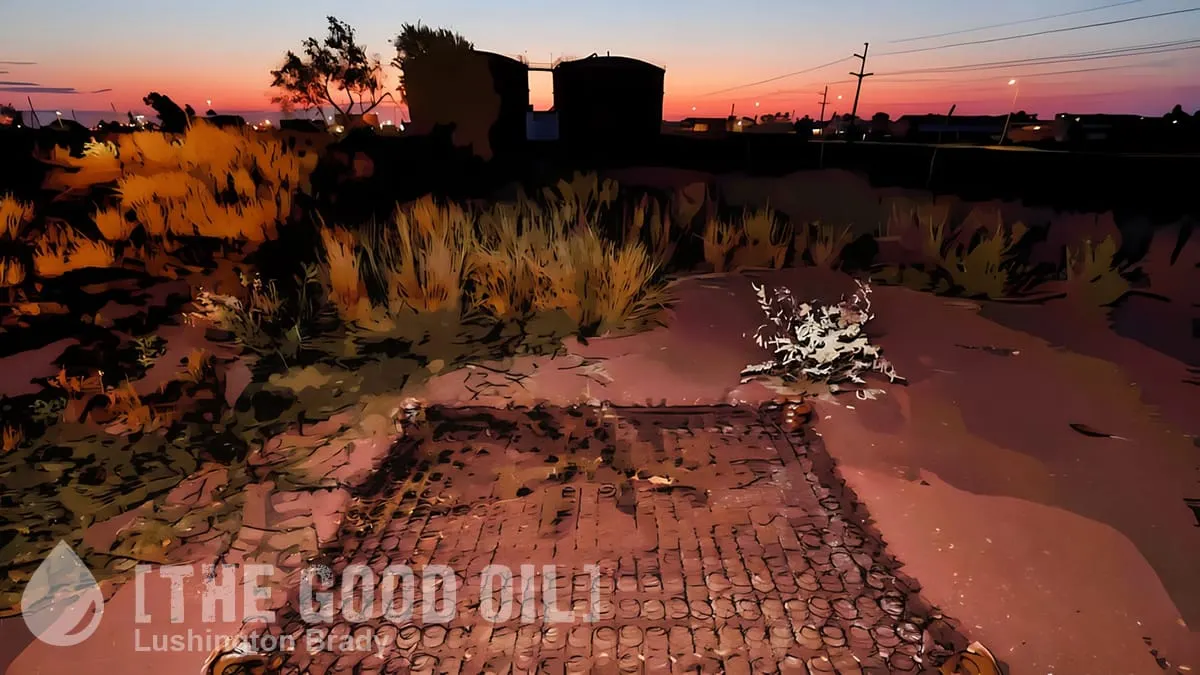
Now consider what that culture looks like when a man decides to exercise his customary rights. Robert Bully was a ‘cultural elder’ in Port Hedland, a man admired about town for his large and well-behaved family. For nine years, that family man drove his favourite daughter, Susie, into the bush in the family bus, laid down a towel on a discarded mattress, and raped her while road trains thundered past a hundred metres away. She was eight when he started. He was her father. He was, in the language of the industry, a leader.
The police knew. A Warageri woman working the Child Abuse Unit watched him for two years with the grim certainty of someone who has seen this film before. The Department of Child Protection knew as well. It knew, and it did nothing, for the most bureaucratic of reasons: there were 13 children, and finding beds for all of them would have been frightfully inconvenient.
“He was under my scrutiny for at least two years. DCP knew what he was up to … but I reckon they were thinking, ‘If we remove his 13 children, where are we going to put them all?’”
So 13 children were left with a child rapist and one of them was raped for nine more years. She finally reported him at 17. He was convicted at 51, on 11 of 12 counts, and sentenced to 12 years. The department that could have stopped it at any point has still not been asked to explain itself with any seriousness.
And this is not an isolated horror. It is the ordinary weather of the Pilbara. A 12-year-old propositioned outside the South Hedland shops by a man in his 40s offering marijuana in exchange for sex. The murdered grandchildren of Dorothy Papertalk, handed back by the same office to a violent meth addict. A dozen children abandoned in Frisby Court. The state’s longest-serving police commissioner, Karl O’Callaghan, surveying the wreckage, offers the only honest assessment available.
“The DCP is still completely inconsistent in the way it responds to Aboriginal kids in crisis. DCP is not doing the job it is supposed to do – and when it does do its job, it makes some terrible decisions,” said Mr O’Callaghan.
Note what is missing from every official explanation. The men are missing. The culture that produced them is missing. Instead we get the familiar liturgy: intergenerational trauma, colonisation, disadvantage and the legacy of dispossession. All of which are real, and none of which explain why a father rapes his daughter on a mattress in the scrub or why a department full of well-paid public servants decides that the safest course is to look away.
Susie Bully, 21 years old, has now done what the entire child protection apparatus of Western Australia could not: she has spoken.
“The child sex abuse is so bad within the community but it’s kept so quiet. No one talks about it. Kids just stay quiet.”
That silence is not an accident of history. It is the product of a bargain, struck between bureaucrats terrified of being called racist and men who understood perfectly well that a ‘cultural leader’ badge is the finest shield a predator can wear. The ‘world’s oldest living culture’ has been drafted into service as an alibi and too many little girls are paying the price.
For all that he carefully avoids discussing the role of Aboriginal culture, Dillon is absolutely right about one thing: “we must never forget that these children are Australian children”. He is right that Aboriginal Australians “are not a separate group of Australians”.
So, stop treating them any different than we would any other child rapists.

![Marvellous Melbourne’s Big Day of Diversity [Updated]](https://storage.ghost.io/c/31/f4/31f4e20a-0315-499e-83ff-139e8eab53bf/content/images/size/w1304/format/webp/2026/10/The_GoodOil_YogiThemAgain.jpg)