Table of Contents
As many Australians are all-too-aware, $40 billion of our taxes is annually funneled to just 3.8 per cent of the population. Three times as much taxpayer money per capita goes to Aboriginal Australians than others. Yet, we are also told, Aboriginal Australians persistently lag behind everyone else in everything from education and employment, to health and life expectancy.
So, many Australians ask, where does all the money go?
Former PM John Howard had a fair idea: in 2005 he dissolved the Aboriginal and Torres Strait Islander Corporation, citing its “culture… of corruption, nepotism and elective victimhood”. ATSIC may be gone, but that culture persists. Somebody is trousering an awful lot of taxpayer money – and it’s not cuz down in the remote community.
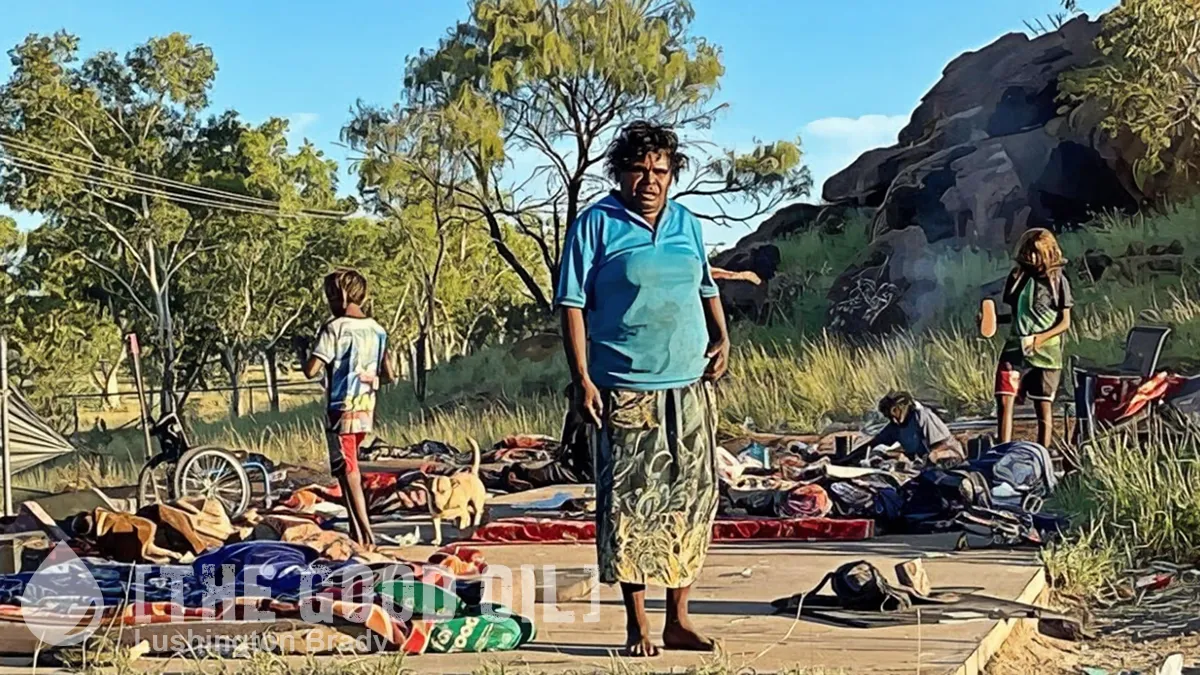
This is the Aboriginal settlement of Cummeragunja located on the New South Wales side of the Murray River, near the border with Victoria. It’s only a small village with a population of around 100 people, of which 20 are children. Cummeragunja has a problem: it’s quite literally falling apart […] The town is owned (if that’s the right word) and managed by the Cummeragunja Local Aboriginal Land Council, one of around 120 Aboriginal land councils under the umbrella of the NSW Aboriginal Land Council.
Interestingly, the Local Aboriginal Council has a volunteer board of seven people, all with the surname Atkinson.
The housing crisis in Cummeragunja has been known for at least a decade. Some residents have stopped paying rent to the Aboriginal Land Council, because the properties are so neglected. Others are reduced to effectively squatting in condemned houses, because they have nowhere else to go.
This just one of hundreds of similar stories across Australia.
The Spanish equine theme park El Caballo in Wooroloo [on the outskirts of Perth] was purchased in 2020 for $12 million, in order to provide a “proof of concept” of a social housing model to tackle homelessness for members of Western Australia’s Noongar community.
An additional $1.5 million was then spent on repairs, trying to turn it into liveable social housing.
Three years later, with the property still sitting empty, the accommodation portion of the site was sold for $4 million, at a loss of $4.5 million.
And so it goes.
One in three indigenous corporations have failed to file legal reports on their operations, including 26 groups with a turnover of more than $5 million, prompting calls for an audit of the sector.
Of the more than 3000 Aboriginal and Torres Strait Islander corporations registered in Australia, there are 1254 with reports not lodged for the 2023–24 financial year that were due in December, according to figures from the Independent Office of the Registrar of Indigenous Corporations (ORIC).
About 195 of these corporations are classed as “medium” because they have an operating budget of between $100,000 and $5m, while 26 are “large” organisations with an income above that threshold.
Data published by ORIC also shows there are 792 corporations that have not lodged reports for the 2022–23 financial year, including 10 with a turnover above $5m.
What don’t they want the rest of us to see?
One Nation Senator Pauline Hanson has called for a “comprehensive audit” of the indigenous corporations sector given the high rate of noncompliance.
“Some of these organisations have eight- or nine-figure budget and millions of dollars’ worth of assets, with CEOs earning wages well over $250,000,” she said.
Ms Hanson said Australian taxpayers had “every right” to know how their money was being spent.
And it appears that a great many ‘tribal big men’ (and women) are determined that we won’t.