
New Zealanders voted for change in 2023. They elected what they thought was an old-fashioned, centre-right National government, sending enough votes to libertarian party ACT and firebrand Winston Peter’s NZ First. On ballot paper, then, New Zealanders thought they were electing a centre-right government with a mandate for sweeping reform.
Instead, they got the same old permanent government in a slightly different suit.
In October 2023, New Zealanders were in a foul mood. Three years earlier they had handed Labour an outright majority with 50.1 per cent of the vote. But in 2023, they cut that vote nearly in half. They elected a National-led coalition that had promised to get the country back on track.
The two coalition agreements with ACT and NZ First laid out an ambitious reform agenda: slash red tape, restore property rights and rein in meddling regulators. Eighteen months later, the polls have slid further south than Slope Point, the reforms are watered down or dead and Kiwis once again say the country is heading the wrong way. The reason is two-fold: firstly, the deep state the legacy media would have you believe doesn’t exist.
Behind every elected government stands a permanent, unelected one. Ministers introduce bills and fight political battles. Then the public service has its turn.
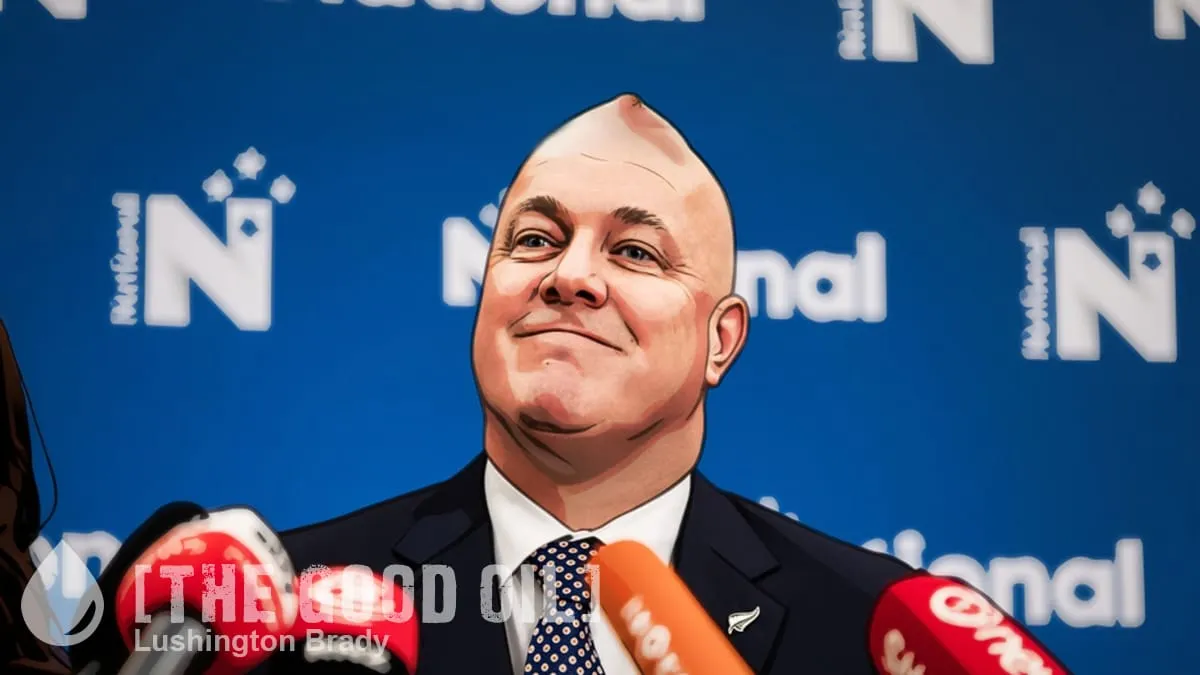
The deep state is real in Wellington, just as it is in Canberra and Washington. But now we get to the second and pertinent reason Christopher Luxon’s National government is in the poll poo: the bureaucracy only runs roughshod when the elected government is too weak, too ‘moderate’ and too desperate to be liked to smack it down.
Take Medsafe. The coalition promised automatic approval for medicines already green-lit by trusted overseas regulators within 30 days. Sensible, right? Cut duplication, speed up access and stop treating Kiwis like lab rats for local pen-pushers. Enter the pink-haired frightbats and the bureaucrats, whose livelihood depends entirely on the taxpayer’s purse staying wide open.
The law passed in November. Under the draft rules, Medsafe has 30 working days, not calendar days. The clock starts only once it accepts the application, and it pauses whenever it asks for more information. That is not the near-automatic approval the coalition agreements promised.
Bureaucracy 1, voters 0.
Planning reform fared even worse. The Resource Management Act was meant to be junked for a property-rights centred regime where approval was the default, not denial. The Ministry for the Environment, high on control-freak ideology, neutered it. Property rights vanished from the primary bill, cost-benefit tests disappeared and the old worldview survived intact.
The Commerce Commission? Coalition wanted to clip its wings. Instead, the bureaucrats persuaded the government to expand its powers. Classic deep state stuff.
Even the Reserve Bank, slapped with a clearer mandate and funding cut, simply ignored the signal and invented new ways to boss private banks around. Social licence, stewardship... whatever legal fig-leaf they could grab.
What unites the four cases is quiet defiance of an elected government by a permanent, unelected one. Voters worry about politicians who break their promises. They should worry more about politicians who cannot get their promises past the bureaucracy.
Cannot… or will not.
Luxon’s National Party is the problem. This is the same species of ‘moderate’ invertebrate that has hollowed out Australia’s Liberal-National Coalition. Chasing inner-city approval and terrified of being called mean by the wobbling tilty-heads of the legacy media, they lack the spine to purge, redirect or simply override the deep state. Result? Lowest polling in living memory on both sides of the Tasman, One Nation breathing down their necks in Australia and the punters deserting in droves to anyone who sounds like they might actually fight.
It doesn’t have to be this way.
Contrast the weakness of ‘conservatives’ in New Zealand and Australia with Donald Trump’s second term. Same deep state swamp in Washington and same careerist resistance. But Trump arrived with a popular mandate and the political will to use it. Schedule F, mass firings, DOGE efficiency drives, loyalist appointments: the bureaucracy being brought to heel – not pandered to. The reforms aren’t being quietly diluted, but rammed through.
New Zealanders didn’t vote for polite managerialism in nicer suits. They voted to end the endless decline under Labour’s woke experiment. Instead they got National’s version of the same disease: weak-kneed moderation that leaves the real power with the unelected.
The deep state doesn’t fear strong conservatives with a mandate. It fears them exactly because they won’t play nice. Luxon’s National are proving, yet again, that the centre-right’s fatal weakness isn’t ideology: it’s the inability to wield power like they mean it.
Until conservative parties rediscover the virtue of spine, the permanent bureaucracy will keep winning. And the voters who trusted them will keep getting screwed. Long may the Trump lesson echo across the Pacific.




![[The Good Oil] Stuff Up of the Day](https://storage.ghost.io/c/31/f4/31f4e20a-0315-499e-83ff-139e8eab53bf/content/images/size/w1304/format/webp/2024/09/Stuff-up-image-1.webp)

