
Table of Contents
In brief
- TPM candidate Oriini Kaipara wore Julius Malema’s red beret and South African flag at a debate, raising concern.
- Malema is infamous for the chant “Kill the Boer, kill the farmer,” linked to brutal farm attacks.
- Winston Peters questioned why journalists ignored the symbolism, sparking public reaction.
- TPM’s anti-colonial stance aligns with Malema’s rhetoric, but the violent overtones jar with New Zealand’s democratic culture.
Why the concern?
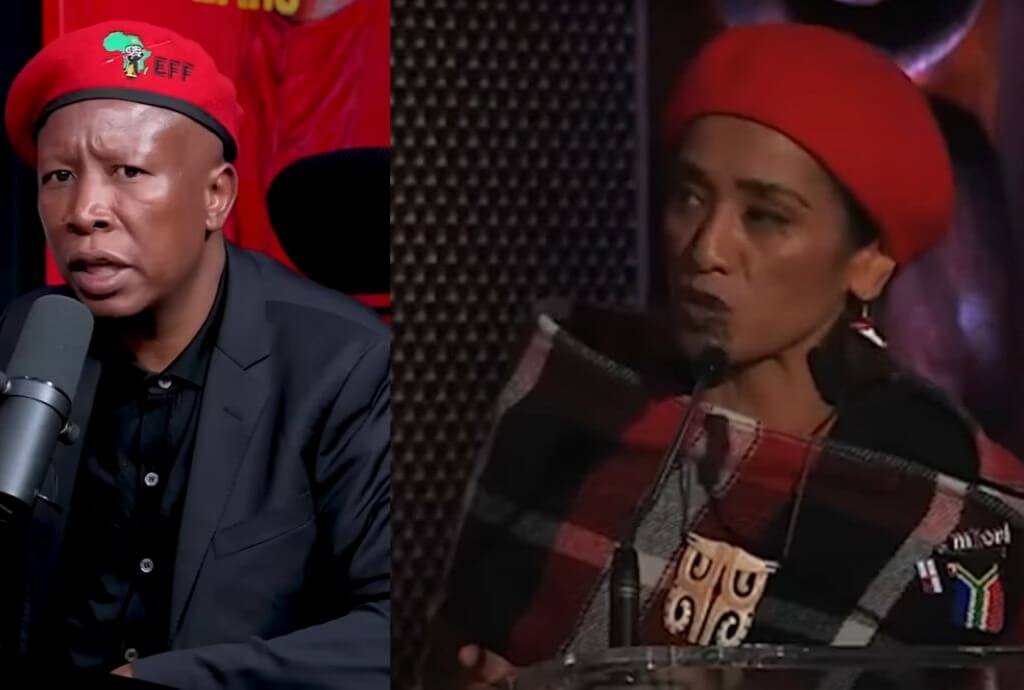
When Te Pāti Māori (TPM) candidate Oriini Kaipara appeared at an election debate in Auckland’s Tamaki Makaurau electorate wearing the red beret of South African firebrand Julius Malema and a South African flag pinned to her cloak, it raised eyebrows. Malema is notorious for the chant “Kill the Boer, kill the farmer,” linking him to brutal farm attacks. To many, it was an alarming choice of symbolism.
New Zealand First leader Winston Peters publicly questioned why no journalist had pressed Kaipara on the beret and flag. His social media posts drew thousands of reactions, showing how sharply the imagery cut through with voters.
Who is Julius Malema?
Julius Malema is the leader of South Africa’s Economic Freedom Fighters (EFF), a radical leftist party founded in 2013 after his expulsion from the ruling African National Congress. Known for fiery rhetoric and theatrical style, Malema has built a reputation as a populist hero to some and a dangerous demagogue to others.
His red beret and military-style uniform have become symbols of the EFF. But Malema is most infamous for reviving the apartheid-era struggle song with the lyric, “Kill the Boer, kill the farmer.”
Malema was recently found guilty of hate speech for remarks made in 2022. The statements included: “No white man is going to beat me up… you must never be scared to kill. A revolution demands that at some point there must be killing.”
Many see a direct link between Malema’s rhetoric and the country’s continuing epidemic of farm attacks, which often involve extreme violence, rape, torture, and murder of farming families in rural areas. The victims are disproportionately white.
These attacks have become a symbol of insecurity for white farmers, who feel abandoned by the state. The US has recently started welcoming white farmers as refugees fleeing the violence in South Africa.
The TPM connection
TPM has long described itself as a movement against colonial structures, and Malema’s rhetoric resonates with that cause. Both movements are built around challenging settler institutions, pushing for indigenous or native rights, and questioning private ownership of land and resources.
TPM also tends to take pride in displays of symbolism. This means that it’s unlikely the association with Malema would have gone unnoticed. TPM members have also been accused of engaging in racist rhetoric and calls for violent revolution.
Notably, despite being elected members of Parliament, these actions get the kid gloves from NZ’s mainstream media.
Malema’s language of economic revolution echoes TPM’s calls for sweeping change in “Aotearoa”, from co-governance models to the return of land and resources. For TPM activists, wearing the beret and flag might be seen as a gesture of solidarity with another anti-colonial struggle.
But the comparison is fraught. South Africa’s racial history is not New Zealand’s. The violent overtones of Malema’s politics do not translate well in a country that prides itself on democratic debate and peaceful protest.
Why it matters for voters
South Africa is one of the most violent societies on earth, with 75 murders a day in 2023. Farm attacks in particular are notorious for their cruelty. Against that backdrop, for many, it looks reckless for a New Zealand candidate to borrow the symbols of Malema and his movement.
Whether TPM meant solidarity or provocation, the choice of beret and flag forces voters to ask what kind of politics they are being offered by candidates in the running.
Centrist approached Oriini Kaipara and Te Pāti Māori for comment but received no response.

![[The Good Oil] Stuff Up of the Day](/content/images/size/w1304/format/webp/2024/09/Stuff-up-image-1.webp)


