This is edition 2025/161 of the Ten@10 newsletter.
Hi all,
This is the Ten@10, where I collate and summarise ten news items you generally won't see in the mainstream media.
Enjoy!
1. Defining the Centre.
Chris Trotter
- 📉 TOP’s Low Polling Reality – The Opportunities Party (TOP) perceives itself as more electable than reality shows, polling just 2–3% instead of the imagined 20%, highlighting a weak grasp of political reality.
- 🧠 Centrist Echo Chamber – TOP members mistake their small circle of like-minded “sensible” centrists for a significant portion of the electorate, overestimating their appeal.
- 🗳️ Tiny Membership Base – Despite being a registered party with over 500 members, TOP’s support base is small and likely concentrated in Wellington and Auckland, limiting national influence.
- 💸 Gareth Morgan’s Legacy – Founded in 2016 by millionaire Gareth Morgan, TOP launched with 2,000 members but managed just 2.4% of the vote and has since struggled with internal splits and declining credibility.
- 👑 Leader Selection Shift – Rejecting democratic elections, TOP now appoints its leaders via internal interviews rather than member votes, prioritizing control over inclusivity.
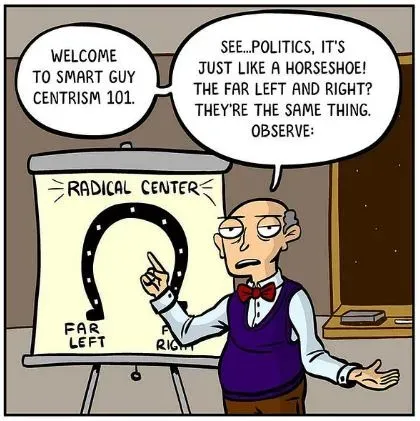
- ⚖️ Centrism Defined by Scruton – Philosopher Roger Scruton described centrism as a vague, compromise-driven stance appealing to those who’d accept “anything,” but warned it’s wrongly equated with moderation.
- 🏢 Professional Managerial Class (PMC) – In New Zealand, centrism largely reflects the worldview of professionals, experts, and administrators—people tasked with “keeping the system running” but often disconnected from voters’ realities.
- 🙅 Public Distrust of Centrists – Both elites and working-class voters view centrists skeptically, seeing them not as neutral managers but as a self-serving class extracting high “rents” from their roles.
- 🦠 Covid-19 Fallout – During the pandemic, professionals were initially hero-worshipped (e.g., Ashley Bloomfield) but later faced hostility, culminating in anti-mandate protests, exposing deep public distrust of expertise.
- 🛑 Authoritarian Centrism – The PMC defended “the science” by wielding power aggressively, willing to sacrifice moderation to control narratives and maintain authority.
- 🧩 Strategic Infiltration – Over decades, centrists embedded themselves within Labour and National, reshaping party constitutions, sidelining grassroots democracy, and transforming them into vehicles for PMC influence.
- 🔢 TOP’s Future Outlook – With just 2.5% support, TOP lacks electoral viability, while Labour and National together command two-thirds of voters—leaving centrists more influential inside major parties than running their own.