
This is edition 2025/193 of the Ten@10 newsletter.
Hi all,
This is the Ten@10, where I collate and summarise ten news items you generally won't see in the mainstream media.
Enjoy!
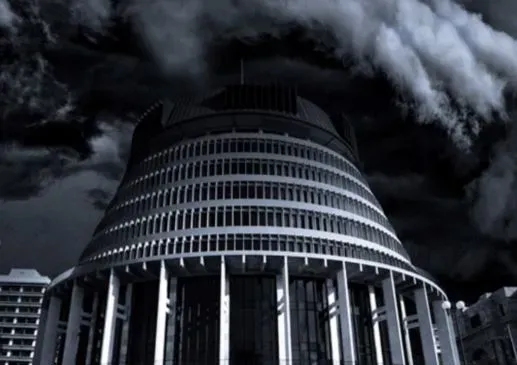
1. Unlucky Strike?
Chris Trotter
- 🌧️ Massive Strike, Limited Power — Over 100,000 health and education workers are striking in New Zealand, but their essential roles mean their actions can’t last long without triggering a social crisis.
- ⚖️ A Cry of Frustration — The strike stems from failed negotiations and government stinginess, serving more as a symbolic protest than a sustainable industrial action.
- 📣 Public Opinion Battle — Unions hope to rally public sympathy to pressure the Coalition Government into concessions, a classic tactic in state-sector disputes.
- 🧮 Political Calculations — Governments rarely provoke strikes deliberately; fiscal limits and public tolerance determine how far each side can go.
- 🧠 Education Minister’s Strategy — Erica Stanford has outmaneuvered teachers’ unions by highlighting ideological priorities (like Palestine) over education outcomes, boosting the Coalition’s credibility.
- 🏥 Health Sector Turmoil — Transferring the Health portfolio to Simeon Brown to cut costs has worsened tensions, with deep systemic issues inherited from previous governments.
- 💰 Tax Cuts and Consequences — Finance Minister Nicola Willis’s tax cuts limited room for higher health spending, making strikes almost inevitable.
- 🥊 Minister on the Offensive — Simeon Brown accused doctors of crossing ethical lines, suggested banning doctor strikes, and publicized their high salaries to undercut sympathy.
- 📉 Public Sympathy Wanes — Many New Zealanders earning far less may see the strikes as self-serving rather than justified, reducing the unions’ moral leverage.
- 🧾 Government’s Hard Line — Judith Collins and Public Service Commissioner Brian Roche condemned the “Mega-Strike” as political, signaling a coordinated effort to break public-sector union power.
- 💔 Fading Social Licence — The traditional goodwill toward teachers and health workers is weakening, threatening unions’ ability to mobilize public support.
- 👷 Private Sector Disconnection — With over 92% of private workers non-unionized, many see public-sector conditions as privileged rather than relatable.
- 🕰️ End of Solidarity Era — Since the 1991 Employment Contracts Act, a generation has grown up without union solidarity — today’s strikes echo a past most workers no longer remember.
- 🌪️ Conclusion — The 100,000-strong strike faces not only stormy weather but also a colder political and cultural climate, one that may leave public-sector unions more isolated than ever.