
This is edition 2026/024 of the Ten@10 newsletter.
Hi all,
This is the Ten@10, where I collate and summarise ten news items you generally won't see in the mainstream media.
Enjoy!
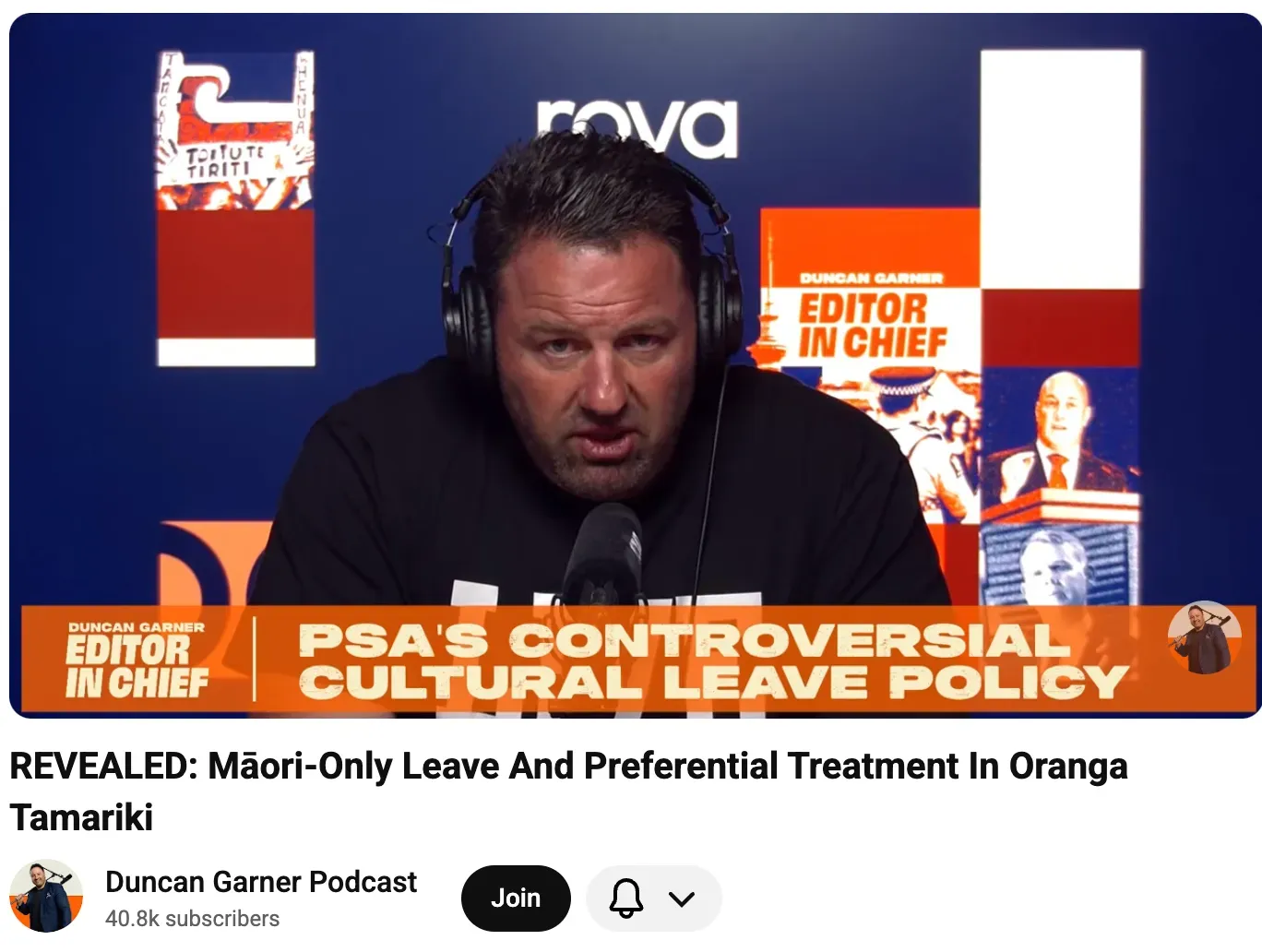
Rot: Taxpayers are paying for special unlimited paid leave for Māori staff
Ani O'Brien
- 🐝 Duncan Garner sparked controversy by reporting that Māori staff at Oranga Tamariki can access effectively unlimited discretionary paid cultural leave unavailable to others.
- 📜 The Oranga Tamariki + APEX collective agreement includes a clause granting paid discretionary leave specifically for “Kaimahi Māori” for cultural obligations such as marae roles, iwi meetings, and performances.
- ⚖️ The author argues the entitlement is explicitly race-based, taxpayer-funded, and lacks a defined annual cap, making it difficult to budget and govern.
- 🔄 Although the agreement expired in December 2024, its terms continue to operate in practice until replaced, meaning the provision remains active.
- 🧾 A PSA memo states cultural obligations are best defined by Māori staff themselves, reinforcing that the leave is open-ended and manager approval is unlikely to be declined.
- 🕊️ The agreement also includes Māori-specific bereavement provisions (“He Wā Pouri”) that are not time-bound, loosening standard leave rules when tikanga is invoked.
- 🏛️ Comparisons with other agencies (DOC, Ministry of Education, Te Puni Kōkiri) suggest most embed tikanga and te reo culturally, but tie financial benefits to skills or duties rather than ethnicity.
- 🌿 However, the Ministry for the Environment also appears to provide Māori-specific leave entitlements and te reo allowances, raising similar governance concerns.
- 💰 Cost modelling estimates the policy could cost between $1.7m and $10m annually at Oranga Tamariki, depending on uptake and backfill assumptions.
- 👶 The author argues that redirecting those funds could employ 35–120 additional frontline social workers, increasing support for vulnerable children.
- 😠 Concerns are raised about workplace resentment, burnout, and potential conflicts with anti-discrimination principles under the Human Rights Act.
- 🏛️ Minister Karen Chhour inherited the agreement and cannot easily remove the clause without triggering difficult union renegotiations, making reform politically complex.
- 🔥 The conclusion calls for future renegotiation to remove race-based clauses and potentially legislate against embedding racial entitlements in public-sector agreements.