This is edition 2026/051 of the Ten@10 newsletter.
Hi all,
This is the Ten@10, where I collate and summarise ten news items you generally won't see in the mainstream media.
Enjoy!
1. Who really runs the South Island?
Bryce Edwards
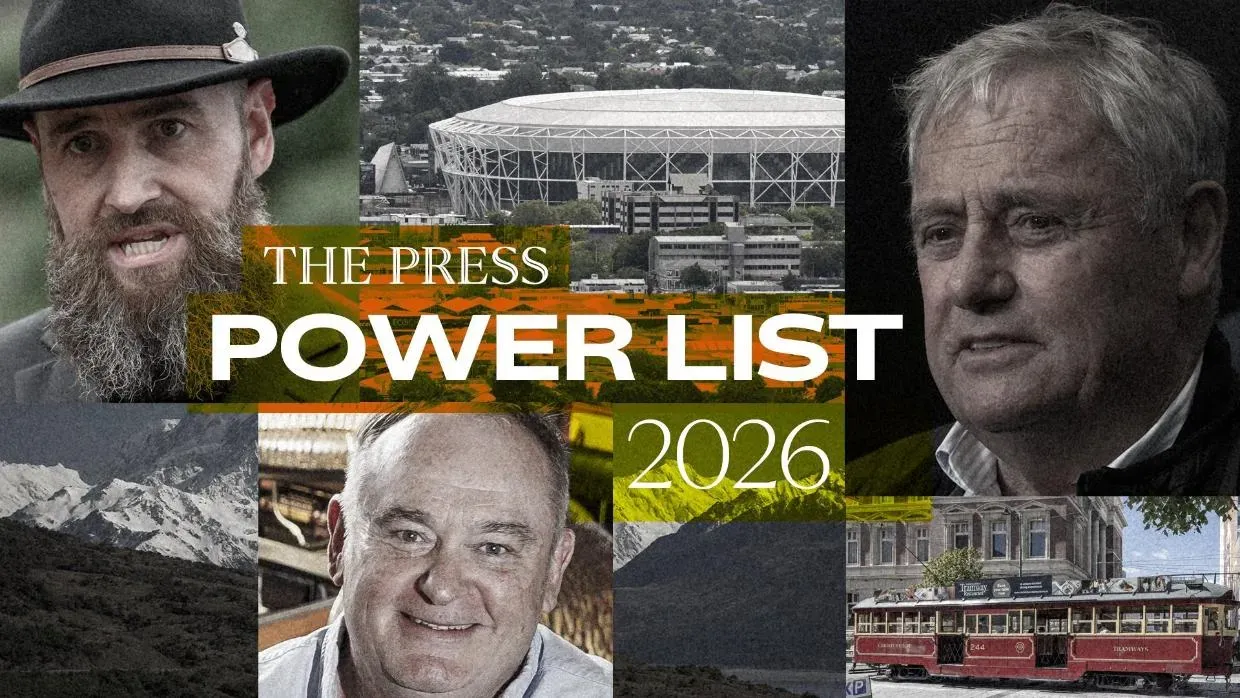
- 📰 The The Press Power List ranks the 50 most influential South Islanders, revealing where real power lies beyond elected roles.
- 🤔 Power lists can feel self-congratulatory, but when done well (as by Philip Matthews), they expose who truly sets agendas and wields influence behind the scenes.
- 🏛️ Traditional political power has weakened in the South Island, with influence shifting away from elected officials toward developers, iwi leaders, and institutional figures.
- 🏗️ Property developers dominate the list, showing economic power is now rooted in land ownership and urban development rather than government.
- 🏙️ Richard Peebles (ranked #1) exemplifies this, controlling major parts of central Christchurch’s rebuild and shaping the city’s future through private projects.
- 💰 Other major developers like Philip Carter and Matthew Horncastle highlight how a small group holds significant urban and economic influence.
- 📈 Wealth and power are increasingly tied to property, reinforcing inequality as land values rise and ownership concentrates in few hands.
- 🪶 Ngāi Tahu emerges as a major force, blending cultural, political, and commercial power with multiple leaders ranked highly.
- ⚖️ Figures like Justin Tipa and Te Maire Tau reflect iwi influence extending into legal, environmental, and national policy debates.
- 🧭 Ngāi Tahu represents a unique hybrid power structure—part corporation, part cultural authority—raising questions about its role alongside democratic systems.
- 🗳️ Politicians are largely absent or low-ranked, with only a few like Megan Woods appearing, underscoring how little formal political power remains in the region.
- 🏚️ This reflects concerns raised by Bruce Jesson about a “hollow society,” where democratic influence is overtaken by corporate and elite interests.
- 🏢 Unelected actors like Leeann Watson wield significant behind-the-scenes power through direct access to ministers and policymakers.
- 📞 Such access highlights inequality in influence—business leaders can directly contact top politicians, while ordinary citizens cannot.
- 🌆 The list suggests the South Island is increasingly shaped by private capital, iwi leadership, and professional lobby networks rather than democratic processes.
- 🎭 Celebrity and media influence have declined, with figures like Sam Neill representing softer “moral” influence rather than structural power.
- 🧑🤝🧑 Community figures (e.g., conservationists, charity founders) appear for their moral credibility, showing alternative forms of influence beyond wealth and politics.
- 📍 The list is heavily Christchurch-focused and male-dominated, reflecting existing regional and gender imbalances in power.
- 🔍 Power lists highlight individuals but often miss deeper structural analysis of how power operates and who benefits.
- ⚠️ Overall, the list reveals a shift toward a less visible, less accountable power structure—what the author calls a growing “southern oligarchy” dominated by wealth, land, and unelected influence.