This is edition 2026/053 of the Ten@10 newsletter.
Hi all,
This is the Ten@10, where I collate and summarise ten news items you generally won't see in the mainstream media.
Enjoy!
1. Election year gets blown up: fuel prices rise, reputations plummet
Grant Duncan
- 🗳️ New Zealand’s 2026 election race has become highly volatile early, with both Christopher Luxon and Chris Hipkins losing political momentum amid crisis and controversy
- 📊 National sits at 30.8% in the RNZ–Reid poll, trailing Labour by nearly five points, while both leaders suffer declining approval ratings
- ⚡ A global energy crisis—driven by conflict involving Iran and disruptions in the Strait of Hormuz—is pushing fuel prices sharply higher in New Zealand
- ⛽ Rising petrol costs are hitting households hard, with a 56-cent per litre increase translating into significant extra weekly expenses and broader inflation across goods
- 📉 Research from Harvard Kennedy School shows rising oil prices historically reduce incumbents’ chances of re-election, putting pressure on the Luxon government
- 🇳🇿 Luxon has condemned Iran’s actions but faces political risk as higher fuel prices directly affect voters and could sway the November election outcome
- 💰 The government has responded with a targeted relief package—$50 weekly support for low-income working families—while ruling out cutting fuel taxes
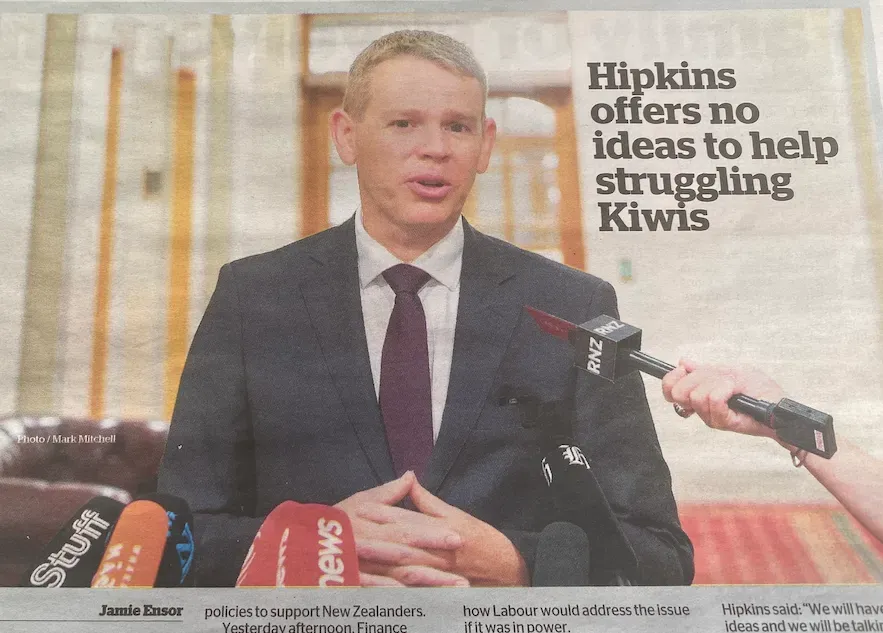
- 🗣️ Hipkins criticises the government’s crisis response but has offered few concrete policy alternatives, while the Green Party of Aotearoa New Zealand proposed measures like free public transport
- 🔄 Labour’s polling has improved since 2023, rising into the mid-30s, but the party has not capitalised strongly on the current crisis
- 💥 Hipkins is also dealing with personal political fallout after controversy involving his family, undermining his credibility and distracting from Labour’s messaging
- ⚖️ Voter frustration is growing, particularly around perceived hypocrisy and leadership inconsistency, which can be politically damaging
- 🌍 The key political issue has shifted from foreign policy positioning to managing domestic economic fallout from global energy shocks
- ⚠️ The path to the 7 November election is increasingly uncertain and risky, shaped by crisis management, economic pressures, and fragile public confidence