
This is edition 2026/069 of the Ten@10 newsletter.
Hi all,
This is the Ten@10, where I collate and summarise ten news items you generally won't see in the mainstream media.
Enjoy!
1. How to stop the rise of NZ First
Bryce Edwards
- 🛒 Winston Peters promises to break up the supermarket duopoly, a clear, punchy populist policy likely to resonate more than the Green Party of Aotearoa New Zealand push for electrification.
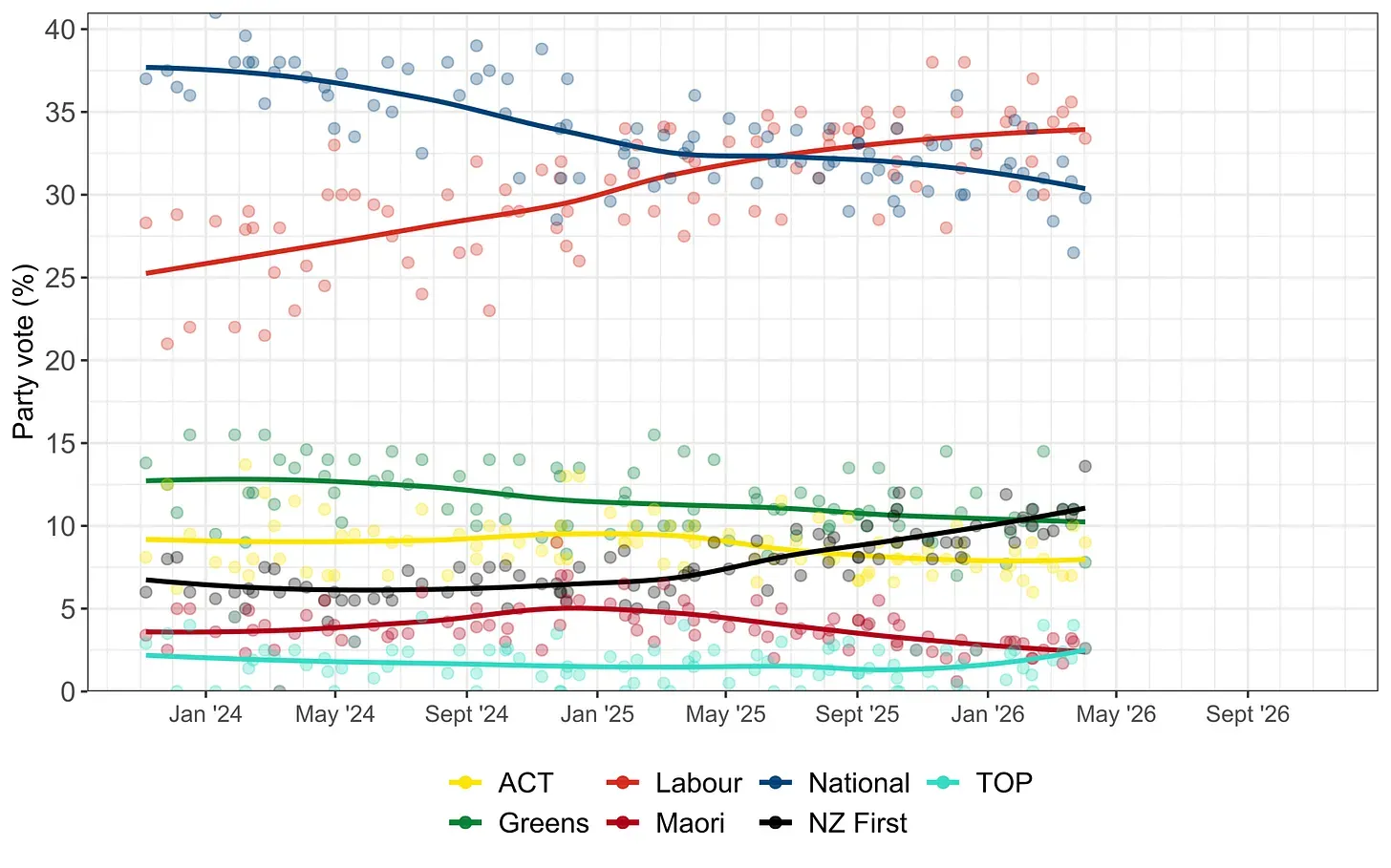
- 📊 New Zealand First is gaining momentum in polls (13–15%), driven by anti-establishment policies like breaking up electricity gentailers and targeting corporate dominance.
- 🗳️ Peters’ rising popularity (12.1% preferred PM) and ambitions—highlighted by Matthew Hooton—suggest NZ First could demand major power, even the վարչապետ role, after the election.
- 🔧 The “Broken New Zealand” narrative reflects widespread belief that key sectors (supermarkets, banks, power) are dominated by uncompetitive elites, with rising prices and declining services.
- 📉 Public pessimism is growing: most think the country is heading the wrong way, trust is low, and only 17% believe the next generation will be better off.
- ⚡ Peters’ success comes from tapping this frustration—naming villains and offering simple, forceful solutions—regardless of NZ First’s own establishment ties or limited delivery in government.
- 🧭 The political field is largely vacant, with other parties failing to connect with discontented voters, allowing NZ First’s surge to reflect broader systemic dissatisfaction.
- 👥 Danyl McLauchlan identifies two neglected voter blocs—the “Precarious Left” and “Alienated Conservatives”—together ~35% of voters who feel the system doesn’t serve them.
- 🏛️ These groups are politically orphaned: Labour/Greens align with educated elites, while National/Act represent establishment business interests, leaving a large disaffected base.
- 🎯 Peters is positioning himself to capture these voters, despite ideological differences between the groups, by focusing on their shared distrust of the system.
- 🥀 Chris Hipkins and Labour acknowledge problems (duopolies, oligopolies) but offer cautious, incremental solutions like regulation rather than structural reform.
- 🧾 Labour’s recent policies (limited capital gains tax, “Future Fund”) are seen as timid and overly cautious, reinforcing a perception of managerial, risk-averse politics.
- ⚠️ Without bold action—like breaking up monopolies or major tax reform—Labour risks losing more support to NZ First, especially among its traditional base.
- 🔮 The central dynamic of the campaign: Peters is capitalizing on anger and simplicity, while rivals appear hesitant, technocratic, and disconnected from voter frustration.