This is edition 2026/212 of the Ten@10 newsletter.
Hi all,
This is the Ten@10, where I collate and summarise ten news items you generally won't see in the mainstream media.
Enjoy!
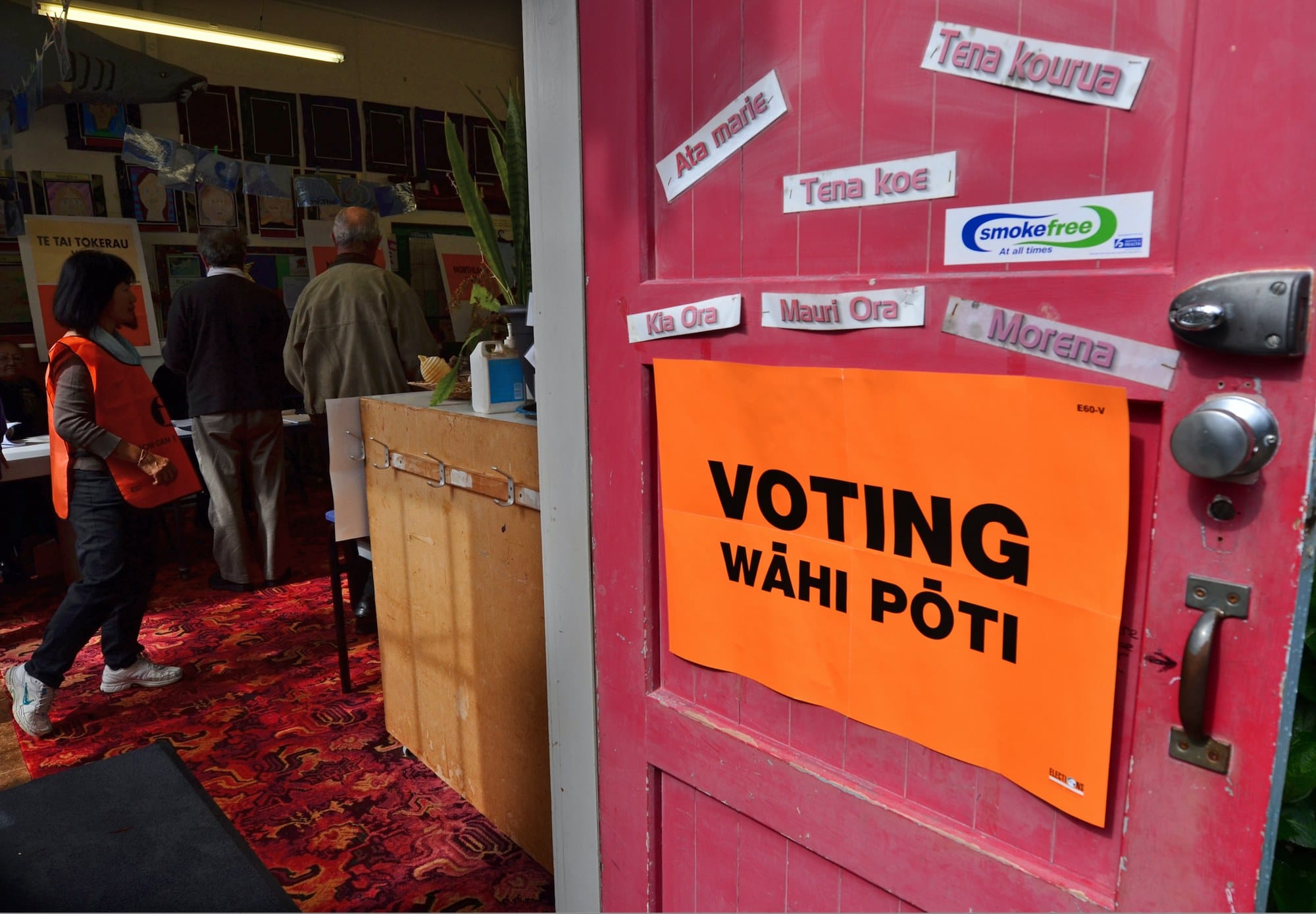
1. Democracy Briefing: Could New Zealand be voting again?
Bryce Edwards - The Democracy Project
- 🗳️ Bryce Edwards writes that the 2026 election may not have produced a government that can last. The right bloc has 67 seats, one more than the 66 needed for a majority. The special votes could still remove that margin, and even if it survives, any deal will be hard to hold together. A second election remains unlikely, he says, but the fear of being blamed for one is already shaping how the parties deal with each other.
- 📣 Richard Prebble told Sean Plunket on The Platform that the result would produce "a very unstable parliament", and added: "I think we'll be back at the ballot box within a year." Both Christopher Luxon and Qiulae Wong say they want to avoid a rerun, and both are making sure the blame would fall elsewhere. Luxon told reporters, "New Zealanders won't thank us for going back to an election and back to the polls again."
- 📊 Edwards sets out three ways it could happen. The most immediate is that no government can be formed after the official count on 27 November. Mike Butterick leads Kieran McAnulty by 139 votes in Wairarapa, and NZ First's twelfth seat is also at risk. If both were lost, the coalition would have 65 seats in a House of 130, exactly half. Rodney Hide's simulation of the specials, run 40,000 times, produced a dead heat of that kind in about a quarter of the runs. Even then Opportunity could let Luxon govern by abstaining, if terms could be found that Wong, David Seymour and Winston Peters could all accept.
- ⚙️ A government could also form and later stop working. Seymour told Chris Lynch that the coalition "barely survived" its first term, and that talks on a new one could run until Christmas. National has no list MPs, so any vacancy in its caucus would ordinarily mean a by-election, and as Prebble put it, "You need a majority of more than one." A prime minister can also go early to seek a stronger mandate, as Helen Clark did in 2002, but with National below 30% and his leadership in question, Luxon has little reason to try.
- ⚖️ Philip Joseph told the Post it was extremely unlikely that a leader would breach the caretaker convention or call a fresh election, and that the process "is designed to actually form a government, not to force division". Sir Geoffrey Palmer called the convention an "absolute safeguard". The Cabinet Manual says the Governor-General will act on a prime minister's advice to dissolve "as long as the government appears to have the confidence of the House", and would expect a caretaker prime minister to consult the other parties first. Parliament must meet by 14 January, but the talks can run past that date.
- 📉 In a Further Analysis section, Edwards argues that National has more to fear from a rerun than its partners. If it held the same electorates and stayed in overhang, party votes moved to Act or NZ First could add to its partners' seats while National stayed on the same electorates. Prebble's Herald column called for both Luxon and Chris Hipkins to resign, ending: "What if coalition talks fail? Please, not Christopher versus Chris again." Harry Mowbray, behind the vote-splitting campaign, has been talking to donors about whether they keep funding National. His son Nick gave National $250,000 this year, and Act $225,000.
- 🟠 Act and NZ First both grew, and could grow again if more National voters split. When the coalition was formed in 2023, National held 72% of its seats, Act 16% and NZ First 12%. On the preliminary count the shares are 63%, 19% and 18%. Seymour wants "one game plan, one coalition agreement" this time, and Shane Jones has said that if NZ First is in a position to negotiate after the specials, "that will be leveraged, that will not be squandered".
- 🌱 Opportunity, on 5.96% with no electorate seat, could be voted out of Parliament by a fall of one percentage point. David Farrar writes that if it forced a second election, "they would get slaughtered." Chris Trotter's general rule is that "Anybody who is seen to have forced a new election within six months of the last one, the public will punish them mercilessly." Farrar and Andrea Vance also warn that if Opportunity gets too close to the centre-right, its own left-leaning voters may punish it too.
- 📌 Takeaway: A threat to go back to the voters carries most weight from a party that could survive carrying it out. Act and NZ First have fewer doubts than National or Opportunity, which strengthens their hand. Those doubts will probably be enough to produce an agreement, Edwards writes, but Luxon would be making concessions to avoid an election he cannot be confident of winning.