

This is edition 2026/221 of the Ten@10 newsletter.
Hi all,
This is the Ten@10, where I collate and summarise ten news items you generally won't see in the mainstream media.
Enjoy!
1. How things may change with specials
David Farrar - Kiwiblog
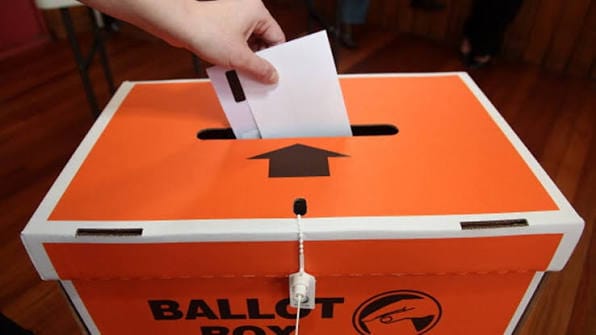
- 🗳️ David Farrar walks through how special votes could change Friday's final count, and what that would do to the current three-seat majority: 67 for National, ACT and NZ First, against 64 for Labour, the Greens, Te Pati Maori and Opportunity. The arithmetic is messy. If National or Te Pati Maori lose a party-vote seat, they do not actually lose one (someone else gains one). If Labour wins an electorate, National loses a seat but Labour does not gain one, because they get one fewer list MP. The final counts are released at 2pm Friday.
- 📊 On the party vote, Farrar regards it as likely that NZ First will lose a list seat to the Greens, Opportunity or Labour, a net impact of -2 on the majority. It is possible National loses a list seat, for a net -1, or that Labour loses a list seat to the Greens or Opportunity, which would leave the majority unchanged. Just on the party vote, he writes, the majority could shrink by 2 or 3 to 1 or 0. It is possible it does not shrink at all, or by just 1, but he would be very surprised (and delighted) if that happened.
- 🗺️ On the electorates, he regards a Wairarapa flip to Labour, from a majority of 139, as likely, for a net -1. That is not based on any knowledge of the Wairarapa count, he says, but on what he has heard about specials in another seat. A Hamilton East flip, from a majority of 456, is possible, also a net -1. He regards Mt Roskill flipping to National (majority 262) and Te Tai Tokerau flipping from Te Pati Maori to the Greens (majority 436) as unlikely. Either of those would be a net +1.
- 🏛️ That leaves four possible outcomes. If the Government loses 0 to 2 seats on specials, Farrar writes, it can still form a government, and he would expect a coalition agreement in fairly short order.
- ⚖️ If it loses 3 net seats, the result is a hung parliament. The Government would need Opportunity to abstain, or to give confidence and supply. Opportunity cannot give Labour the numbers to govern, so their only choice is to allow National to govern, or force a second election. Farrar thinks that could be an ideal outcome for Opportunity: no backlash from either side, a chance to keep portraying themselves as centrist, and policy concessions on any laws the Government wants to pass. The catch is that they would have less leverage on their five non-negotiable policies. If they refused even to abstain, a second election would be almost certain to give the Government a large majority, as National voters would in huge droves vote for ACT or NZ First, giving them an extra 12 to 18 list MPs, because National no longer has any list MPs to defend.
- 🔑 If the Government loses 4 or 5 net seats, a Labour, Greens, Te Pati Maori and Opportunity government would be feasible, with a majority of 1 or 2. National would still be the largest party, and would have first option to negotiate. Opportunity would be in a stronger position to demand their five non-negotiables, with Labour now a backup. Farrar thinks it is far from likely that National could negotiate an agreement that meets those five bottom lines, let alone one that NZ First and ACT would also accept.
- 🤝 Opportunity might show some flexibility, he writes, on the basis that a government with a majority of 6 or 7 is preferable to one with a majority of 1 or 2. If no agreement is reached with National, they would start negotiating with Labour. Everything Opportunity wants is stuff Labour and the Greens want to do anyway, so they could reach an agreement very quickly, and Chris Hipkins would become prime minister. Ironically, that overlap may make them slightly reluctant to go left, because they may not get credit for their "wins", whereas if they force National to save the Climate Commission, the Paris Agreement and the rest, they can more credibly claim that only happened because of them.
- 💡 Takeaway: a close electorate race could still go to a judicial recount. If Wairarapa or Hamilton East ends with a majority under 40 votes, a recount is likely. The biggest change in a judicial recount has been 38 votes, which could delay the return of the writ past the Thursday 3 December deadline by a few days. If the 120th and 121st list quotients are very close, and which party takes the last one would change the outcome, it is possible to recount all 2.8 million party votes across the 71 electorates. The deposit is $90,000, plus legal fees. In 2008 the gap was only 22 party votes; in 2002 it was 381. Farrar says a gap under 500 is unlikely (the gaps in MMP elections to date, working back, have been 4828, 7552, 4935, 8739, 5905, 22, 1094, 381, 4250 and 2348), but it is not impossible.