Table of Contents
Grant Duncan
Political commentator, academic and author, based in central Auckland. Research Associate, Public Policy Institute, University of Auckland. Visiting scholar at City St George’s, University of London.
While Prime Minister Luxon’s state-of-the-nation speech last month sounded like the branch manager’s monthly pep talk, Chris Hipkins, in his turn, looked and sounded like the head prefect.
They say that a country gets the leaders it deserves, but surely New Zealanders deserve better.
Dull & Duller: NZ’s election year kicks offGrant Duncan PhD 21 Jan Read full story
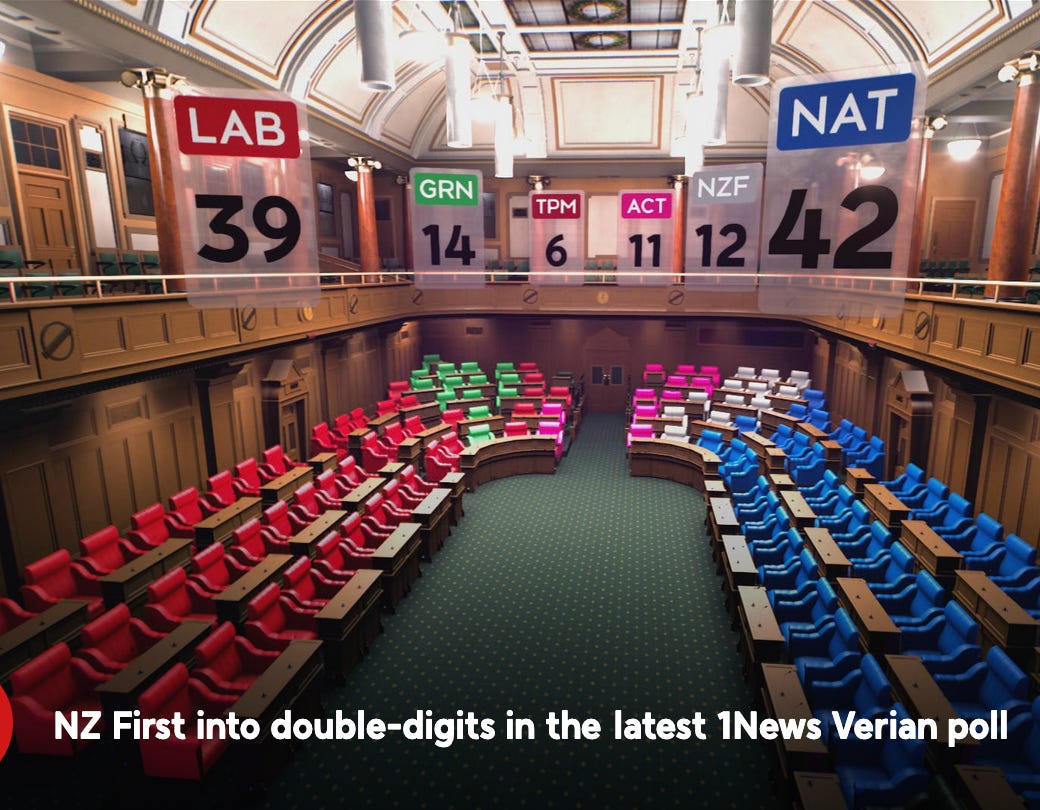
Having reviewed the seven main parties contesting New Zealand’s 2026 election in the last few weeks (links are below if you missed any), it’s time to assess forces and survey territory.
The big issues can be split into two dimensions: affordability (or cost of living) and nationhood (or te Tiriti). That makes an economic and a cultural division. The Treaty is constitutional; however, it’s the country’s founding historical document and can’t be minimised as “merely cultural”.
But it’s amazing how much the political parties agree on these issues!
There’s a cross-party consensus that low incomes, inflation and the cost of living are leading election issues, as in 2023. No one denies that affordability is a problem and hardly anyone would vote for inflation. There’s broad agreement, moreover, that the principal underlying cause is New Zealand’s long-term lag in economic productivity, associated with a major infrastructure deficit.
Differences arise over what to do about it. Should the country go down the free-market deregulation pathway to unleash talent and innovation? Or should there be an industrial policy and an investment fund? And, if there is an investment fund, in what kinds of industries should it invest? And should the pay-equity scheme be reinstated? If government borrows to pay for all of this, to what extent are the budget deficits contributing to inflation and hence reducing real incomes?
No matter which direction the majority of voters point in November, effective solutions all require hard work, as the basic goal is to earn a higher standard of living by producing more of the things that the rest of the world wants to buy. Success has to be earned: it won’t be handed to us.
Believe it or not, there’s a cross-party consensus about the Treaty. Treaty settlement bills pass through parliament without serious opposition. They’re not controversial. New Zealanders could take pride in this. It’s the result of half a century of protest, negotiation and restitution (albeit partial), advanced by both Labour-led and National-led governments.
Differences arise over how to frame te Tiriti within the constitution and in public administration. Judicial activism has developed theories that are understood and supported more by a university-educated minority. But the 2023 debate over co-governance reflected a polarisation of opinion about an inferred “partnership” and what it means in practice. Judicial doctrine became political doctrine, but not everyone’s buying it.
The ACT Party’s Treaty Principles Bill had more opponents than supporters: 40 per cent were opposed in one poll, 36 per cent in another. Large proportions weren’t sure. While ACT’s equal-rights model was only supported by a smaller minority (30 per cent or less), there’s still a question mark over how governments should proceed in recognising te Tiriti.
A recent Reid Research poll asked: “Do you think the Treaty of Waitangi has too much, about the right amount, or too little influence over government decision making?” The results were:
- Too much: 38.1%
- About the right amount: 34.1%
- Too little: 16.6%
- Don’t know: 11.2%
When broken down by preferred political party, there was a predictable left-to-right gradient. For instance, 81.6 per cent of ACT supporters said the Treaty has “too much influence”, while 45 per cent of Green supporters and 50 per cent of TPM supporter said “too little”.
Reid’s figures more or less corroborated an online reader-initiated survey I did with Stuff prior to the 2020 election. The relevant item said: “Regarding obligations under the Treaty of Waitangi, the government does…”, and the options were “too much”, “about the right amount” and “not enough”. (There was no “don’t know” option). That online survey can’t be seen as “accurate” within a margin of error, but the results were roughly 42, 42 and 16 per cent respectively, with a similar left-to-right polarisation. So I wasn’t surprised by Reid’s findings.
In the more authoritative Reid poll, 21.9 per cent of Labour supporters and 3.3 per cent of National supporters said “too little” was being done. Based on that feedback, neither major party appears to have a mandate to push ahead into deeper recognition of Treaty-based rights or principles – say, through structural reforms. National evidently got that memo, and Labour may still be unsure about what it means for them.
But let’s not forget the huge historical process of redress that those parties have achieved together. They’re not ‘anti-Treaty’ (let alone fascist and racist) if they tactically withdraw or advance only gradually. Both parties will be mindful of public opinion in election year.
The minority of New Zealanders who want a co-governed or Tiriti-centric society are seeking, in effect, a constitutional transformation. But changing a country’s constitution should be done democratically.
People who want more done to honour te Tiriti may feel frustrated that much public opinion seems reluctant, resistant or often (in their eyes) downright ignorant. But waiting for dinosaurs to become extinct may not work. As with comparable issues overseas, such as immigration, majority public opinion may not ‘catch up’ with a progressive minority. Indeed, the opposite can happen, and polarisation can widen if people feel they’re not being heeded. The rise of Reform UK is a warning sign.
A parliamentary system is designed to be adversarial. It’s not in politicians’ interests to discuss (as I’ve done above) the bedrock of consensus. To get your attention, they want dramatic clashes, and the TV stations, who want to boost ratings, oblige them by setting up head-to-head pre-election debates.
Meanwhile, the country’s young folk are looking to Australia, while the old folk are told their pensions and health care are unaffordable. Those in the middle raising kids are struggling to stay afloat. Gaps will be filled by migrants from India, while the official unemployment rate has risen steadily from 3.2 per cent in December 2021 to 5.4 per cent in December 2025.
The coming election is shaping up to be a good old class contest between the ‘sorted’ property owners on one side and the struggling property-less class on the other, framed in terms of housing affordability, the price of bread and butter, etc. It’s also shaping up to be a bitter culture war over the Treaty – and probably immigration too. But let’s keep in mind how much the parties agree on the basics!
The National Party fails to deliverGrant Duncan PhD 12 Jan Read full storyNZ Labour Party: last election’s leftoversGrant Duncan PhD 19 Jan Read full storyThe NZ Green Party: will they grow a spine?Grant Duncan PhD 26 Jan Read full storyNew Zealand First: bucking the system since 1993Grant Duncan PhD 2 Feb Read full storyTe Pāti Māori paddles into troubled watersGrant Duncan PhD 9 Feb Read full storySeymour’s ACT: choking on his own ideasGrant Duncan PhD 16 Feb Read full storyThe Opportunity Party: looking for a fair goGrant Duncan PhD 23 Feb Read full story
This article was originally published by Politics Happens.