Table of Contents
It always amuses me seeing urban Millennials gushing about their backyard vegetable patch or chooks as though they’re at the cutting edge of some modern food revolution. Because, well, that’s just what I was brought up with as entirely normal.
It’s likely a generational thing, of course. My parents were of the Silent Generation, who grew up through Depression and World War. A backyard vege patch wasn’t a virtue-signalling indulgence: it was survival. So was frugality.
The Millennials’ parents, the Boomers, never had to worry much about frugality. They came of age in the Golden Age the Silents built with their sweat and blood. “If you don’t buy it now, the price will only go up,” was the prevailing mentality of the 1970s, as one Boomer explained to me.
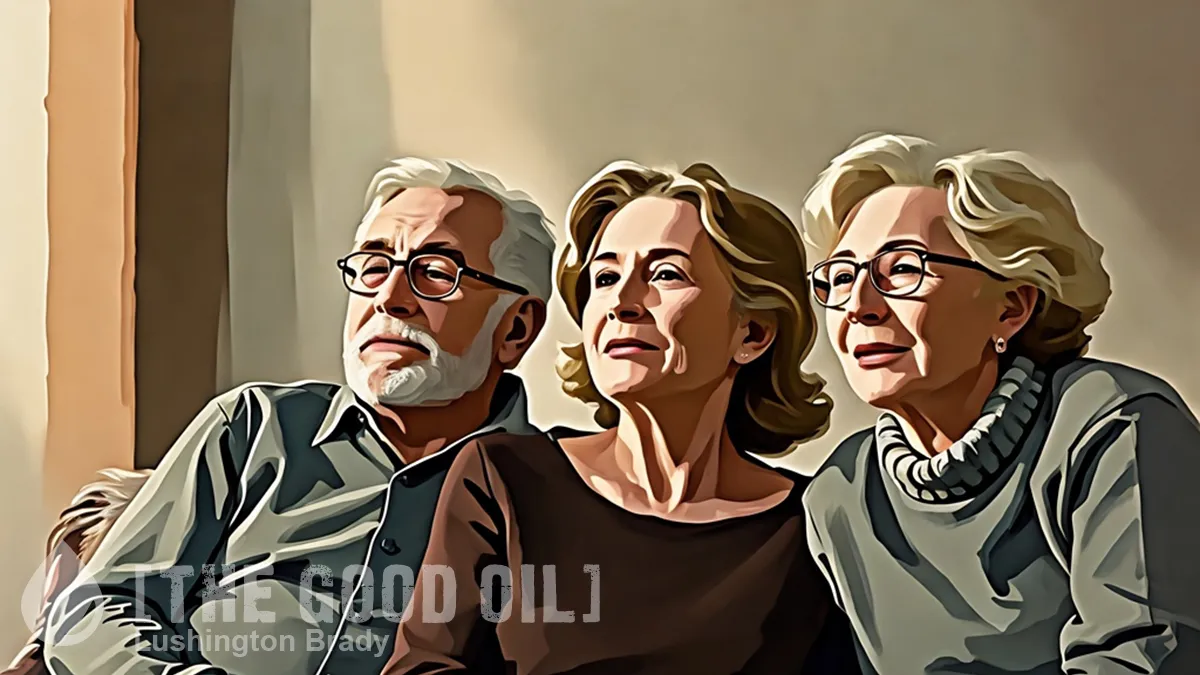
Both my parents and all of my uncles and aunts are gone now. Only one in-law remains as the last living link with the world the Silent Generation learned to survive.
As the Silents and older Boomers move closer to the edge of life I wonder what skills, belief systems and insights they’ll be taking with them. Modern humanity has been around for 300,000 years (maybe 8,000 generations) and has generally prospered and progressed from generation to generation by passing down what each has considered to be the collective wisdom of a life well lived.
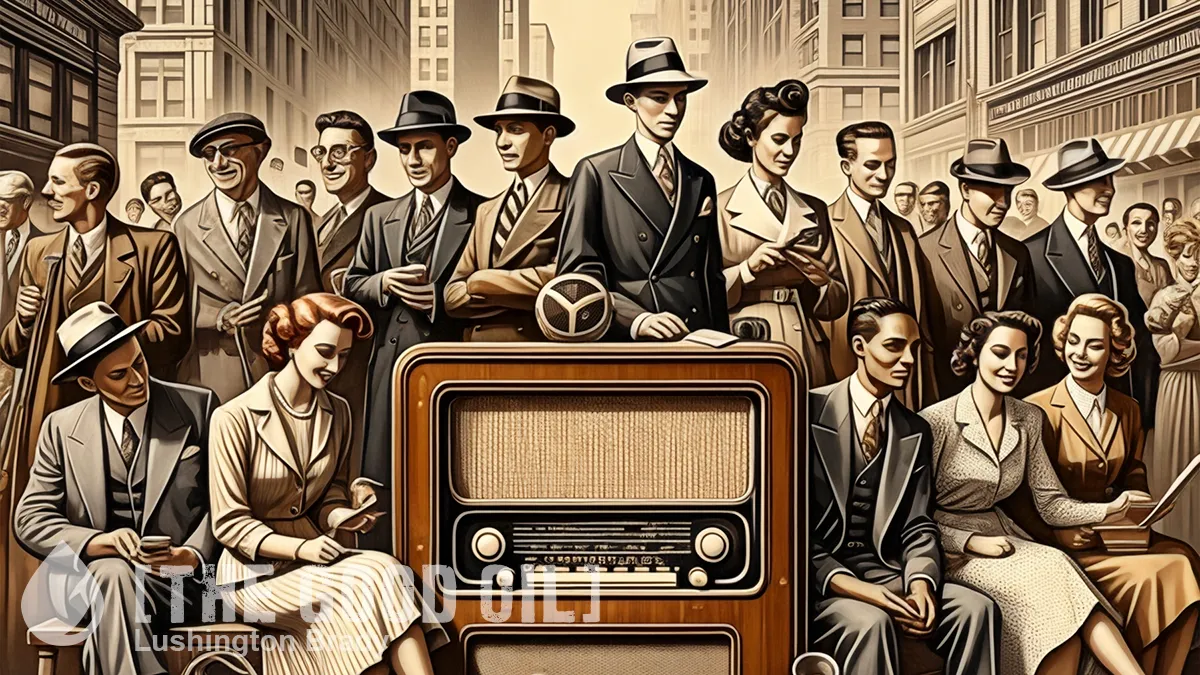
The skills that I think are receding but which once flourished amid middle Australia in the Silents’ world are simple, everyday skills like the ability to darn a sock, to light a fire, to chop and stack wood, and to disassemble, clean and reassemble the carburettor of a lawnmower. Here is a frugal world where women knitted or crocheted whenever relaxing in the evening listening to the radio or watching the telly. Here is a world where chooks were kept, vegies were grown, mushrooms were picked, and where fishing was both a manly sport and a deliverer of a dividend for dinner.
I learned all of those things, bar knitting and crocheting (which I deeply regret), at Mum and Dad’s knee. Nowadays, though, it’s cheaper and easier to throw away a faulty part than repair it.
All this was back when lunch was called dinner and dinner was called tea. This was a time when trucks were called lorries, when currency comprised pounds, pence and shillings. Here was an odd (but loyal) Antipodean world where people laughed along with British TV shows like Steptoe and Son and On the Buses.
It’s not just that, as James May grouses: we’ve raised generations of men who no more know how to re-wire an electrical plug than they do to build a particle accelerator. We’ve lost much of the simpler social mores that were once taken for granted. Basic manners, saying ‘please’ and ‘thank you’ and taking off one’s hat indoors, have all but vanished. The once-taken-for-granted church on Sunday, too.
The Silent Generation’s world was one of deep commitment to faith, where the church ruled and where sermons could, if the priest thought you needed it, jolt the congregation with stories of hellfire and brimstone and with lurid talk of eternal damnation. Even the humblest of houses carried crucifixes and imagery of saints and deities in every room (except the bathroom). The one in the front room, the good room, was a declaration of household faith to all who visited.
And while there is much of-the-moment baggage to leave behind with every generation, there are other bits – the warmth, the sense of community, the love – that should be acknowledged, savoured, perhaps even carried forth in some form or other.
One of the happiest rediscoveries of returning to church (admittedly, nowhere near as often as I should) has been the sense of community. People whom, even in our little town, were just faces you’d see at the supermarket, are just that little bit closer. The Sign of Peace, the simple act of shaking hands with otherwise strangers, is a little bit of social glue that shouldn’t be underestimated.
There is something about this era, this community, that I find compelling. The Silents’ way of life may be outdated by modern standards but it held everyone together through the Depression and war. A belief system about how to live, love and laugh is part of our insurance against the effects of future adversity. Maybe that’s the Silents’ message to us all.
It’s up to us to not just heed it, but to pass it on.