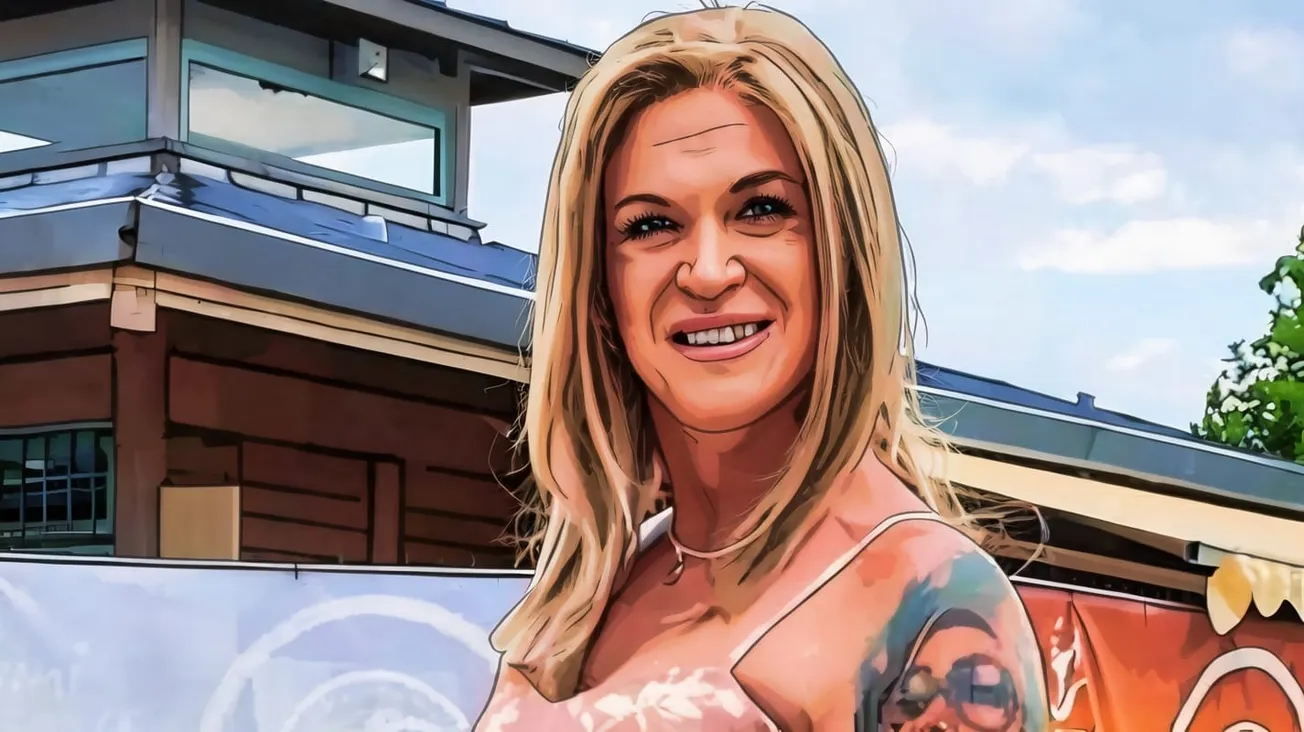
Yvonne van Dongen
Veteran NZ journo incredulous gender ideology escaped the lab. Won’t rest until reality makes a comeback.
Irish psychotherapist Stella O’Malley’s outspoken condemnation of gender ideology has not cost her clients. Quite the opposite. She says her client list is almost always full.
That’s despite the Irish Council for Psychotherapy stating that efforts to change, manipulate or reverse a person’s sexual orientation or gender identity through psychological therapy are unethical.
But then she doesn’t have the Conversion Practices Prohibition Legislation Act that practitioners in New Zealand have to contend with that prohibits certain practices intended to change or suppress a person’s gender identity or expression. Nor does she operate under far more explicit statements supporting gender-affirming care by the local professional body, the Association of Psychotherapists Aotearoa New Zealand (APANZ).
O’Malley was in Auckland prior to her appearance at the Genspect conference in Wellington recently. I spent an afternoon with her, husband Henry Thompson and Genspect NZ director Simon Tegg on a trip to Waiheke Island and I can report she is just as you would expect from her podcast – open, warm, charming and fun. Also brimming with frustrated energy.
I’m not saying speaking out is costless. I’ve had two complaints against me. But there’s a myth amongst our own that we can’t do anything. That and an awful lot of cowardice.
Since speaking out and forming Genspect, the international organisation advancing a psychological and psychiatric understanding of transgender ideation, in 2021, O’Malley says she had learned a lot about her profession.
Therapists want to be liked. Most are afraid of conflict. But actually there are quite a few of us working outside the policy.
The changing face of her profession has also had an impact on outcomes. O’Malley says 25 years ago 80 per cent of psychotherapists were male. Today 70 per cent are female. She is sympathetic to the analysis by American conservative critic, Helen Andrews, that the growing presence of women in a profession helps produce a more risk-averse, conformity-driven culture.
All the same from a distance it appears to gender criticals here that the debate in the United Kingdom has tipped in their favour They have, after all, enjoyed a series of major wins such as:
- In 2021 lawyer Maya Forstater won a landmark employment case establishing that her belief that sex is biological and cannot be changed was capable of protection as a philosophical belief under the Equality Act. Subsequent proceedings confirmed that protection.
- The 2024 Cass Review on NHS gender identity care of children leading to the cessation of routine puberty blocker prescription for gender distress and the closure of NHS’s former centralised Gender Identity Development Service, the Tavistock Clinic.
- In 2025 UK Supreme Court unanimously ruled that the terms woman, man and sex in the Equality Act 2010 refer to biological sex.
- That ruling led to new guidance requiring accommodation in single-sex hospital wards, toilets and changing rooms to be based on biological sex. Also a judicial review concerning mixed-sex toilets at a Scottish primary school resulted in the local council conceding that it had a legal obligation to provide separate male and female facilities.
So I’m taken aback when O’Malley wails “We’re failing!” She quickly qualifies this by adding:
Legally we’re winning, sure, sure. But, medically and culturally, gender ideology is still in play. We have completely failed to give clinical leadership.
We’ve opted to be the moderate ones. You know ‘take your wins’ they say. Or ‘it’s only a tiny number now.’ But no, it’s been a crashing failure. The United Kingdom is a glimpse of the future for all other areas.
She tells me that some of the wins are shot through with holes. The Tavistock gender identify clinic closed but three new regional youth gender clinics have officially opened across England, with more scheduled to launch under a phased rollout.
As well, while the Cass Review did identify serious weakness in the evidence for medical interventions, it did not conclusively establish the causes of rising referrals, the likelihood of desistance among today’s adolescents, or the long-term outcomes of alternative treatment approaches.
Worse, Dame Hilary Cass has endorsed the creation of a puberty blocker trial, which entails giving the experimental drugs to vulnerable children. Legal challenges failed to halt what is known as the Pathways clinical trial. The planned recruitment date was August 1, 2026.
Cass has continued to disappoint. In June she revealed in the House of Lords the case of an 11-year-old boy who was transitioned to be a girl by his parents at the age of two. He now refuses to leave his room and will not go to secondary school for fear of being ‘outed’ as a boy. As a result of his inactivity he has weak bones. The question Cass was asking to the House of Lords was about the eligibility of 11-year-olds for the puberty blockers trial and whether it should be politicians or doctors making the decision.
It’s worth reading the full transcript to grasp the implications of her request.
I ask noble lords to consider the case of a child who I will call Jo who was a biological male, socially transitioned at two and a half by his parents. At 11, she – which I say advisedly because the chances of her reverting to her biological gender is vanishingly remote – she has been in stealth and will not go to secondary school because she is so afraid of being outed in that environment. She’s now refusing to come out of her room except very rarely and she now has weak bones, not as a result of puberty blockers but through inactivity. I ask the noble lady the minister should her subsequent treatment be decided by politicians or by the clinicians who are looking after her?
By highlighting this tragic boy, she inadvertently made the case against the low age limit for the puberty blockers trial but also the premise of the trial itself. The case exposed the act of ‘social transition’ as the child abuse it really is.
Dr Cass subsequently clarified that “Jo” was a composite case rather than a single identifiable child but O’Malley writes that does not alter the purpose of this formulation.
Also Cass is on record as saying:
There are a tiny number of people who will never be comfortable with their biological sex, with the gender associated with their biological sex. For them, a medical pathway is the only way they’re going to live their life comfortably.
O’Malley rejects this utterly. She is adamant that gender dysphoria, until 2013 labelled gender identity disorder, was always a mental illness and should be treated as such. She champions a counter-movement called Repath or re-psychopathologisation. In effect, she wishes to return to a time when gender distress was treated as a psychological disorder.
O’Malley argues that experiencing gender nonconformity or holding a transgender identity is not inherently pathological but that the pathology begins with the intent to medicalize or modify a healthy body. She calls the pathological fixation with wanting to become the opposite sex an “extreme overvalued belief”, akin to anorexia.
She’s also highly critical of the psychiatric profession, which has, over the years, embraced outlandish and faulty ideas such as the use of malaria to treat schizophrenia (malariotherapy), repressed memory syndrome, gender transitioning and the now debunked notion of chemical imbalances in the brain. O’Malley believes all psychiatrists should be doing is medicating dangerous people to safety. Nothing more.
In her own profession, a culture of affirmation had become embedded in parts of the service and discouraged proper scrutiny. O’Malley explained her approach to gender distressed young people in that article:
I believe it is worth returning to the question that should always come first: how should we understand this child?