Rating: 1/5, 2.5/5, and 4/5.
I’m giving Christopher Nolan’s The Odyssey three separate ratings (out of five stars): a 1, a 2.5, and a 4. Why, I’ll shortly explain.
So, for the longest time, I had simply no interest in seeing The Odyssey in theatres. Despite being an admirer of Nolan’s films since Memento (2000), the vibe for The Odyssey was… not good. We all know why. Anyway, my youngest was going to see it and persuaded me to go along. I’m glad I did.
Not because The Odyssey is a great movie, or even a very good one. But, because it’s surprisingly audacious, even if it doesn’t quite work, and for a reason no one else seems to have picked.
So, the ratings.
As an adaptation of Homer’s Odyssey, I’ll give it a 1/5.
It covers much of the material from the epic, including such often-neglected incidents such as the Laestrygonians. Yet the most famous incidents are barely mentioned at all, or completely muddled. Scylla and Charybdis are blink-and-you-miss-them. The essence of the confrontation with the Cyclops – Odysseus’ famous cunning leading to a moment of hubris that sets in motion everything else that befalls him – is completely absent.
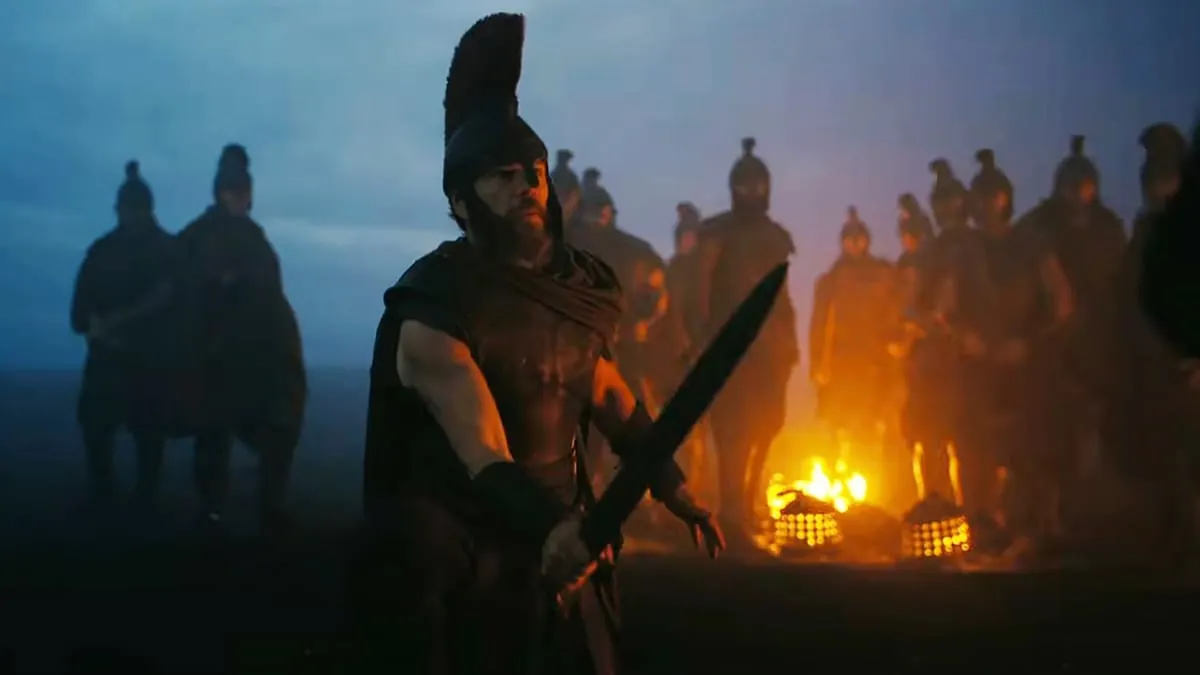
The infamous ‘diversity casting’ is as bad as you’d expect. Don’t be gulled by the determined glazing that ‘it’s barely in it’. It’s in it nearly all the time, and in your face: not just trans-Sinon (a ridiculous effort that almost prompted my wife to call, “He runs like a girl!”) and ‘Helen of Detroit’, but also the multiracial crew of ‘Greek warriors’ look like they’ve been pulled off the streets of a coastal US city.
As for Odysseus himself, in keeping with Hollywood mores these days, the supposed hero has been turned into a bitter, miserable, self-hating old man. Either way, Matt Damon ultimately simply doesn’t have the gravitas or intensity the character demands.
So, in this Odyssey adaptation, Nolan has bowdlerised one of the greatest epics of the Western canon into a soulless, dour, spiritless Jeremiad lacking any real sense of adventure, scale or grandeur.
As a movie in its own right, I’ll give it 2.5/5.
As a movie, it’s a solid… okay. Not terrible, but not terribly great. The story is a mess: Nolan’s usual adroit touch with weaving multiple timelines and narratives seems just soulless and muddled. This happens, then this happens, another thing happened earlier, then the other thing happens. That’s about it.
Much of the fault lies with the casting. Stanley Kubrick and Alfred Hitchcock had an astonishing knack for taking stars who were matinee idols but not particularly great actors and pushing them well out of their comfort zones into delivering great performances. Anthony Perkins was a teen idol starring mostly in light romances and comedies, until Hitchcock’s Psycho (1960). Think also Doris Day in The Man Who Knew Too Much (1956). Kubrick similarly elevated the likes of Ryan O’Neal (Barry Lyndon, 1975) and Tom Cruise (Eyes Wide Shut, 1999).
Christopher Nolan had no such luck with The Odyssey. While he assembled an all-star cast, nearly all of them are either not up to the material or wildly out of place. Damon, as noted, simply can’t carry the weight of the Odysseus role. Tom Holland is ludicrous as Telemachus. Jon Bernthal’s Menelaus is a wise-cracking Frank Castle in a chiton. Zendaya is… ugh, Zendaya: exploring her standard acting range of looking vaguely annoyed for the entire time she’s on screen – less ‘owl-eyed Athena’ than ‘squint-eyed A’thee’nah’. Charlize Theron’s usual luminous beauty is dulled-down to the point that she looks less like a sea-nymph than a washed-up LA beachcomber who’s seen too much sun and not enough sunscreen. Circe (Samantha Morton), the femme-fatale par excellence, beautiful with the flashing golden eyes, could be any middle-aged frump selling crystals, essential oils and dreamcatchers at any Sunday market in the country.
The dialogue is mostly risible, and the accents grating. Even my son, who otherwise liked the film, admitted that the first half-hour almost broke his will to endure the rest. While he thought it quickly gathered pace, for me it didn’t really hit its stride until the third act. Finally, The Odyssey shows us what it could have been.
Of the set-pieces, the visit to Hades, to speak to the shades of the dead, is one of the few truly memorable sequences in this dreary film. For once, the otherwise bizarre location choices works perfectly. Iceland provides a suitably bleak and dreary setting for the underworld. Elliot Page actually shows that she can act when she’s not looking like a little girl trying to look like a boy. Agamemnon (Benny Safdie) finally gets some dialogue instead of relentlessly aura-farming as a anachronistic Hellenic Batman.
Otherwise, the locations are simply baffling. I mean, we know Odysseus wandered far, but he never even left the Mediterranean. He certainly didn’t sail to what is too-obviously Scotland – complete with snow. In the Mediterranean.
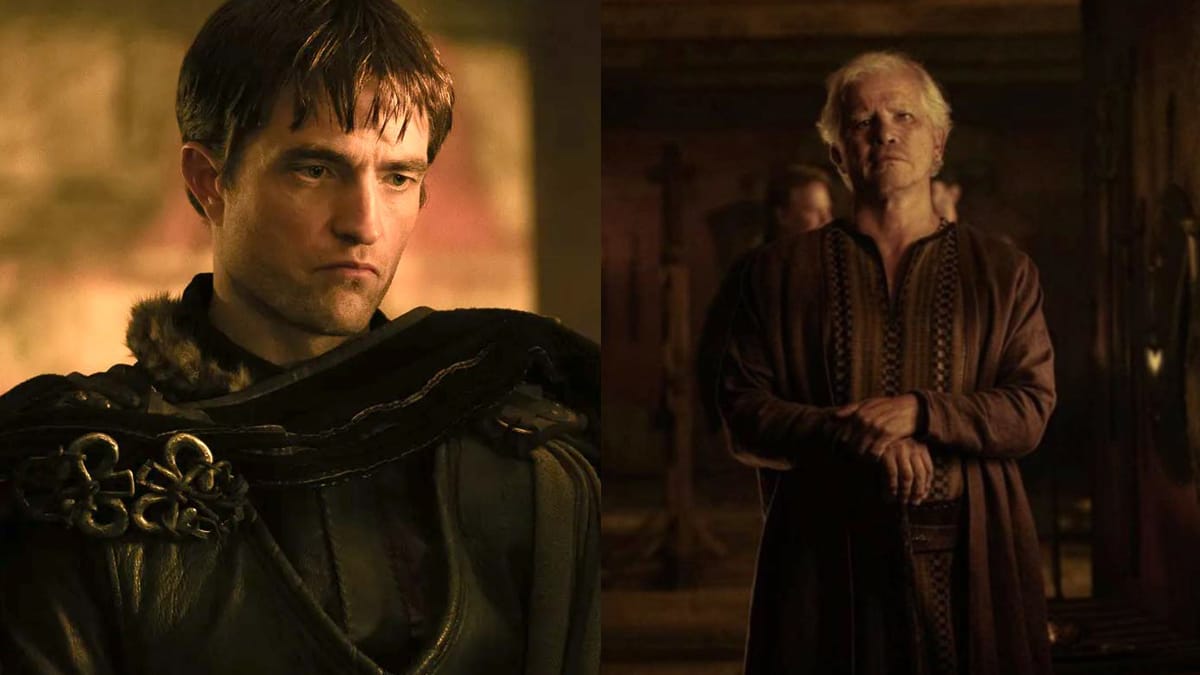
That said, there are two surprisingly standout performances. Robert Pattinson has spent years living down Edward Cullen, and in The Odyssey he shows why he thoroughly deserves to put Twilight (2008) behind him. As Antinous, the leader of the suitors, Pattinson is appropriately loathsome, by turns slimy and calculating, at others subtly menacing.
John Leguizamo is the big surprise of the film, as Eumaeus the old swineherd who is Odysseus’ most loyal servant and friend. While his accent threatens to chafe at first, his performance, by turns curmudgeonly and tender, gives the film a heart and soul it otherwise sadly lacks.
Between them, Pattinson and Leguizamo almost single-handedly save the film. Their antagonism is the real core of the film, which is not what most people seem to think it is.
Which brings me to the third rating: 4/5 for sheer audacity.
I’ve long said that Nolan is one of the most genuinely subversive film-makers in modern Hollywood. He rebuffed the shallow, flashy charm of modern cinema in The Prestige (2006). He skewered the Occupy movement in The Dark Knight (2008). He railed against the modern West’s abandonment of technological audaciousness in Interstellar (2014). He revived old-fashioned, unadorned patriotism in Dunkirk (2017).
What Nolan has done with The Odyssey is just as audacious and subversive: he got the entirety of the Woke establishment to go all-in for a movie that rails against the dying of the Western light at the hands of unchecked mass immigration from the Third World.
Seen in this light, the rage-baiting casting that generated so many months of furious debate seems to have been a master-stroke. The woke left immediately manned the barricades, determined before even the first trailer was released that this would be the cinema of the ages. ‘Nolan’s greatest ever!’ As Bret Easton Ellis noted of Black Panther (2018), the pre-determined narrative was that what turned out to be a mediocre film at best was cinema greatness. Of course, the right were equally determined to hate it – but, unlike the left, they’ve largely changed their minds after actually seeing it, conceding that it’s at least okay-ish.
What almost nobody seems to have noticed is the subtext, which is weird, because it’s almost impossible to miss.
The kings of the civilised world allowed themselves to be distracted in a self-serving quest for glory in a decade-long pointless war. A war characterised by literal falling towers. While they’re squandering so much blood and treasure, their homes are invaded by grasping, thieving bullies. Savages whom, Odysseus plainly says at one point, cannot build anything great, but only take the luxuries hard-won by greater men.
When Odysseus laments that “Our age of bronze is collapsing”, what is otherwise a bizarrely anachronistic line reaches across the millennia to warn us that our own age is in peril. All because our elites abandoned themselves to a pointless forever war and the mindless intoxication of the lotus, while the barbarians eat up our inheritance.
That is the true message of this film. If only the vessel carrying the message was better than merely okay.