Kathryn Pick
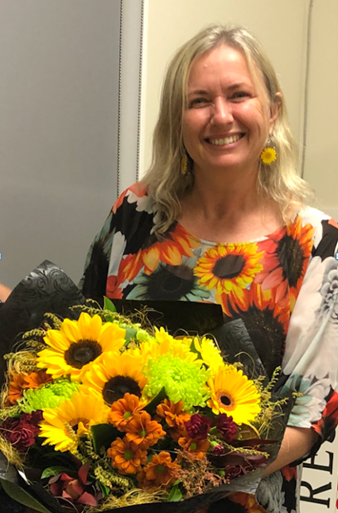
My name is Kathryn Pick and until recently I had spent more than 30 years working in education.
In 2023, I told part of my story under the pseudonym Principal X in A Day I Will Never Forget. You can read that earlier account here.
I hold a master’s in education and qualifications across psychology, pastoral care and trauma-informed practice. I have been a teacher, sports coach, SENCO, a Kāhui Ako deputy principal serving more than 3,000 students and a principal for 12 years.
What mattered most to me in all of my roles were the relationships – the children, families and colleagues I supported through their hardest moments, many of whom still trusted me enough to seek me out years later. Losing my only brother taught me early that the truest measure of a life is the difference it makes to others.
One of my schools became a placement of last resort for excluded students and in 12 years as principal I never expelled a student – choosing wraparound support and restorative practice instead.
Even my therapy dog, Pedro, was part of that approach, supporting anxious and neurodiverse children at school for nine years.

He came to school with me every day.
Covid and the mandate
When Covid arrived, I led my school through lockdowns, uncertainty and rapidly changing rules – moving children into remote learning, staying open for essential workers and personally delivering (and sometimes paying for) food, medical supplies and school resources for families in hardship.
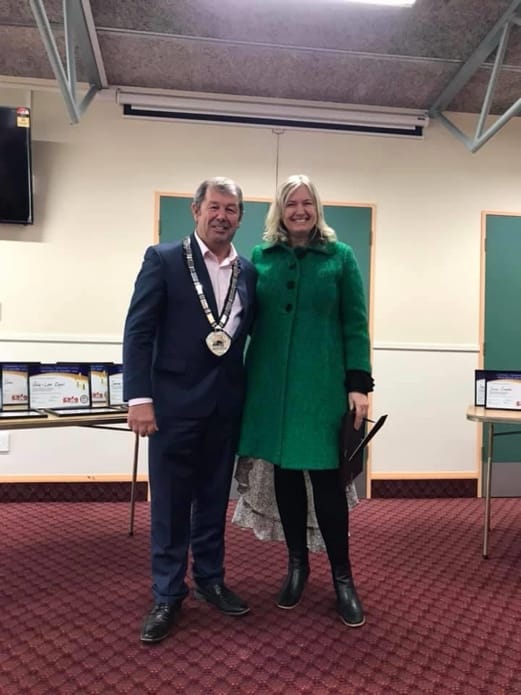
In 2021, I received a mayor’s award for this work, including helping establish neighbourhood support groups that connected elderly and vulnerable residents with volunteers throughout the lockdowns.
A few months later, I was terminated from the principal’s role I loved.
I could not comply with the vaccine mandate because of a medical condition and a history of severe allergic reactions. I had initially been granted an exemption on medical advice, but, when the exemption provisions changed, my application was declined. I was offered the opportunity to receive the vaccine in a hospital emergency setting with a resuscitation team on standby. The doctor arranging the referral ‘reassured me’ by stating, and I quote: “Don’t worry, because if you die, the resus team will bring you back to life.” I could not bring myself to take that risk.
I had just completed my master’s and been awarded a leadership scholarship. As a single mother with no job to go to, I also missed my own graduation, holding a small ceremony of my own on Mt Taranaki instead.
I lost my career, but I did not lose the trust of the community I had served.
What happened next
Three weeks after I was stood down, my school experienced a Covid outbreak.
A parent contacted me directly, even though I was no longer allowed on site, to tell me that their child had tested positive. Within days, many families were in isolation.
For most, this was manageable.
But I knew that was not true for everyone.
Some of the families I worked with were dealing with poverty, mental health challenges, addiction or isolation from support networks — and in our small rural community, services were limited even before lockdown stripped away what safety nets remained.
After consulting a trusted colleague about the welfare of some of these families – told to quarantine for three weeks, including over Christmas – we agreed a second medical opinion could help. Two families had, within a week of a positive PCR result, returned a negative RAT result, adding to their confusion, though RAT tests were then in short supply. With the full consent of the families involved, I collected their Covid test result information and shared it privately, never publicly, with a lawyer, acting on advice that this was protected under legal privilege – not, as my board later alleged, sourced from any school database. My only concern was the welfare of families I knew and had supported for years. Some of their experiences were later summarised into an affidavit, with full consent, for potential use in separate litigation.
What followed changed my life.
After a complaint from the doctor who had reviewed the test results, my board reported me to the Teaching Council and the Privacy Commissioner without ever asking for my account of what had happened. An independent technical investigation later found no evidence that I had breached the school’s systems or accessed the information through its database.
Yet the Teaching Council investigation continued for four and a half years.
Throughout that time, I was never stood down, continuing to work in education because I was never considered a risk to children, families or colleagues.
In June 2026, the Teaching Council Disciplinary Tribunal cancelled my teaching registration.
I was struck off the profession after more than 30 years.
The tribunal’s own minute of 11 February 2026 acknowledged that it was unclear what I knew about how the information I provided in the affidavit might ultimately be used. That question became central to the finding of serious misconduct against me.
Rather than resolving that uncertainty on the evidence available, the tribunal drew an adverse inference from my decision not to attend a further hearing for cross-examination – a decision I was legally entitled to make - and concluded that I had possessed the knowledge and intent that it had previously acknowledged was unclear.
That is something I continue to struggle with.
I know that difficult decisions can be scrutinised and I don’t believe I’m above accountability.
But I do believe that context, intent and proportionality matter.
My case involved no allegation that I abused, exploited or harmed a child. There was no finding that I posed a risk to students. Yet I received the maximum professional penalty available: cancellation of my registration.
I have also been ordered to pay $45,500 in costs, following my unsuccessful High Court challenge, on top of the $40,000 already spent defending myself. I am currently unemployed and unable to pay this. The professional and personal toll has been enormous.
Where I am now
Now that my name suppression has been lifted, I have chosen to tell my story openly.
Behind every investigation, policy and disciplinary finding is a real person and a real story. Public policy is, by necessity, a one-size-fits-all approach – and it’s often the people with the fewest resources and the smallest voices who carry the greatest burden when it doesn’t fit.
Leadership means more than following procedures: sometimes it means asking hard questions or making decisions with no risk-free answer. Everything I did was consistent with how I had always led – understanding the people in front of me and doing what I believed was necessary.
That has come at an enormous cost. I am now rebuilding my life, using the skills, experience and compassion that shaped my career to support others through coaching, education and work centred on healing and purpose.
My professional identity may have been taken from me, but my values have not.
The question I leave with you:
When does standing by your values become misconduct?
|
If you are in a position to help me meet the financial consequences of
this |
[Editor’s note: Kathryn is part of the Tauranga GO sump and is known to Eliora. There is a good article about this case available here: https://dailytelegraph.co.nz/opinion/six-years-on-students-still-suffering-mandated-out-teachers-still-persecuted/]