Table of Contents
Simon O’Connor
Husband, step-father, foster dad, and longtime student of philosophy and history. Also happen to be a former politician, including chairing New Zealand’s Foreign Affairs, Defense, and Trade Committee.
Iran has a wonderful, deep, and rich history. Persia, as it was once known, has enriched the world from the great poetry of Rumi to Avicenna’s work in medicine and philosophy. Persians are a distinct ethnic, linguistic, and cultural group and often, mistakenly, thought of as Arab. Persian’s speak Farsi, whereas Arabs speak, well, Arabic!
Today, those of the Iranian diaspora are among the most highly educated in Western societies, contributing notably in the sciences and engineering – though not exclusively.
I have sadly not yet made it to Iran. I got close a few years ago, flying in a Royal New Zealand Air Force plane through the Persian Gulf and ‘enjoyed’ hearing Iranian military threatening to shoot us down because supposedly we were in their air defence zone. I should note, we were in international waters and, despite the aggressive, almost comical, messages crackling through the headphones, it was more a game than a serious situation.
Tragically, since the Islamic revolution in 1979, the people of Iran have been oppressed and brutalised by a theocratic regime – the mad mullahs as many of us refer to them. The revolution’s causes are wide and deep, but you could simplistically say it was a fusion of Islam and left-wing socialists. A strange coupling that is – worryingly – still very familiar today.
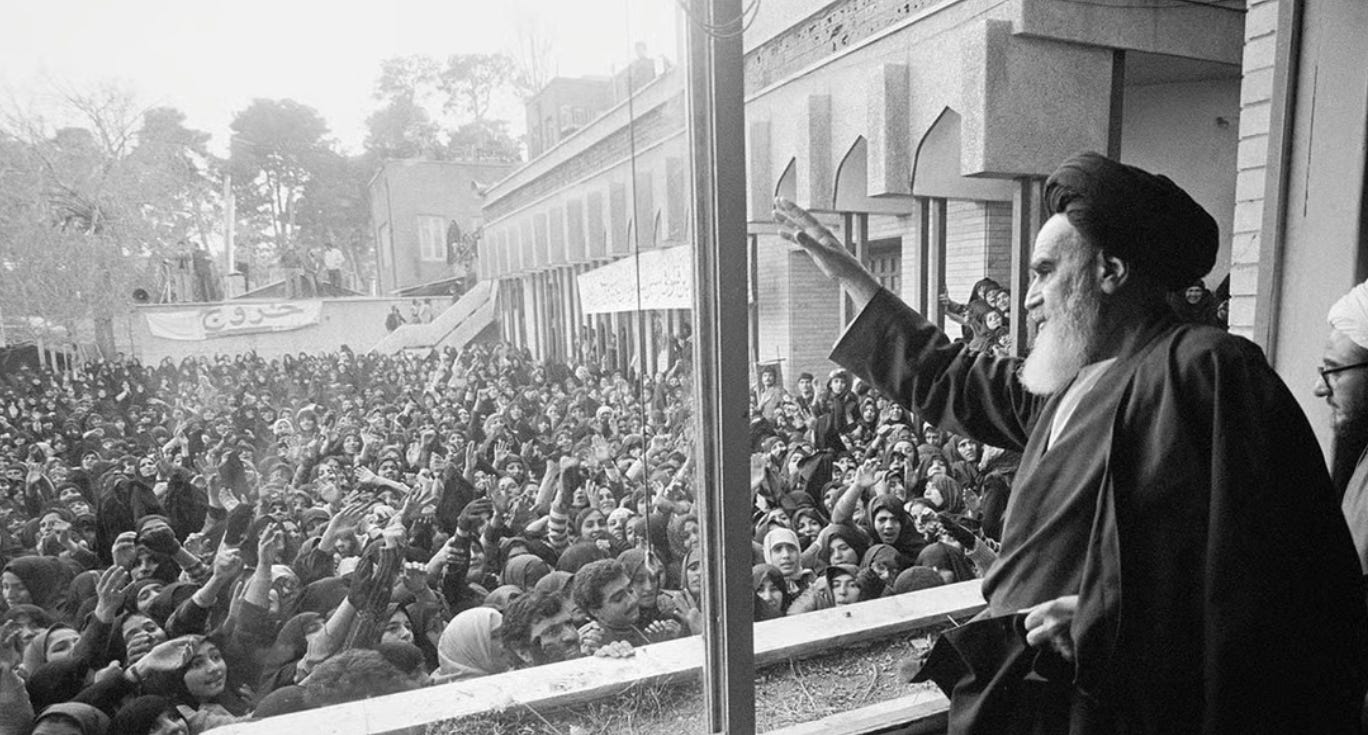
A once vibrant culture and country has been replaced with a repressive religious regime, an appalling human rights record, and a explicit intention to spread terrorism around the world.
As I write, hundreds of Iranians are once again being killed by this despotic regime, desperate to hold onto power. Thousands more are being arrested as the people rise up across the country to free themselves of this Islamic tyranny. As many Iranian friends have noted to me, this expression of Islam has never been part of Iranian culture. That the regime needs to continually use extreme violence to maintain it’s ‘religion of peace’ is not lost on any rational person. My use of the word continual is deliberate for, ever since 1979, the regime has been killing, torturing, and detaining it’s own people. These current protests are huge, but also echo the relatively recent ‘women, life, freedom’/Mahsa Amini protests where, sadly, many more Iranians were murdered and cruelly treated.
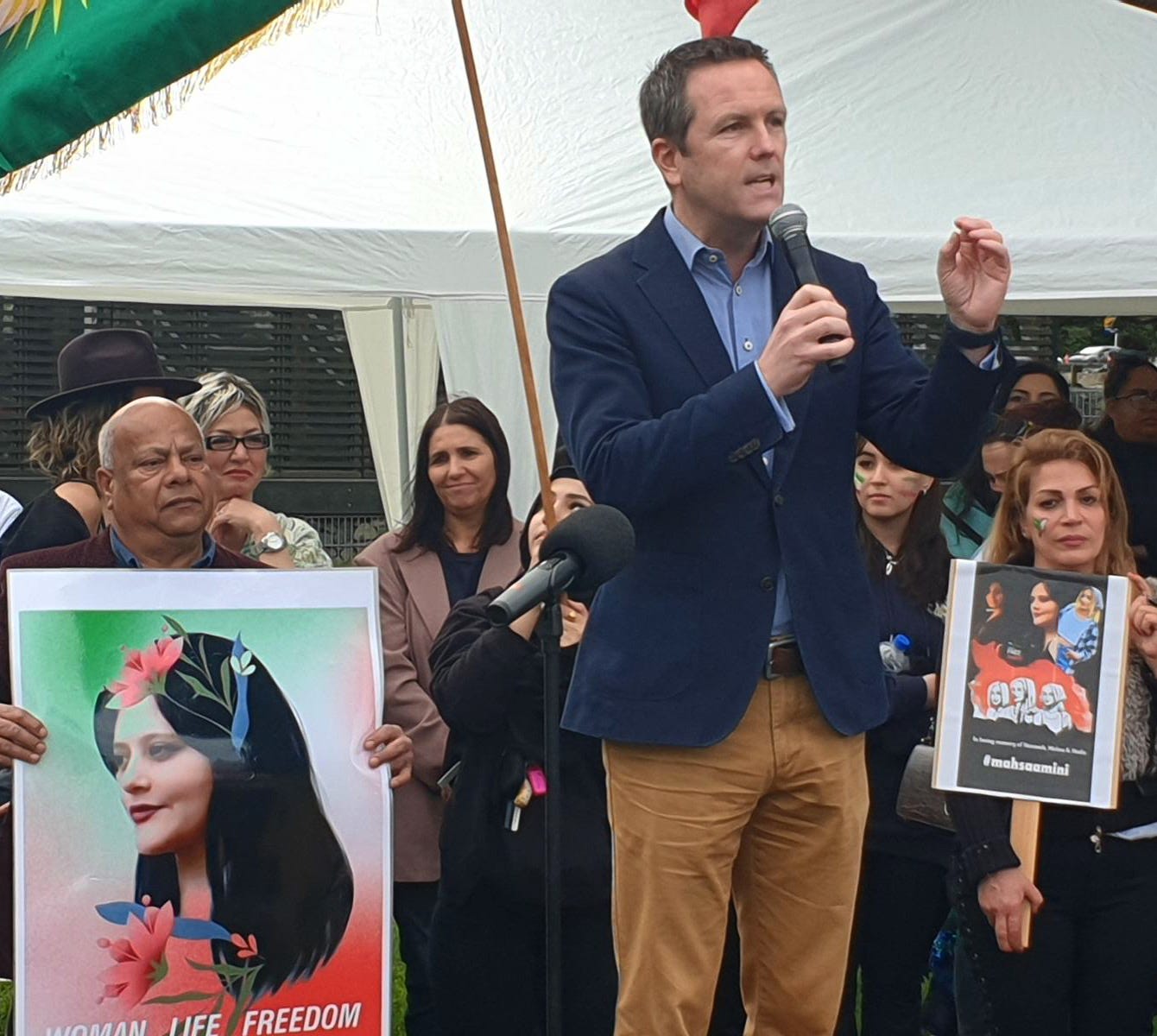
The Islamic regime in Iran though, this time, is teetering on the brink of collapse. There are a number of factors, from the desire of the people to be free, to ridding themselves of a repressive religious regime, economic implosion as the regime funds nuclear and military ambitions (and consequently, suffers international sanctions), as well as repeated military failures – the most recent being the total inability to interdict American and Israeli air forces attacking their nuclear facilities.
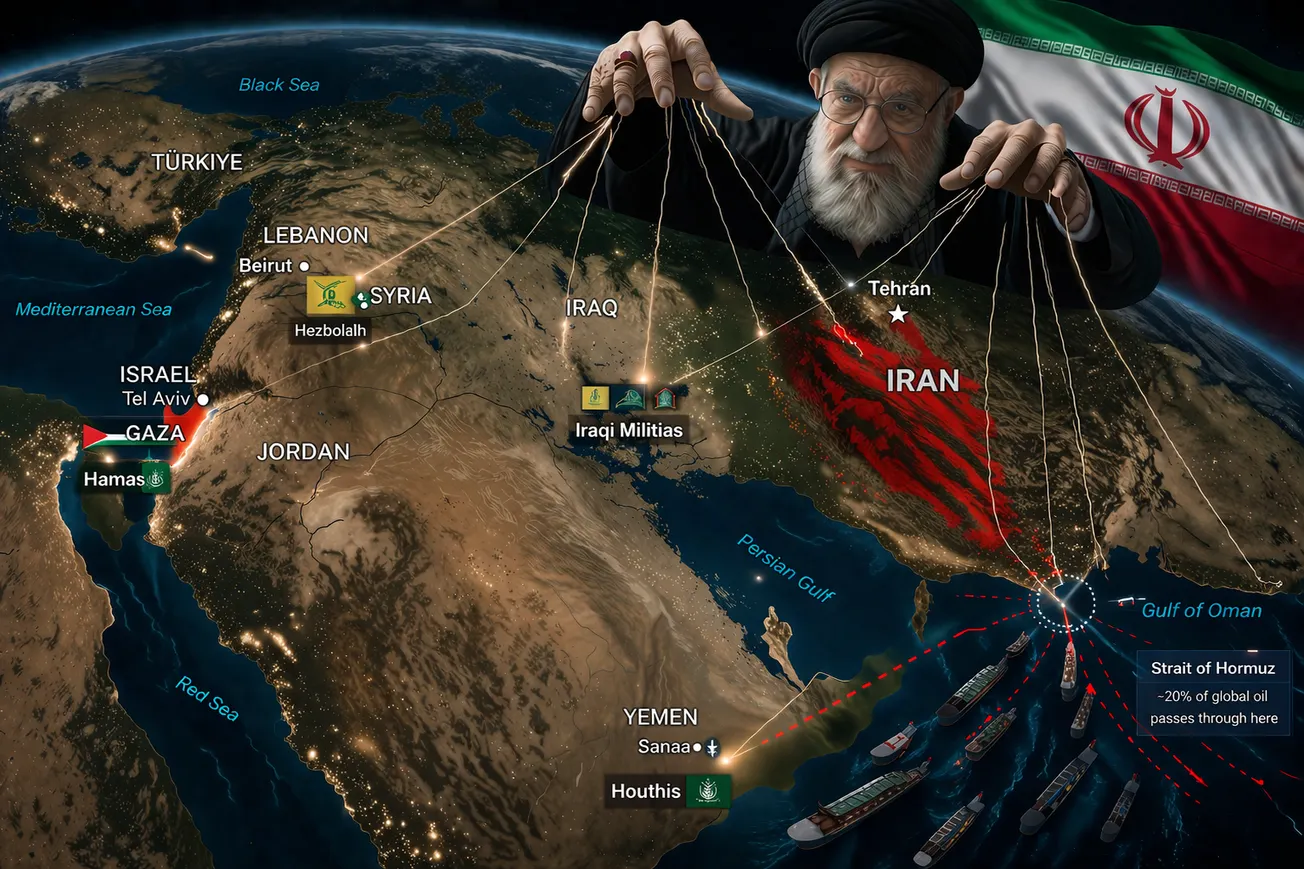
The collapse of this regime after 47 years is probable, but not a certainty. Tens of thousands may march in the streets, but it only takes a few of the regime’s henchmen with weapons to turn things around. The Islamic Revolutionary Guard Corp (IRGC) is the much-feared military arm of the mullahs and we are already seeing a horrific death toll. They are the well-armed religious zealots enforcing not only tyranny in Iran, but exporting terror around the world. As I have frequently lamented, successive New Zealand governments have failed to designate it a terror organisation despite overwhelming evidence of their crimes, including interference here in New Zealand.
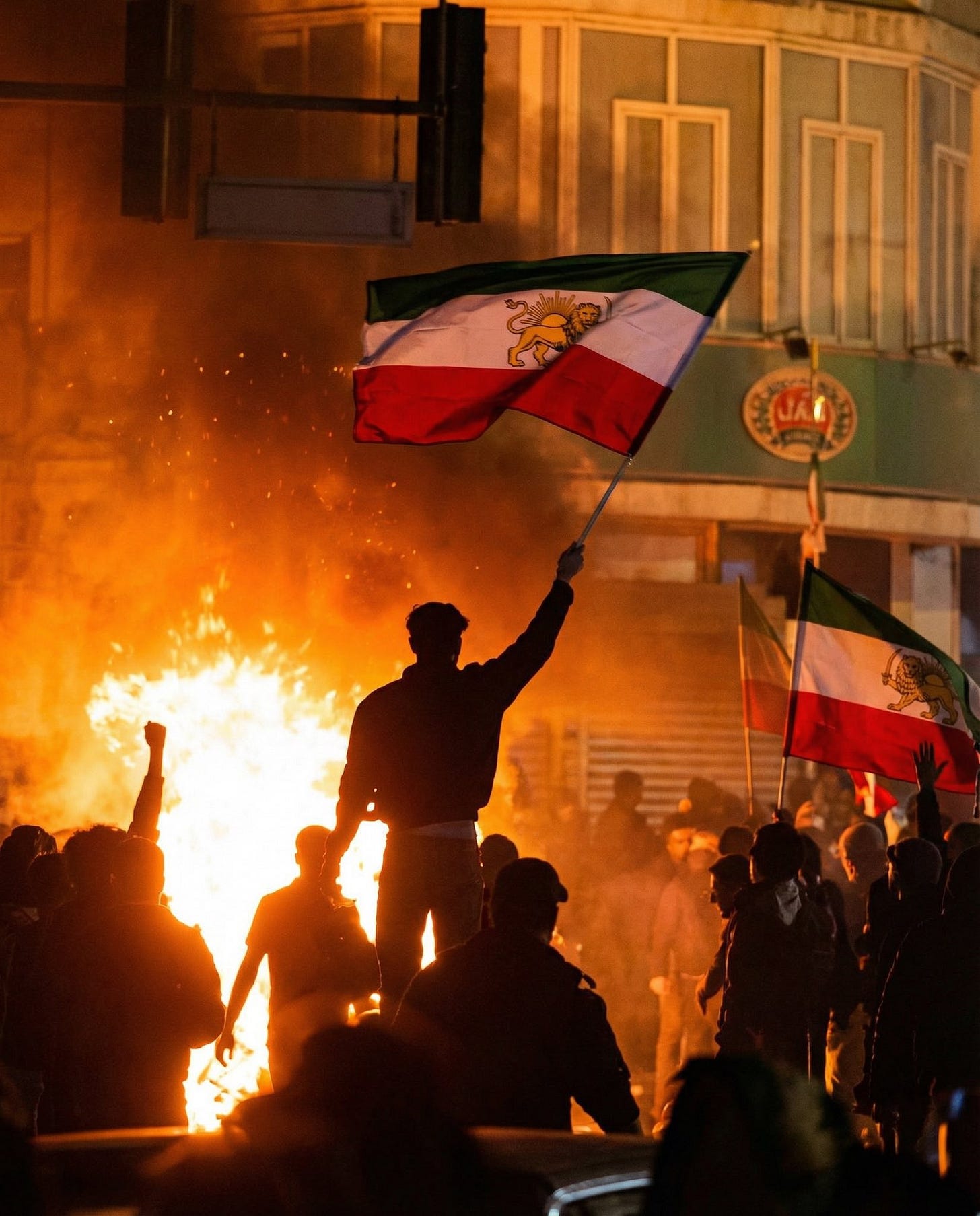
While countries like the United States have been clear that wholesale killing of civilians will provoke a military response, this could easily prove a double-edged sword. On one hand, targeted strikes on IRGC infrastructure and personnel will weaken these thugs’ ability to terrorise protestors but it may also be misused by the regime to rally its supporters.
Ironically, the usual left-wing activists in New Zealand and elsewhere in the Western world – who have been aggressively out on the streets for months – are currently deathly silent as the Iranian people seek to free themselves. These are the activists protesting Gaza and all the other ‘justice’ issues, from the Treaty to climate change.
We should not be surprised, however, for reasons I will explain later, when you consider such activists have held aloft photos of the Iranian leadership, flown flags of Iranian terrorist groups, and more.

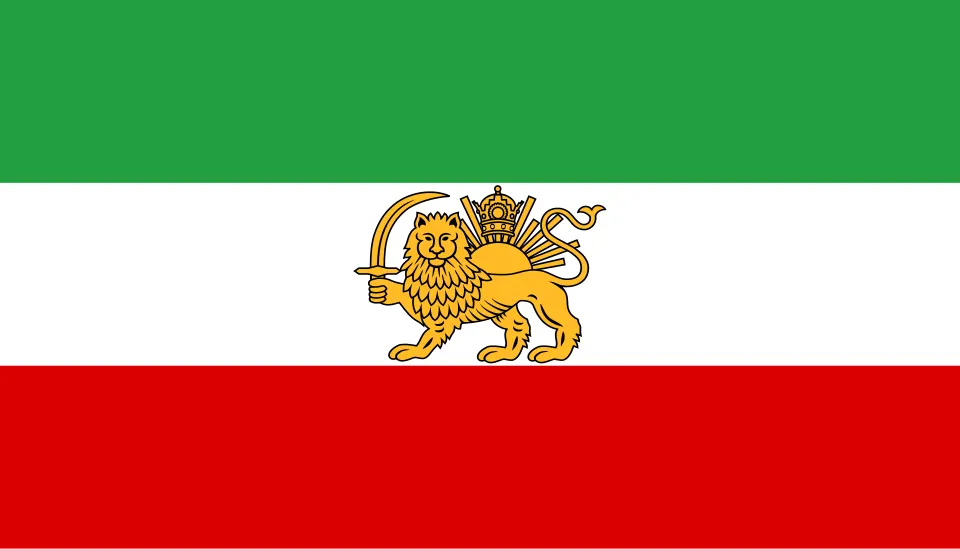
As the regime falters, it is not clear what will replace the Islamic regime. The son of the former Shah (monarch/king) – Reza Pahlavi – is proving to be a rallying figure for Iranians both inside and outside the country, but even if he were to take on a constitutional role as head of state there are still major questions around how the rest of the country’s infrastructure – from the army to the bureaucracy – would change. This will not be an easy switch from theocracy to democracy. Iranians will also have a memory of life under the Shah – which, while freer in many ways, also had its repressive elements. Put another way, the revolution of 1979 was not random or without cause.
We need to question, however, why coverage of events in Iran has been relatively muted in much of the West, including here in New Zealand. Despite days of protests sweeping across Iran, mainstream media, by in large, said nothing and, even now, while there is some coverage, it is hardly matching the intensity of reporting around other similar world events. One need only consider the near obsessive reporting on Gaza for example, or the current fascination with ICE protests in Minnesota. Taking the latter, it is fascinating that a singular event in an American state is given preference and prominence, yet the aspirations of an entire nation to rid itself of theocratic rule is often an afterthought in reporting.
Governmentally, too, it’s only been in recent hours that a rather tepid statement has been made by the minister of foreign affairs and nothing from the prime minister. A few MPs have made mention, but relatively restrained. There has been virtually no comment from the Green and Labour parties, who until recently were at the forefront of every liberation cause but who appear indifferent to the desire of Iranians to be free.
The reasons for this are relatively simple and straightforward, for the reasons I will set out below. But I would also suggest a read of this very well-articulated X post by Tahmineh Dehbozorgi:
The Western liberal media is ignoring the Iranian uprising because explaining it would force an admission it is desperate to avoid: the Iranian people are rebelling against Islam itself, and that fact shatters the moral framework through which these institutions understand the… https://t.co/4G0UEvL0YO
— Tahmineh Dehbozorgi (@DeTahmineh) January 9, 2026
A key reason for the lack of response by many progressives is that to criticise the Iranian regime would also be seen as criticising Islam. And, as we know, mainstream media, politicians, and other elites do not support any criticism of Islam – that would be Islamophobic, supposedly. Even as I write, there is a weird story in the Post about an Islamic school in New Zealand being questioned around its religious beliefs, what they are teaching students, and how they may be treating girls differently to boys. The tone and angle of the story, however, is not in support of such questioning, but instead an expression of disdain that anyone would dare question Islam. If this were a Christian school (or any other religion), the reporter’s approach would be completely opposite, as we have seen on frequent occasions.
It is an inescapable fact that Islam is a driving force of the regime in Iran. What they preach and practice is not an aberration, outlier, or misinterpretation. It is Islam – not how all Muslims think or practice by any means, and certainly on the extreme end – but it is Islam. The mullahs and their followers are practising a fundamental form of the religion: a literal form prescribed from their holy book. There is no concept of the secular in Islamic thought, nor such niceties as a separation of church and state.
Mainstream media and others cannot cope with this and, consequently, to avoid any criticism of this expression of Islam, they go silent on Iran.
Similarly, media and activists who are obsessed with socialism, the collective good, and ever-increasing state control are unwilling to criticise a regime whose embrace of such approaches is clearly failing. Iran is not only a religiously controlled state, but a economically, culturally, and socially controlled one as well.
Running parallel is Western liberals’ blind commitment to cultural Marxism and, in particular, critical theory which divides everyone between oppressor and oppressed. In this circumstance, America and the West are always evil oppressors (imperialists!), while Iran and its underpinnings are the oppressed. It is why pro-Hamas groups in Australia marched with pictures of the Ayatollah, cried when Israel and the US removed Iran’s nuclear weapons capacity, and are currently upset that a socialist despot in Venezuela was removed. No matter the reality or context, progressives adhering to critical theory cannot switch the categories. So even as horror is being visited upon the Iran people once again by the Islamic regime, progressives view the regime as oppressed and turn their blame onto the supposed oppressors – the United States, Israel, and the West.
We also have the inescapable hatred of Israel to contend with. The Iranian regime cannot abide the existence of Israel. This is not simply a political position, but a religious one. Again, far too many in the West fail to understand the religious underpinnings that drive antisemitism from the likes of Iran’s leadership.
Sadly and worryingly, we have too many left-wing activists in New Zealand obsessed with eradicating Israel and the Jewish people. It has driven much of the public protests we have seen since October 7th. Undoubtedly, Iranian money has been funnelled to various groups here in New Zealand to facilitate this aggression and antisemitism.
This wretched antisemitism now means such activists are deliberately turning a blind eye to what is happening in Iran. This is clear from the complete lack of any rallies, protests, or messages of support for the Iranian people. It is the classic ‘my enemies’ enemy is my friend”. That Iran hates Israel and America, aligns with the views of many on the progressive left and, consequently, many on the progressive left readily align themselves with the corrupt Islamic regime, such is its hatred of both Israel and the West.
As I wrote a few months back, the Islamic revolutionaries, including Hamas and Hezbollah, share a common goal with left-wing progressive groups here in New Zealand. It is their shared disdain and revulsion of Western society. They want to destroy the society we have built, mostly on Judeo-Christian frameworks. For the Islamic regime in Iran to fall, would mean that part of the revolution fails.
A ceasefire of silence ...Simon O'Connor 16 October 2025 Read full story
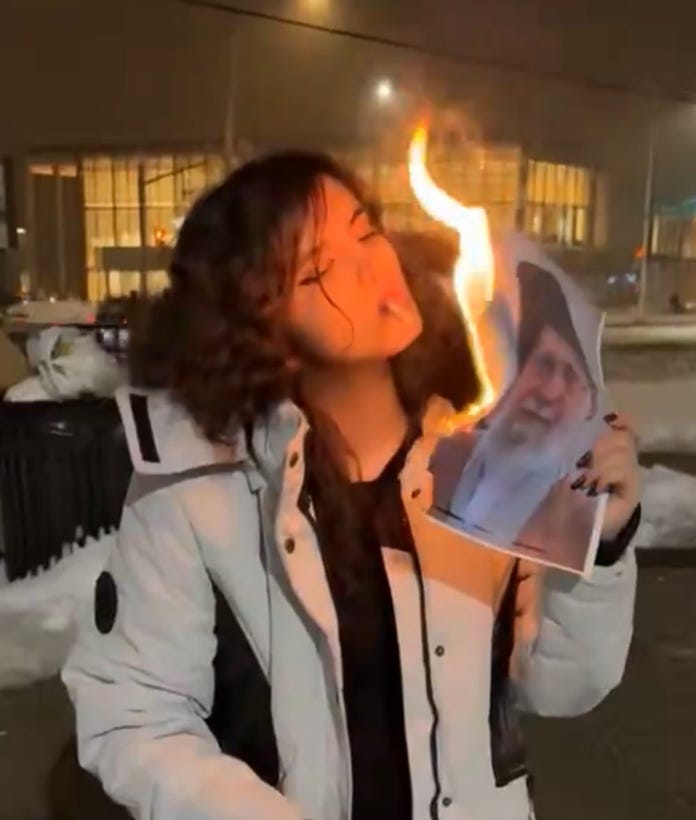
Finally, we have those invested in cos-play and not actual activism. Members of the Green Party and others run about wearing their Temu-bought keffiyehs while Iranian women, like the one now famous for lighting her cigarette from a burning image of Iran’s Supreme Leader Ayatollah Ali Khamenei, are putting their lives on the line. The former is performative and comes with no consequence – the latter is all consequence and requires moral clarity, conviction, and courage.
We can hope and pray that the will of the Iranian people wins, through, and the Islamic regime falls. It will be transformative for the people of Iran but also the wider Middle East and the world. But we should also remain observant of how this is playing out in New Zealand. The mad mullahs may be thousands of miles away, but many of their views and perspectives are supported here in New Zealand in various ways. Just as the Islamic regime corrupted Persia, we must ensure the same corruptive influences do not change the trajectory of New Zealand’s democracy and values.
This article was originally published by On Point.