Table of Contents
Mark Durie
Mark Durie is a senior research fellow at the Melbourne School of Theology.
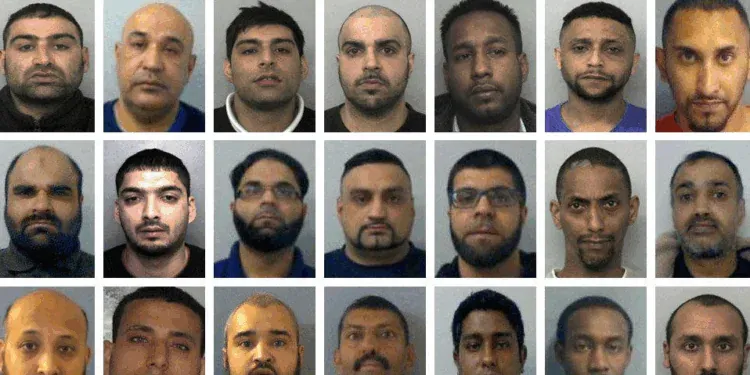
The many prosecutions of grooming gangs have shocked the UK public. There is the sheer scale of the abuse, in which thousands of abusers have raped, intimidated, controlled, tortured and sexually exploited thousands of underage girls. Also shocking are the repeated failures of both the criminal justice system and numerous reviews to bring about lasting change.
The expression ‘grooming gangs’ has been challenged, as it could be taken to imply some kind of consent. Although ‘rape gangs’ is not inaccurate, ‘grooming gang’ does capture the element of psychological control over victims, many of whom have been subjected to repeated rapes over an extended period of time.
Is ethnicity the key to this epidemic? The 2014 Jay report about grooming gangs in Rotherham stated that “the majority of known perpetrators were of Pakistani heritage”. At the time around three per cent of the town’s population was Pakistani. However, while it is true that most of the convicted gangs have consisted of men of Pakistani heritage, for example in Oxfordshire, Rotherham and Telford, the published lists of members of Pakistani gangs have shown that the ‘Pakistani’ men are all also Muslims.
Moreover, several non-Pakistani grooming gangs have been made up of men with Muslim names, including two Somali gangs in Bristol, a gang composed mainly of Africans in Banbury, a gang of three Iranians in Chelmsford, a gang of three Syrians and a Kuwaiti in Newcastle, a pair of Turkish men in Somerset and a gang of 17 men in Newcastle of Albanian, Kurdish, Bangladeshi, Indian, Turkish, Iranian, Iraqi and Pakistani heritage. In the last case, all the men’s names were Islamic, with the exception of one Hindu. Although there have been a handful of smaller gangs made up of non-Muslim perpetrators, the clear majority of gangs overall and all the larger gangs have been made up of Muslim men. Peter McLoughlin, who compiled a list of grooming gang convictions from 1997 to 2018, found that 87 per cent of those convicted had Muslim names.
The label ‘Pakistani’ for these gangs is both too narrow and too broad. Too broad because overwhelmingly it has been Muslim Pakistani men involved in these gangs, not Pakistani Christians, Hindus or Sikhs. Too narrow because of the gangs made up of non-Pakistani Muslims. The label ‘Asian’ is also a misnomer: there has been no Indian, Japanese or Chinese grooming gang.
Trevor Phillips, writing for the Telegraph in 2017, rightly said: “What the perpetrators have in common is their proclaimed faith. They are Muslims, and many of them would claim to be practising.” This has become apparent despite the best efforts of the authorities to conceal any connection of these crimes with Islam.
Unfortunately, Western secular people are handicapped by a deeply entrenched religious illiteracy which can make it hard for them to discern and analyse the influence of religions. Rafael L Bardají, former National Security Advisor to the Spanish Prime Minister, put his finger on the issue: “A population that has fundamentally turned its back on its faith cannot understand the religious motivations of others.” At the same time some Western people are blind to certain features of Islam because they project their impressions of a benign Christianity onto it. There is also is dominant strand of Western thought which dismisses the influence of religions altogether, relegating faith to the domain of private spirituality.
Another handicap impacting public officials’ understanding has been the fear of being labelled Islamophobic.
These factors conspire to make it difficult for Western people to have a sensible conversation about Islamic theology and practice. Yet we do need to talk about religions, not least Islam, because, despite secular prejudices, religions are a powerful force, shaping nations. Politics may be downstream from culture, but culture is often downstream from religion.
In a detailed paper published by Christian Concern I have identified eight features of Islamic theology and practice which relate to the grooming gang phenomenon. These factors could explain the dramatic over-representation of Muslims among perpetrators.
These are:
- The doctrine of the superiority of Muslims over non-Muslims.
- The doctrine of loyalty and disavowal, also known as “love and hate for the sake of God”.
- The superiority and dominance of men over women.
- The mandated seclusion of women by men.
- The religious practice of forced marriage and the lack of a concept of an age of consent.
- The perceived threat of dangerous female sexuality.
- The practice of sex slavery as an aspect of the laws of jihad.
- The treatment of conquered non-Muslim peoples in Islamic law.
Evidence for these factors influencing the behaviour of grooming gang members can be found in the testimonies of their survivors, the public statements of Muslim leaders and the canonical texts of Islam.
The report also makes 11 recommendations:
- Fears of stoking Islamophobia should not be allowed to scuttle transparent investigation of the grooming gangs’ religious cultures.
- The religious identities of both perpetrators and victims should be rigorously recorded.
- Police should be trained to interview grooming gang suspects concerning their religious beliefs.
- Police should also be trained to investigate religious aspects of the testimony of victims.
- The state should enforce a legal prohibition of unregistered sharia marriages.
- The role of abusers’ family members in enabling abuse must be considered.
- Islamic religious leaders should be called upon to disavow the activities of grooming gangs as well as certain religious beliefs which have enabled grooming gang activities.
- Politicians should refrain from making dismissive but ignorant claims concerning what Islam does and doesn’t teach about human sexual relations.
- It must be publicly acknowledged that there are Muslims who reject key elements of the grooming gangs’ religious cultures.
- The UK Forced Marriage Unit should remove statements on its website that there is no religious basis to forced marriages in Islam.
- Awareness training should be provided to vulnerable white working-class communities who are being targeted by grooming gangs. (The Sikh community already have programmes which could be used as a model.)
This article was originally published by the Daily Sceptic.