Nothing, surely, speaks to the current broken state of Britain – and the wider West – than the fact that an atheist flees an Islamic country fast descending into fundamentalism, only to find himself in an even more fundamentalist Islamic country.
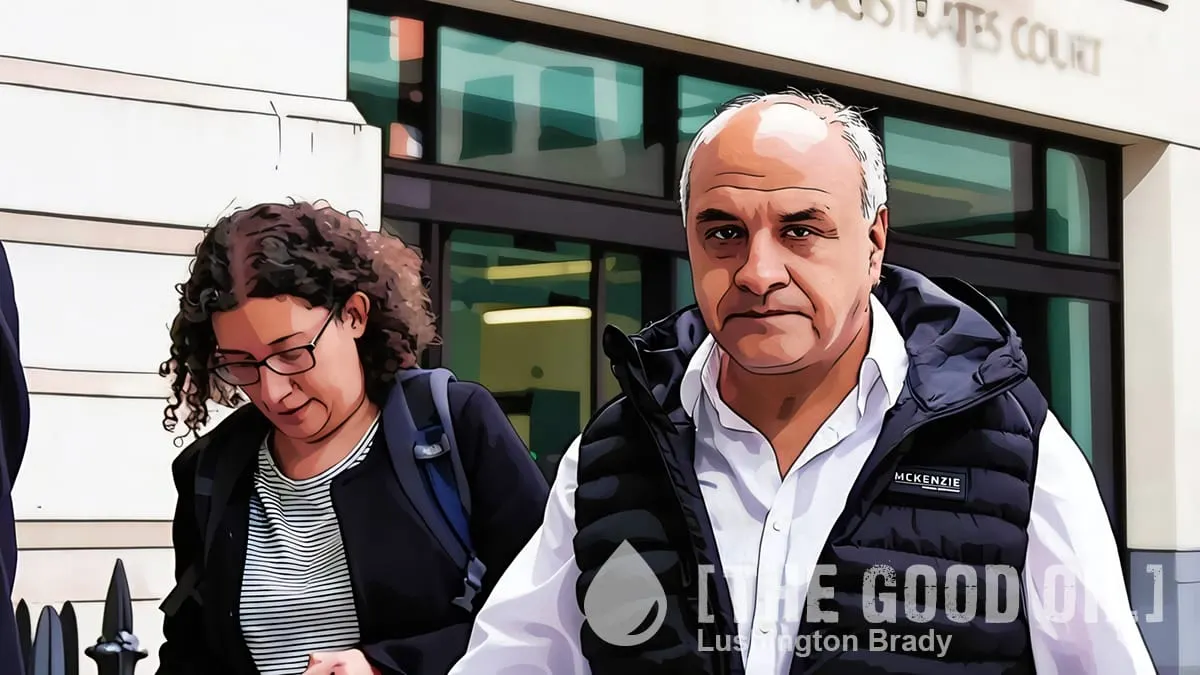
My name is Hamit Coskun and last year I was convicted in a British court of religiously aggravated public order offense. My “crime”? Burning a copy of the Quran outside the Turkish consulate in London. Moments later, I was attacked in full view of the street by a man. I was hospitalized. Then I was arrested and convicted in Westminster Magistrates Court.
Coskun fled Turkey after years of fighting the slow Islamic takeover under Erdogan. Secular Kemalism had given way to Quran schools, religious dogma in classrooms, police enforcing faith rather than law and open welcome for Hamas figures. His own family, Armenian and Kurdish roots, non-religious, had already paid in blood and torture for dissent. He arrived in Britain in 2022 hoping the land that once prided itself on free speech and individual liberty would let him continue that fight.
Instead, he found a country that has quietly reinstated blasphemy laws – but only for one religion.
Coskun’s symbolic protest against political Islam drew an immediate violent response. A man slashed at him with a knife, shouting he would kill him for insulting the faith. Enter the two-tier British justice system. That attacker received a suspended sentence. Coskun, the victim, was arrested, convicted and only escaped after a successful appeal backed by the Free Speech Union and National Secular Society. The Crown Prosecution Service then spent hundreds of thousands of pounds trying to drag the case back to the High Court to reinstate the conviction.
The Crown Prosecution Service (CPS) has lost a High Court bid to challenge the acquittal of a man who burned a Quran outside the Turkish consulate in London.
Hamit Coskun was initially convicted last June of a religiously aggravated public order offence after he held a flaming copy of the Islamic text aloft and shouted an expletive about Islam outside the Turkish embassy in February last year.
The 51-year-old successfully appealed against his conviction, having it overturned by Mr Justice Bennathan at Southwark Crown Court in October.
The CPS brought an appeal against that decision at the High Court and asked for it to be reconsidered.
The CPS lost. Lord Justice Warby and Ms Justice Obi dismissed the appeal. The Free Speech Union called it a humiliating defeat and demanded the Director of Public Prosecutions resign. Stephen Evans of the National Secular Society was blunt: the prosecution was an attempt to introduce a blasphemy law by the back door and a hostile reaction cannot be allowed to determine whether speech is criminal.
Britain once led the world in rolling back religious censorship. Blasphemy laws targeting Christianity were scrapped decades ago. Now the same legal machinery is being repurposed to shield Islam from criticism. Coskun was told his protest against Erdogan’s regime and the political theology driving it was really hatred of Muslims. The judge accepted the prosecution’s claim that he had not shouted “Erdogan” loudly or often enough while being knifed and kicked on the pavement.
Police officers no longer served the law but the faith.
Oh, you thought he was talking about Britain? No, he was talking about Turkey, but an openly Islamic country is now indistinguishable from the UK.
This is the inversion at the heart of modern Britain. A man who risked his life opposing the very Islamic authoritarianism that has turned parts of his homeland into a base for radicals is prosecuted for the same stance in the country that claims to defend liberal values. Meanwhile, the violent enforcer of religious orthodoxy walks free with barely a slap on the wrist.
The pattern is now unmistakable. Britain has abandoned both its Christian inheritance and its hard-won tradition of liberal democracy. In their place stand de facto Islamic blasphemy rules enforced through ‘religiously aggravated’ public order offences. Criticism of doctrine is reframed as hatred of believers. Peaceful protest is criminalised if it offends the wrong imported sensitivities. The state no longer protects citizens from violence – it protects certain religions from offence.
Coskun now discusses asylum in America. He came to Britain expecting the freedom he could no longer find in Turkey. He discovered instead a country that has imported the very intolerance he fled and dressed it up as diversity and inclusion. The West that once sent missionaries and ideas outward now imports the problems it once helped contain and punishes those who name them.
Britain’s liberal democracy did not die in a single blow. It is being quietly strangled by institutions that have decided some religions are beyond criticism while ordinary citizens pay the price in lost speech and rising disorder. Hamit Coskun’s case is simply the latest proof that the old country no longer believes in the principles that once made it worth defending.