Tom Armstrong
Just an old fashioned romantic libertarian conservative at heart. Or maybe a romantic conservative libertarian, depending on the stages of the moon.
Jake Wallis Simons’ recent article in the Telegraph, “We are witnessing the emergence of a 21st century British fascism,” is a textbook example of the mendacious mainstream media’s favourite trick: stretch a word until it snaps, then fling the broken pieces at anyone who challenges the prevailing woke orthodoxy. The piece is long on insinuation, short on precision, and almost entirely empty of historical honesty. What follows is a straightforward deconstruction of its claims, its methods, and its deeper purpose.
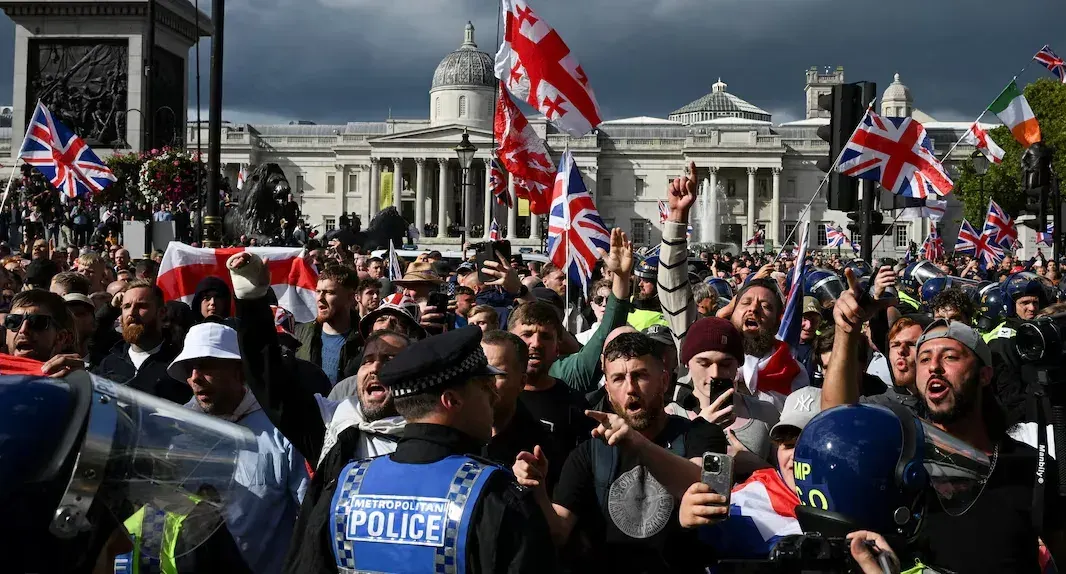
Start with the central accusation. Simons says a strain of “US-inspired ethnonationalism” has arrived in Britain, embodied by Rupert Lowe’s Restore Britain, and that this amounts to fascism. He reaches for the usual props: talk of “traitors,” calls for mass deportations, references to “demographic security for the white British people,” and a refusal by Lowe to declare that King Charles is a “white Briton” under a particular demographic definition. He then leaps, irrationally and without any serious argument, to Blut und Boden, Volksverräter, and the shadow of the 1930s.
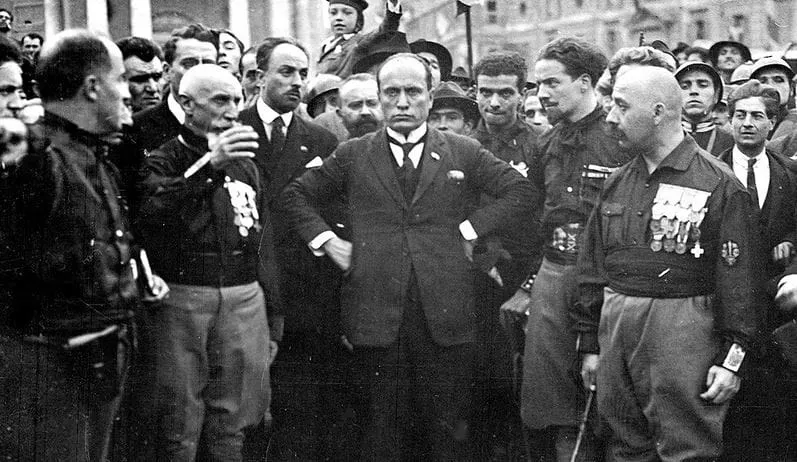
This is rhetorical malpractice. Fascism, as described by its own founder Benito Mussolini, is not a synonym for robust nationalism, strict immigration control, or even ethnic preference. Mussolini’s famous formulation was clear: “Everything within the state, nothing outside the state, nothing against the state.” Fascism is the creation of an all-powerful state that claims the right to direct, regulate and ultimately control every aspect of life; economy, culture, speech, association, family, and conscience. It is totalitarian in ambition and subordinates the individual to the collective as defined by the regime. It does not tolerate independent centres of power or genuine dissent.
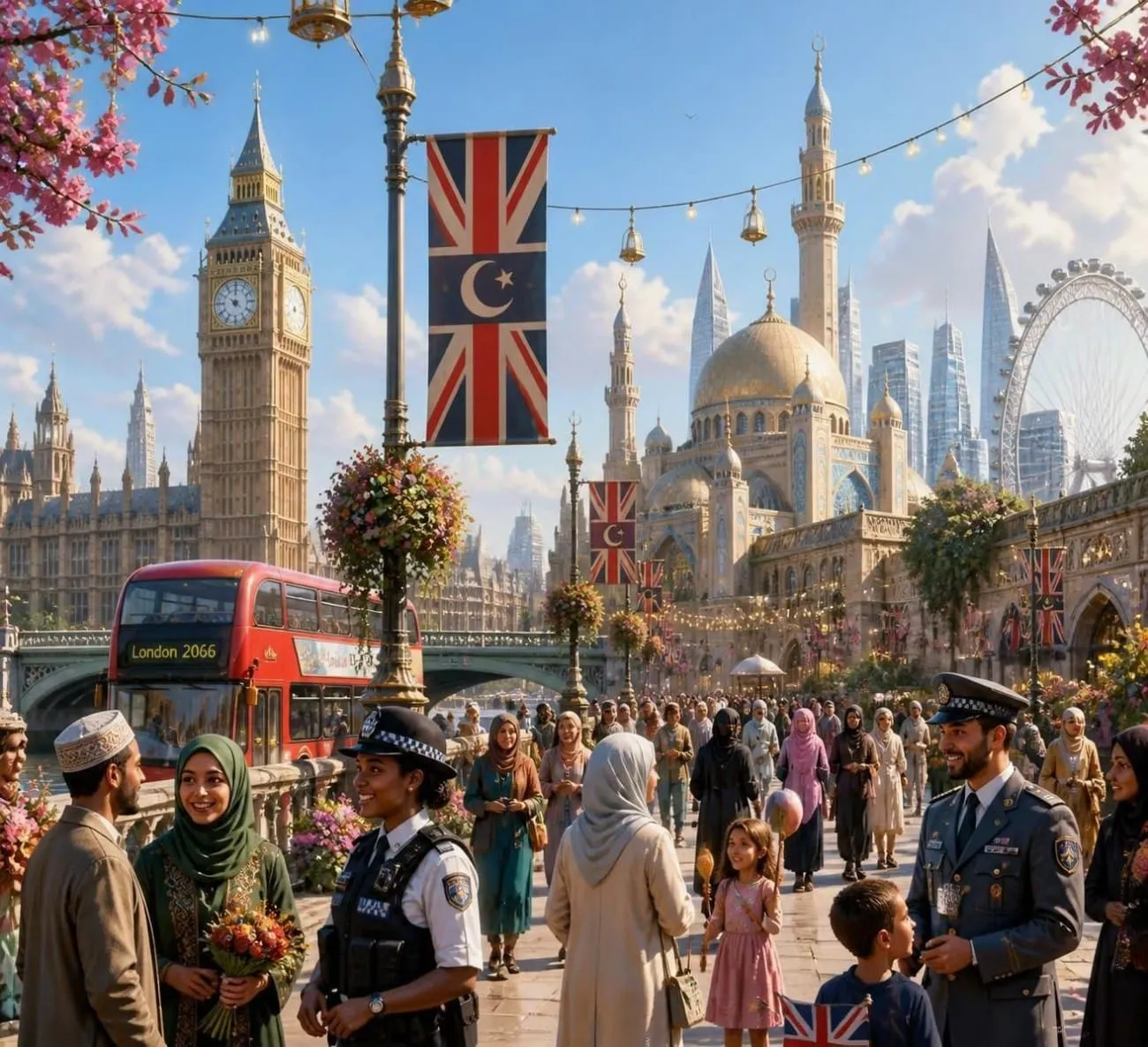
Look around Britain today and ask which political tendency most closely matches that description. It is not the people arguing for controlled borders and the preservation of a recognisable national culture. It is the alliance of Islamist activists and progressive leftists who have spent years building parallel legal and cultural systems, demanding special exemptions from the ordinary rules of free speech and equal treatment, and enforcing a cancel culture that treats disagreement as moral contamination. These groups do not merely disagree with their opponents: they seek to remove them from public life, from employment, from platforms, and sometimes from the country itself. They treat the state and its institutions, from universities to the civil service, the police and the media, as instruments to be captured and used to enforce ideological conformity. That is far closer to Mussolini’s model than anything Rupert Lowe has said.
Simons himself acknowledges, almost in passing, that Islamists are embedded in our societies and that mass migration has been a catastrophe, but immediately and predictably pivots to insist that the real danger is the reaction to these facts. This is the classic motte-and-bailey manoeuvre. Admit the problem in the safe motte, then occupy the bailey by declaring that anyone who wants to reverse the damage is a fascist. The result is that the only permitted response to genuine threats becomes more of the same failed liberalism that produced them.
The article’s treatment of “ethnonationalism” is equally dishonest. The term is presented as a self-evident smear, a new label for racism. Yet the three most prominent figures Simons tries to associate with this supposed menace – Rupert Lowe, Tommy Robinson and Nigel Farage – have all publicly rejected the idea of an all-white Britain or a purely ethnic definition of the nation. Lowe has stated that he detests ‘far-right ethno-nationalist neo-Nazism’ and that he has never been driven by it. Farage has repeatedly warned against the rise of extreme ethno-nationalism and positioned Reform as a civic, not racial, project. Robinson, for all his polemical style, has consistently framed his campaign in terms of culture, law and the defence of free speech rather than blood purity. To ignore these statements, or to treat them as mere camouflage, is not analysis. It is propaganda.
The King Charles episode is a perfect illustration of the method. A demographic projection used a strict definition of “white British” that required both parents to have been born in the United Kingdom. Under that narrow technical definition, the King would not qualify because Prince Philip was born in Corfu. When Nick Robinson of the BBC put this definition to Lowe and demanded a yes-or-no answer, Lowe declined to play the game of “splitting hairs” and insisted the broader point about demographic change was clear. Simons falsely presents this as Lowe refusing to accept that the King is a white Briton, as if Lowe had questioned the monarch’s legitimacy or ancestry in any serious sense. The context is stripped away so that a cautious answer to a gotcha question can be transformed into evidence of racial obsession. This is not journalism. It is ambush theatre.
The same technique appears in the handling of Charlie Downes’s social-media post about Farage and Jewish supporters. Any criticism of particular donors or lobby groups is instantly reframed as a “dog whistle” about Jewish puppet-masters. The possibility that a political figure might simply object to the influence of money in politics is ruled out in advance. The historical parallel is then drawn to early 20th-century Germany, completing the rhetorical escalation from disagreement to proto-Nazism in a few sentences.
Simons is right about one thing: Britain faces serious problems. Large-scale, poorly managed immigration has changed the character of many towns and cities. Parallel societies have formed. Antisemitism has surged, particularly from Islamist and ‘progressive’ sources. Trust in institutions has collapsed. But the solution is not to pathologise every attempt to restore democratic control over borders and culture. The real accelerant of authoritarian politics is the refusal of the establishment, including large parts of the media, to treat these concerns as legitimate. When ordinary people are told that noticing demographic change is fascist, that wanting mass deportation of illegal immigrants is fascist, and that defending the historic character of the country is fascist, they eventually stop listening to the people doing the labelling.
It is the author and the wider mainstream media that are creating the conditions in which genuine extremism can flourish. By emptying the word fascism of meaning and applying it to any serious defence of national cohesion, they strip the language of its capacity to identify real totalitarianism. By treating cancel culture, speech codes and institutional capture as normal, they normalise the very habits of mind that fascism requires: the demand for ideological purity, the punishment of dissent, and the belief that the state and its cultural enforcers have the right to reshape society from above.
Mussolini understood that fascism needs a comprehensive claim on public life. Today that claim is most energetically advanced not by minor parties talking about remigration, but by the establishment’s progressive-Islamist coalition that already controls significant cultural and bureaucratic territory and shows no interest in sharing it. The people who shout “fascist” at every challenge to that coalition are not defending liberalism. They are defending their own preferred form of control. And in doing so, they are helping to till the very ground in which real authoritarianism can take root.
This article was originally published by the Free Speech Backlash.