
Steven Barnes
Steven is a retired doctor from North East England.
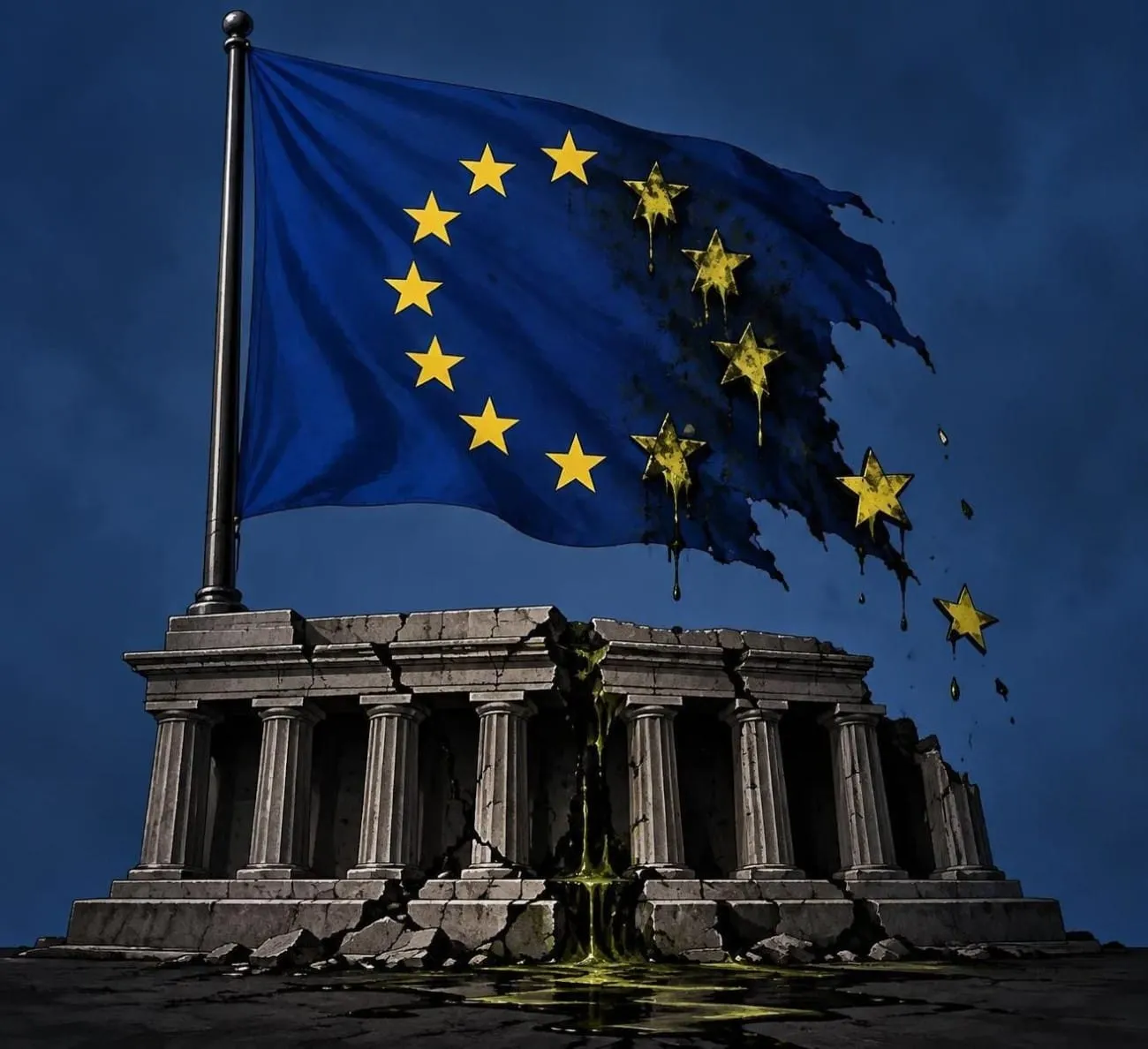
There is something profoundly rotten at the heart of the European Union. Across the continent, ordinary people in the nation states that form its membership are expressing deep unhappiness through strikes, protests and, too often, outright rioting. Germany’s industrial heartlands are grinding to a halt under the weight of mass walkouts. France and Spain are convulsed by cost-of-living anger. Poland is locked in a bitter constitutional struggle that many there describe as a pro-EU power grab. Economically the bloc lags the United States and struggles against Chinese competition. It has failed at prosperity, security of energy supply, democratic accountability and border control. The one thing it has not failed at is the relentless drive towards ever closer union of government. Yet the British establishment, never reconciled to the 2016 verdict of the people, continue to nudge and lobby for a return to this declining, dogmatic project. There is no social or economic case for the United Kingdom to rejoin a dying relic of a past world.
This week more than 400,000 German industrial workers took part in strikes and rallies organised by IG Metall, the country’s largest union. They demanded a five per cent pay rise and binding job guarantees for 3.7 million employees in metal, electrical and engineering sectors. Employers offered a small one-off payment and a 1.3 per cent rise deferred until mid-2028 – in real terms a pay cut. Factories belonging to Bosch, Siemens, Audi, Mercedes-Benz, Volkswagen, Airbus and others saw stoppages. Workers blocked gates, marched with placards and made clear they would not accept further cost-cutting that protects corporate balance sheets at the expense of livelihoods.
Germany’s once-mighty industrial base is in crisis. Soaring energy costs after the loss of cheap Russian supplies, weak investment, American tariffs and fierce Chinese competition have forced plant closures and the relocation of production abroad. The Federation of German Industries has warned that around 15,000 industrial jobs vanish every month. Volkswagen has announced plans for historic job cuts. Energy-intensive output remains depressed. The strikes are not isolated industrial disputes – they are symptoms of a deeper structural failure that Brussels’ regulatory thicket and net-zero obsession have helped to produce.
The unrest is not confined to Germany. In France hundreds of thousands have taken to the streets in recent weeks demanding higher pay, better public services and an end to austerity measures. Transport and schools have been disrupted. Clashes with police, tear gas, arson and looting have led to mass arrests. Spain faces a nationwide general strike on 11 November after weeks of protests over soaring rents and evictions. Housing costs have risen far faster than wages; the eviction of an elderly woman after a 230 per cent rent hike became a national flashpoint. Ireland prepares for public-sector strikes. Italy has seen violent demonstrations. Across more than 30 European countries, cost-of-living protests, student actions and labour disputes have numbered in the thousands since September. Some have turned ugly. The peoples of the EU’s member states are not contented partners in a successful project. They are angry, squeezed and increasingly willing to confront their governments in the streets.
Poland offers a sharper illustration of the EU’s political pathology. Prime Minister Donald Tusk’s pro-European government has moved aggressively to overhaul the Constitutional Tribunal, suspending its president and deputy in a late-night action that brought riot police onto the streets and prompted nationalist President Karol Nawrocki to turn his plane around and return to Warsaw. Tusk frames the changes as restoring judicial independence after the previous Law and Justice administration’s appointments. His critics, including the president, call it an illegal power grab – a “coup” designed to align Polish institutions more tightly with Brussels’ preferences and unlock frozen EU funds. Protesters gathered outside the tribunal, chanting against Tusk. The European Commission’s long pressure over “rule of law” has become a vehicle for intervening in a sovereign nation’s constitutional arrangements. The result is constitutional crisis, mutual accusations of lawlessness, and further polarisation of Polish society.
Economically the picture is equally bleak. Eurozone growth limps along at roughly half the pace of the United States. Productivity gaps with America have widened, particularly in technology and digital sectors. Germany, once the engine, has stagnated or contracted in recent years and remains a laggard. High energy prices, demographic decline, heavy regulation and the costs of the green transition have eroded competitiveness. Industrial jobs continue to disappear. The bloc’s own forecasts show modest expansion that fails to close the gap with more dynamic economies. The EU has not delivered the prosperity it once promised. It has delivered bureaucratic centralisation, chronic underperformance and a generation of young Europeans who see diminishing prospects at home.
The European Union claims to stand for peace, prosperity, democracy and solidarity. On the evidence of the streets and the factories, it has failed at all of these. Energy security collapsed when cheap Russian gas was cut off and no coherent alternative was ready. Borders have been porous for years, with governments struggling to control migration and its social consequences. Democratic accountability is diluted away by the distance between Brussels institutions and national electorates; when national governments try to assert different priorities they face infringement procedures, frozen funds or judicial pressure. Prosperity has proved elusive for the industrial working and middle classes who once formed the backbone of the European project. What remains intact is the ideological commitment to ever closer union – the steady transfer of power from national capitals to the centre, justified by the need for ‘more Europe’ whenever national policies produce friction.
Against this backdrop the British establishment’s residual attachment to the EU looks wilfully blind. The current authoritarian government and surrounding commentariat continue to explore closer alignment, talk of customs unions or single-market access, and float the possibility of eventual rejoining. Michel Barnier, the former EU negotiator, has helpfully reminded anyone listening that there would be no cherry-picking: free movement, full acceptance of the acquis, and the loss of the old rebate would be the price of return. The door, he says, is open – on Brussels’ terms. Rejoining would mean surrendering the hard-won ability to set our own laws, control our borders, strike independent trade deals and escape the regulatory drag that is throttling continental industry.
There is no social case for re-entry. The peoples of the EU’s nation states are demonstrating their discontent through industrial action and street protest. Why would Britain, having escaped, choose to re-enter a house in such disorder? There is no economic case either. The United Kingdom – should it chose to use them – retains the advantages of an independent currency, flexible labour markets and the freedom to regulate according to its own interests. Binding ourselves to a low-growth, high-regulation, energy-constrained bloc would be an act of self-harm. The EU is not a rising power: it is a post-war construct struggling to adapt to a multipolar world of technological rivalry, demographic change and geopolitical competition. Its one consistent success has been the accumulation of central power at the expense of national democracy.
Patriotic conservatives should be clear-eyed. The 2016 referendum was not a temporary fit of pique. It was a decision to recover sovereignty and chart an independent course. The European Union that exists today is more centralised, more economically challenged and more socially strained than the one Britain left. Strikes in Germany, riots and marches in France and Spain, constitutional confrontation in Poland – these are not the signs of a healthy, attractive union. They are the symptoms of a project that has lost the consent of too many of its own citizens while clinging to its founding dogma. Britain has no business returning to it. The task is to make a success of independence, not to crawl back into a declining and dogmatic relic.
This article was originally published by the Free Speech Backlash.


