Table of Contents
With Iran trying its worst to hold the world hostage to the desperation of its fanatical mediaeval theocracy to cling to power, no matter what the cost, you’d think the global powers would be rushing to defend their critical energy requirements.
Instead, the same EU that has spent years throwing tens of billions at propping up a corrupt former province of the Soviet Union and condemning hundreds of thousands more to the meat grinder, is chickening out of the chance to finally bring down the death cult regime that has exported so much terror around the world for half a century – not to mention murdering tens of thousands of its own citizens in just the last few months. In the process, they’re cutting their own throats by giving free reign to the terror regime to choke off the oil supply that, their delusions of ‘green energy’ notwithstanding, their own nations are critically dependent on.
To be honest, we shouldn’t have expected much better from the feckless, spineless EU. After all, they wilfully ignored years of warnings about making themselves utterly dependent on Russian gas, just so they could lie that they were ‘cutting carbon emissions’. Nor should we expect much from Australia and New Zealand, whose current defence capabilities amount to throwing a few water balloons at a raging fire.
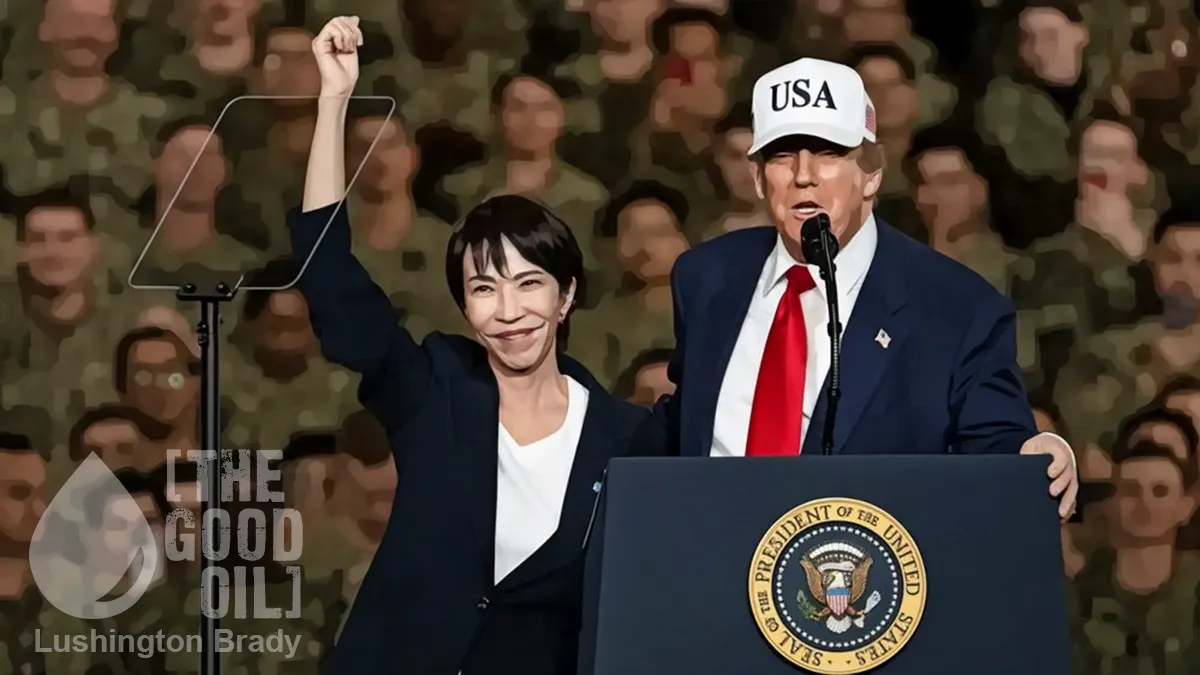
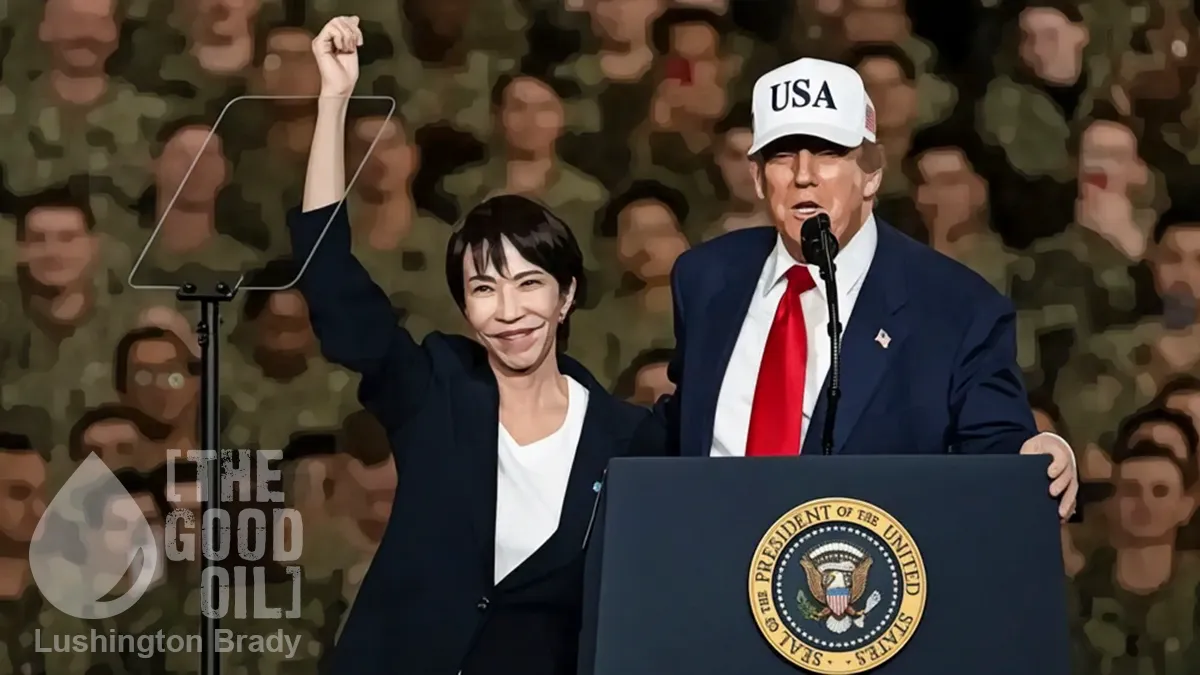
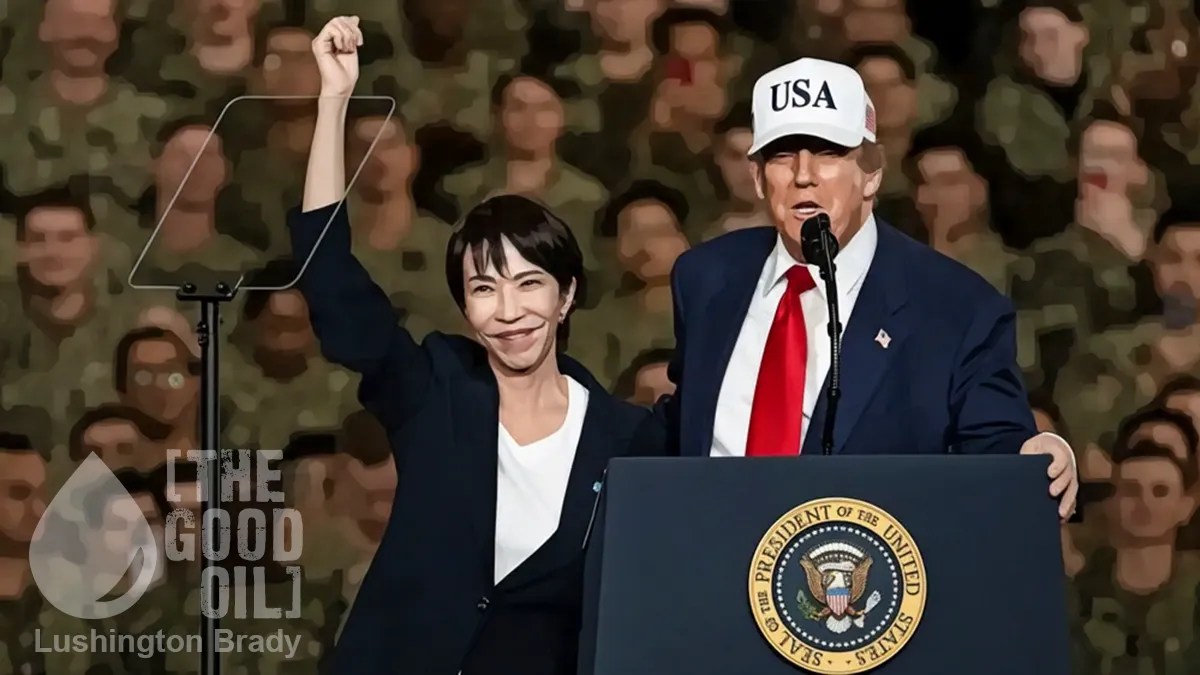
Japan is a much more reliable ally and new PM Sanae Takaichi is a known admirer of US President Donald Trump. But Japan’s domestic politics, not least the post-WWII constitution, are holding back any substantial assistance the nation might be willing to offer.
Tokyo is not currently planning to deploy Self-Defense Force ships to escort vessels in the Middle East, Prime Minister Sanae Takaichi told parliament on Monday, after US President Donald Trump called for Japan and others to send warships to help secure the Strait of Hormuz.
“No decision has been made whatsoever regarding the dispatch of escort vessels,” Takaichi told an Upper House Budget Committee meeting. “We are currently examining what Japan can do independently and what is possible within the legal framework.”
That legal framework is, as already alluded to, Japan’s post-war constitution. Not unreasonably in 1945, that constitution sought to strictly limit Japan’s military capability, severely constraining its ability to wage war. In fact, to prevent it launching an aggressive war again. While in many ways it worked admirably – Japan today is one of the most pacifistic nations in the world – as a living document, that constitution is fast proving unfit to meet the strategic global challenges of the 21st century.
An increasingly belligerent China is the obvious threat, one that weighs particularly on Takaichi’s mind (as it would yours, if Beijing openly threatened to cut off your head). But, resource-poor Japan being more dependent than most nations on imported oil, Iran’s blockade of the Straits of Hormuz is another critical threat. One Japan appears to be hamstrung in meeting with any real force.
Takaichi said during Sunday’s budget committee meeting that Japan had not been asked to join the grouping.
“Legally speaking, this is very difficult,” she told lawmakers. “We are carefully examining what can be done within the scope of current laws and what is the best course of action at this time. At the same time, we are continuing to engage with Iran to help deescalate the situation while also exchanging information with various countries” […]
Japanese officials say the current situation in the Strait of Hormuz does not constitute a “survival-threatening situation” that would trigger the right to exercise “collective self-defense” and deploy the SDF, but the government has left the door open, with Takaichi and other officials repeating that it is continuing to gather information “with grave concern.”
Unlike our own pathetic, clueless, government, Japan at least has planned for emergencies like this.
Japan, which holds stockpiled oil equivalent to about 254 days of domestic demand, on Monday began releasing oil from those reserves in a bid to stabilize the economy.
At the same time, these reserves also allow public complacency in Japan to continue.
An Asahi Shimbun nationwide survey taken Saturday and Sunday found support for the US-Israeli war in Iran in single digits, at nine per cent, while 82 per cent of respondents said they do not support the conflict. The poll also found that 51 per cent said they do not approve of Takaichi’s ambiguity on the legality of the war, exceeding the 34 per cent who said they approve.
It’s all very easy to be blasé when the hangman’s noose seems such a long way off.
Politically, though, the crisis could also be an opportunity for Takaichi. One of her key policies at the recent election – which she won resoundingly – is constitutional reform aimed at tackling situations exactly such as these. The argument is that Japan has paid ample penance for its WWII aggression and that the 21st century is a time for the country to take a stronger role in global security.
Should the blockade persist and the world’s oil start to run dry, China, which is heavily dependent on Iranian oil, would feel the pinch harder than most. And a hungry dragon is a dangerous one, Takaichi need only point out.