Table of Contents
In the excellent alternative-history science fiction TV series For All Mankind, a minor subplot is that Watergate never breaks. Richard Nixon finishes his second term unsullied by the scandal that has blackened his name in reality. This is an interesting point, because, if it were not for Watergate, Nixon would be remembered as not just one of the most popular US presidents (his 1972 re-election redefined ‘landslide’), but one of the most consequential.
All-too-often forgotten today are the major achievements of the Nixon presidency: Détente (easing tensions) with both the Soviet Union and Maoist China, ending the military draft and lowering the voting age to 18, establishing the Environmental Protection Agency and passing of the Clean Air Act, Clean Water Act and the Mammal Marine Protection Acts, passing the Equal Rights Amendment and Title IX, desegregating southern schools and returning land rights to Native Americans.
The media-left are even more deranged about Donald Trump than they were about Nixon. Consequently, his many policy triumphs are completely ignored. Especially his potentially epochal foreign policy achievements. In his first term, Trump brokered the Abraham Accords, persuading the United Arab Emirates (UAE), Bahrain, Morocco, and Sudan to recognise the legitimacy of the Jewish state for the first time. In the past fortnight, Trump has set about remaking the Middle East even more fundamentally.
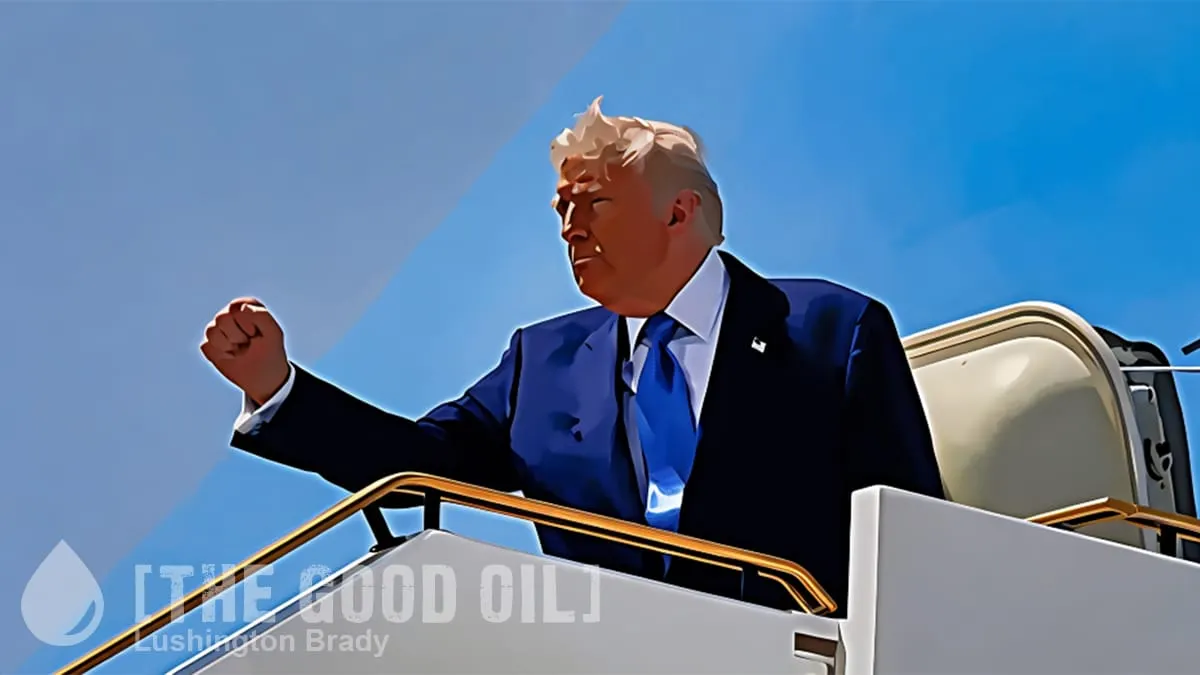
Donald Trump’s visit to the Middle East was a transformative moment that will be felt in the region for years, if not decades. Only a mercurial character such as Trump could have pulled off such an unorthodox visit, blending the pageantry and the bizarre with sweeping and substantial policy pronouncements that have up-ended a generation of traditional US diplomacy in the region.
Let’s be clear: Trump, for all his faults, strode across Saudi Arabia, Qatar and the United Arab Emirates in a way that his predecessor Joe Biden never could have.
He exuded power, embraced the unconventional, took risks, cajoled and threatened, and took his transactional ethos to new heights by declaring – in a region filled with ancient hatreds and blood feuds – that the US has “no permanent enemies”.
The most seismic shift Trump is signalling to the Middle East is declaring that the USA would no longer be “giving you lectures on how to live”. This is a very big deal. The paternalistic finger-wagging, not to mention blatant interference, of decades of US foreign policy has understandably rankled many in the Middle East. We may not agree with how they live, but we don’t like it any better when Middle Easterners scold and sneer at our culture. We’d be outraged, too, if it emerged that, say, the Saudi General Intelligence Presidency, had engineered a coup to remove a democratically elected leader they didn’t like.
Trump is taking, instead, a transactional, laissez-faire approach to Middle Eastern politics. Let’s do business and leave each other to run our own affairs, even if we don’t like them. It may not bring liberal democracy to the Middle East, but what has? At least it might dial down resentment against the ‘Great Satan’.
By far the most consequential and far-reaching outcome was Trump’s decision to lift all US sanctions on Syria under its new post-Assad leader, the former rebel fighter Ahmed al-Sharaa.
The move is a major gamble and surprised many given historic US hostility towards Syria, whose closest traditional allies have been Iran and Russia. But it is consistent with Trump’s willingness to embrace the unconventional, a trait that can be both a strength and a weakness.
If Trump can lever Syria away from Iran and Russia, it will be a major blow to both, disrupting, at least in part, their critical axis of territory through the Caucasus.
[Sharaa’s] government and his leadership are still a work in progress but Trump has recognised the potential upside of a new era for Syria in which the US can help it stabilise the country, repair its economy and prevent the resurgence of Islamic State.
Trump says the move will “give them a chance at greatness” but his decision to meet face-to-face with Sharaa in Saudi Arabia – the first meeting between leaders of the two countries in 25 years – was also aimed at reminding the new Syrian leader that there are strings attached.
Above all, Trump wants Sharaa’s help in ensuring that Islamic State does not re-emerge as a threat to the stability of the region.
Trump also wants Syria to expel all foreign fighters and terrorists and for it to eventually recognise Israel.
The potential benefits for the US from a wealthier, less ideological, Syria are enormous.
Trump is also using the same carrot-and-stick approach to Iran. Trump has made clear that he will never countenance Iran having a nuclear bomb. In return for Iran dropping its nuclear ambitions, Trump is holding out the possibility of lifting US sanctions that have crippled Iran’s economy and stabilising relations between the two countries.
Trump is also exhorting Saudi Arabia to come to the Abraham Accords table – a diplomatic triumph, if it eventuates.
Trump’s visit also was a graphic illustration of how his “America First” approach to foreign policy is as much about cutting business deals favourable to the US as it is about geopolitics.
Or, more correctly, that the two are interrelated. Sure, it may mean cutting deals with bastards, but it’s not as if dirty hands are a new problem in politics. Trying to impose Western-style liberal democracy on a place like the Middle East is a futile pursuit at best. As we rudely found out in Afghanistan: these are people who don’t want democracy and are very far from developing the centuries of civil institutions that brought democracy to the West.
Well, so be it: if they’re fat and contented and not bombing us any more, nor us them, then that’s maybe the best an imperfect world can hope for. The sooner we realise the futility of trying to finger-wag, brow-beat, bomb and bully a culture so at odds to our own, the sooner we can maybe stop wasting so much of our own blood and treasure on a fool’s errand.