Table of Contents
Peter MacDonald
Chris Hipkins should be politically finished. As minister of education, he presided over a collapse in literacy, skyrocketing truancy and an ideological hijacking of the curriculum. As police minister, he oversaw a period of lawlessness and gang dominance, while frontline officers became demoralised: constrained by bureaucracy and ideological recruiting. And as the face of the Covid response, he was the public voice of mandates, lockdowns, MIQ cruelty and divisive social policies that tore communities and families apart.
Yet somehow, Hipkins remains one of New Zealand’s ‘preferred prime ministers’ in the polls. How? Why is someone with a track record of failure still considered viable, even likeable, by so many Kiwis?
The answer lies not in policy, but in psychological manipulation: the same kind that was used during the Covid vaccine rollout. The government, with the help of compliant media, used behavioural science and nudge psychology to drive the nation toward mass vaccination. These techniques included emotional manipulation, fear tactics, shame, repetition and social pressure. They didn’t persuade the nation – they programmed it.
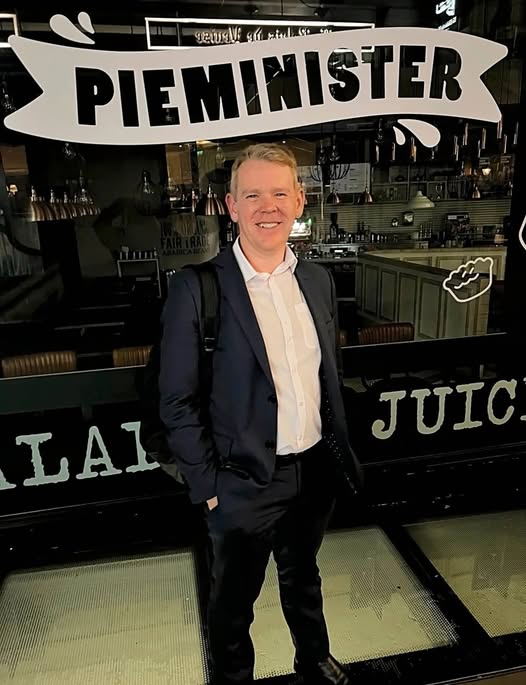
Now, those exact same tactics are being used to rebrand Chris Hipkins. The public is being nudged, again: this time, not toward a jab, but toward a smiling politician holding a pie.
Hipkins image has been carefully crafted. The boy from the Hutt with his awkward schoolboy charm, goofy catchphrases and humble Kiwi persona. The media jumped on his pie-eating photo ops and turned them into icons of relatability. It’s no accident. The meat pie is no longer just lunch: it’s a symbol of manufactured trust.
The average Kiwi, exhausted and still traumatised from the Covid years, is being led to see Hipkins not as the man behind the mandates, but as a familiar figure with good intentions. He’s sold as a man of the people, the kind of guy who eats what you eat and laughs at his own jokes. In contrast, Christopher Luxon comes across as stiff, corporate and detached. So people default to Hipkins: not because he succeeded but because he feels safer.
That’s the key. These tactics don’t rely on facts. They rely on emotional memory and repetition. The media, funded under Hipkins’ Labour Government through the Public Interest Journalism Fund, still defends him – not because he earned it, but because they built him. To admit his failure would be to expose their own role in protecting a collapsing government.
Meanwhile, the consequences are still unfolding. The education system is in freefall and now under a new minister whom critics say is doubling down on the same ideological agendas of diversity and cultural revisionism. The police are overwhelmed and morale has never been lower. And the Covid inquiry is being tightly controlled to avoid exposing the true extent of the harm – a performative commission is determined to ‘move on’ and bury the trauma.
But many Kiwis haven’t moved on. Some lost loved ones. Others lost jobs, health or hope. Friendships were destroyed and families were divided. And yet the people responsible are still being presented as trustworthy leaders, with Hipkins leading the charge while wrapped in puff pastry and spun as a humble hero.
This is what happens when media, politics and psychology converge. It’s not truth: it’s social engineering. Until we confront it, we’ll keep electing images instead of integrity… and eating pies while Rome burns.