LilBaP
Democracy’s had its day – only if the wrong people are in charge of it.
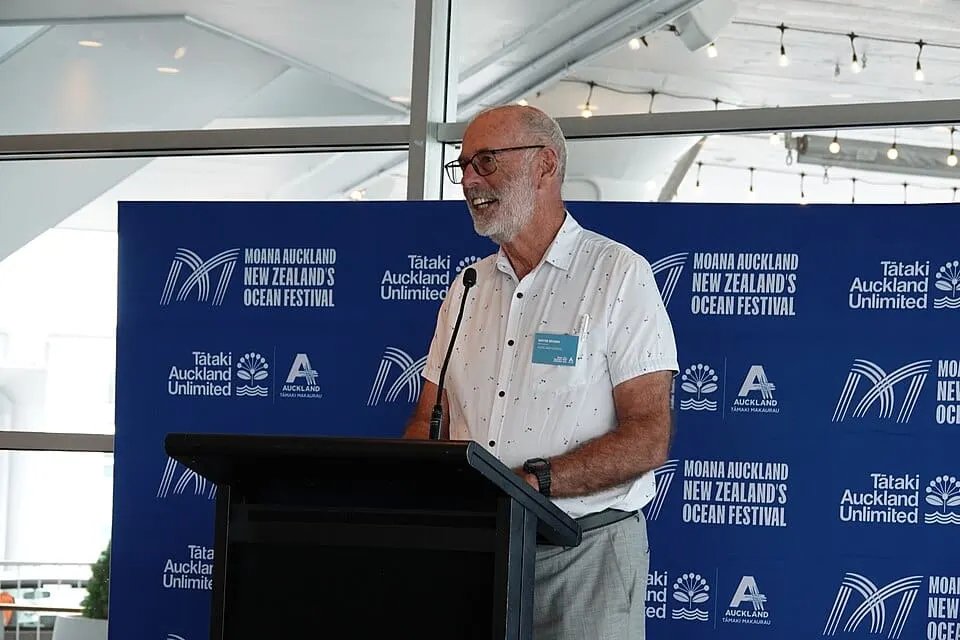
Auckland Mayor Wayne Brown has come back from China and told Stuff that democracy has had its day. The system is unfathomable, the American election produced a non-working government, Europe has not had a good one for years and it is time for something else.
The something else, he made plain, is China’s centrally managed capitalism – the version that allows failure and gets results. Western countries, by contrast, prop up ‘dogs’ such as Fletcher’s and pretend they still have capitalism.
This is the Overton window doing its usual quiet work. A mayor of New Zealand’s largest city can now say, in public, that the system which put him in the job is finished, and the reaction is largely a raised eyebrow rather than a demand that he resign.
He is not leading anything. He is following a shift that has been under way for years in parts of the business and academic world: elected government is slow, messy and embarrassing, while directed growth looks efficient from the outside.
A sheep in a mayoral chain is still a sheep. For a moment I wondered if it was Joe Biden in disguise, but at least Biden knew how to find his razor.
Brown is not wrong that China has grown fast. The bicycles he remembers from 25 years ago have been replaced by electric scooters and high-speed rail. What he leaves out is the ranking that still matters. The United States remains the largest economy on the planet. Its companies still set the pace in the technologies China is trying to copy or buy. Capital that can leave does leave when the rules change without notice.
Growth under political control is not the same as growth under rules – the rulers cannot rewrite overnight. Brown is free to prefer the Chinese numbers. He is not free to pretend the order of actual prosperity has reversed.
He might try being mayor of a major Chinese city and see how long he lasts making these comments in reverse. The answer is not long.
He is also not a Trump figure. Trump’s project, whatever else one thinks of it, was an attempt to reassert elected control over a permanent bureaucracy and a set of trade deals he regarded as one-sided – drain the swamp. Brown’s comments run the other way: less elected control, more admiration for the system that keeps the elected side on a short leash. He has simply built a different swamp.
On the surveillance point he misses the difference. Meta and Facebook collect data because users hand it over in exchange for a service they can stop using – at this point.
The Chinese state collects data because it can, and because the citizen has nowhere else to go. One is a commercial choice; the other is a condition of existence. Pretending they are the same only works if you have never had to test the difference.
The free-speech irony is the part that really matters. Brown can say democracy has had its day, can praise a system that does not allow equivalent criticism of its own leaders and can still expect the interview to be published and answered.
That is the bonus he is casually discarding. In the country he has just visited, the equivalent sentence from a local official would not be treated as a contribution to debate. It would be treated as a problem to be managed. The fact that he can utter the line and the rest of us can call it stupid in public is the practical difference between the system he is running down and the one he is holding up.
He was asked what should replace democracy. He declined to get involved in “that sort of ideological shit”. Convenient – you start the argument then step away from it.
The job of an elected mayor is precisely to operate inside a framework that voters can change. Declaring the framework obsolete while still drawing the salary is the soft option.
If the Chinese model is the answer, the logical next step is to name which parts of it he wants for Auckland – the capital controls, the social-credit architecture, the independent press, or merely the growth numbers. ‘What’s working’ is not a policy.
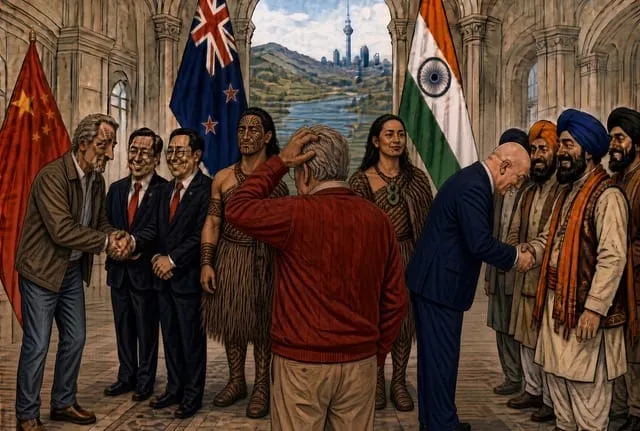
Both sides of the supposed soft centre are showing the same habit. Christopher Luxon, on the mildly centre-right, spent months bowing to Indian demands on a free-trade agreement that still leaves New Zealand as the junior partner. Wayne Brown, on the centre-left, returns from China and effectively bows to the Chinese model as the one that works.
Both of them, along with most of the political class, continue to bow to Māori leaders and the Waitangi Tribunal whenever the subject is raised. The pattern is consistent: each relationship is treated as one that requires New Zealand to adjust, apologise or yield, while the other side is not expected to do the same.
One thing a working business life teaches quickly is that you can be respectful of other cultures without repeatedly bending over for them. Respect is mutual or it is just concession.
When every negotiation, every speech and every policy adjustment starts from the assumption that New Zealand must give ground, the result is not partnership. It is a slow transfer of leverage. China, India and the Treaty sector have all noticed. The politicians who keep performing the bow have not.
New Zealand’s trade with China is real and commercially important. Auckland has a large Chinese population: that does not make the city ‘more pro-China’ in the sense of preferring the Chinese political model over the one that lets its residents vote him out.
I have friends and associates from various nationalities who are hard-working and honest citizens. Most came here for a better life and a free society. Many Chinese who moved to New Zealand did so because it is a democracy – just a thought, Wayne.
Democracy is not a guarantee of good decisions. It is a guarantee that bad decisions can be reversed and that the people who make them can be told, in public, that they are wrong. That is the feature Brown has just described as past its use-by date. The rest of us are still allowed to notice the difference between a mayor who can say it – and a system that would not let him.
At the next Auckland election, people have the chance to change their current decision about who is mayor. Let’s hope they make a wiser choice than last time.