The popular imagination is littered with things we supposedly ‘know’, but which just ain’t so. Or are, at least, highly unlikely. From ‘science says bumblebees shouldn’t fly’ (obviously untrue) to ‘the Great Library was an incalculable loss of millions of books’ (highly unlikely). Then there’s the Cathars.
Largely thanks to Dan Brown’s risible potboilers, there is an unshakeable perception that the Cathars were noble Gnostic victims of ruthless Catholic persecution, particularly in the bloodsoaked Albigensian Crusade in southern France. Stories of noble heretics resisting a brutal church, massacres of “Perfecti” and the infamous “Kill them all; God will know His own” at Béziers fuel romantic images of religious persecution, sometimes even framed as proto-genocide or cultural annihilation.
But how much of any of that is true?
That the Albigensian Crusade at least happened seems beyond doubt. But both its scale and its cause are the subject of much scholarly debate. It seems much more likely that typically brutal mediaeval politics were as much, if not more, responsible than religious zeal. France in the 1200s was far from a unified entity. The further from Paris, the more different were the cultures and even the language. It wasn’t until the early 20th century that most French people even began speaking French as we know it. At the time of the French Revolution, only 11 per cent of the population spoke French.
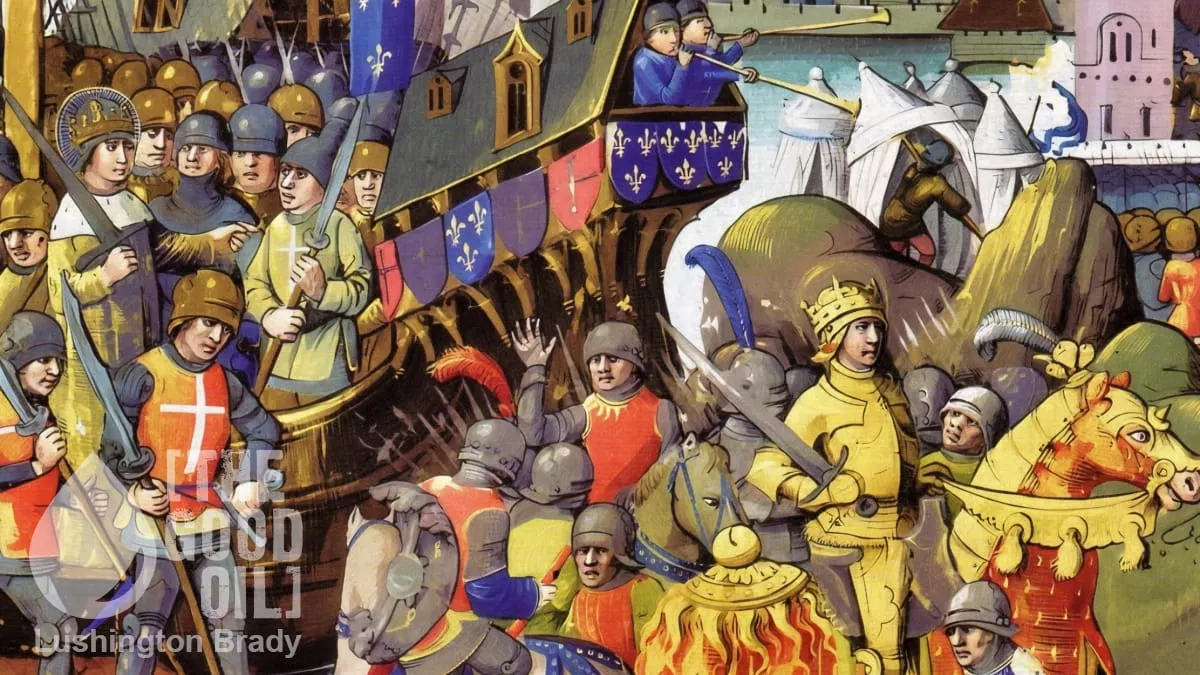
Feudalism also meant that France in the 1200s was much like Germany up until the late 19th: a patchwork of baronies, dukedoms and other fiefs. But the Capetian dynasty was determined to expand its power beyond its initially small demesne around Paris. At the same time, Rome was centralising the power of the church. So, northern French barons, led by Simon de Montfort, answered the papal call to arms, but their real aims soon became clear as the campaign quickly shifted toward territorial conquest. Atrocities occurred, most notoriously the sack of Béziers in 1209, where thousands (estimates vary wildly: medieval claims of 20,000 are likely inflated) died regardless of faith, yet the war was not solely about eradicating a phantom sect. It devastated prosperous Languedoc, weakened southern nobility and facilitated French royal annexation, culminating in the Treaty of Paris (1229). The subsequent Inquisition proved more effective at suppression than the armies.
And the Cathars themselves? A growing number of serious medieval historians now argue that the organised “Cathar Church” as traditionally described may never have existed at all.
Let’s start with the ‘traditional’ account, which didn’t really emerge until the 19th century. It runs something like this:
From the 12th century, a dualist heresy influenced by Bulgarian Bogomilism (and perhaps ancient Gnosticism) spread through Languedoc and northern Italy. Its adherents, called Cathars or Albigensians, believed in two gods – a good spiritual deity and an evil creator of the physical world. They rejected the Old Testament, viewed Jesus as a phantom without a real body and taught reincarnation until souls achieved purity through the Consolamentum sacrament administered by their elite “Perfecti”.
These heretics allegedly formed a structured counter-church with bishops and clergy, winning popular support and noble protection, especially from the Count of Toulouse. The church responded first with preaching, then with the brutal Albigensian Crusade (1209–1229) launched by Pope Innocent III, followed by generations of inquisitorial persecution. The last known ‘perfect’ was burned in 1321. Bernard Gui’s famous inquisitor’s manual became a foundational text for later efforts against heresy.
As seen above, though, there are some big problems with this account.
While contemporary sources show widespread religious dissent and anti-clericalism in Languedoc, where local ‘good men’ and ‘good women’ enjoyed popular respect for their ascetic lives, the term “Cathar” rarely appears in local records. Records of the time show inquisitors speaking in general terms about ‘heretics’. No one in the region self-identified as a Cathar belonging to a distinct church.
Much ‘evidence’ for Catharism emerges from post-crusade interrogations, raising questions of coercion and projection similar to later witch hunts. Inquisitorial documents, often produced under pressure or leading questions after the crusade or layers of translation (Occitan to French to Latin), retroactively imposed Manichaean-style dualism on vague dissent. These sources were frequently read backwards: later inquisitorial assumptions projected onto earlier, vaguer reports of religious dissent.
Sceptics compare the process to the early modern witch hunts. Confessions extracted under duress created the impression of a vast, organised conspiracy that may have existed more in the minds of the interrogators than in reality. Just as scholars now reject the idea of a real “witch cult”, many question whether “Catharism” as a coherent dualist institution ever existed outside inquisitorial imagination.
So, what (do we think) was really going on in Languedoc?
Rather than a foreign-imported Gnostic sect, sceptics see local religious and social tensions. Languedoc had a tradition of relatively independent piety and resistance to the centralising Gregorian reforms that strengthened papal and clerical power. Anti-clerical sentiment was strong. Local customs of respect for ‘good men’ (holy or ascetic figures) were misinterpreted by outsiders as evidence of heretical sacraments.
Indeed, the persecution itself may have radicalised some individuals. A few later figures expressed clearer dualist ideas, possibly as a form of resistance or ‘reaction formation’ to the pressure applied against them. Much like modern-day ‘Wiccan’, which was almost entirely manufactured out of whole cloth in the early 20th century. But the vast majority of those caught up in the violence appear to have been ordinary pious folk or locals swept into a broader conflict over authority, not committed members of a secret dualist church.
Political realities played a major role. The region’s semi-autonomous nobles, including the Count of Toulouse, clashed with the expanding power of the French crown and the church. The crusade, while triggered by the murder of a papal legate, quickly became entangled with territorial ambitions: northern French lords gaining land in the south under the banner of orthodoxy. What began as religious concern could conveniently serve political ends.
It must also be remembered that mediaeval people just didn’t think like modern people. To them, heresy wasn’t just a vague matter of religious disagreement, but an existential threat. Heretics risked the entire community by spurring the removal of God’s protection.
The traditional story of the Cathars has romantic appeal: brave outsiders resisting a powerful institution. But if the sceptics are substantially correct, the real tragedy lies less in the suppression of a sophisticated alternative religion and more in the suffering of ordinary people caught between reformist zeal, regional power struggles and the machinery of persecution. As one scholar of the period has noted, the debate continues with vigour because the stakes involve not only how we understand the Middle Ages, but how carefully we read sources of authority and persecution in any age. For believers shaped by scripture, the call remains the same: test all things, hold fast to what is good and remember that the church’s strength has never lain in worldly coercion, but in the faithful proclamation of Christ crucified and risen.