In brief
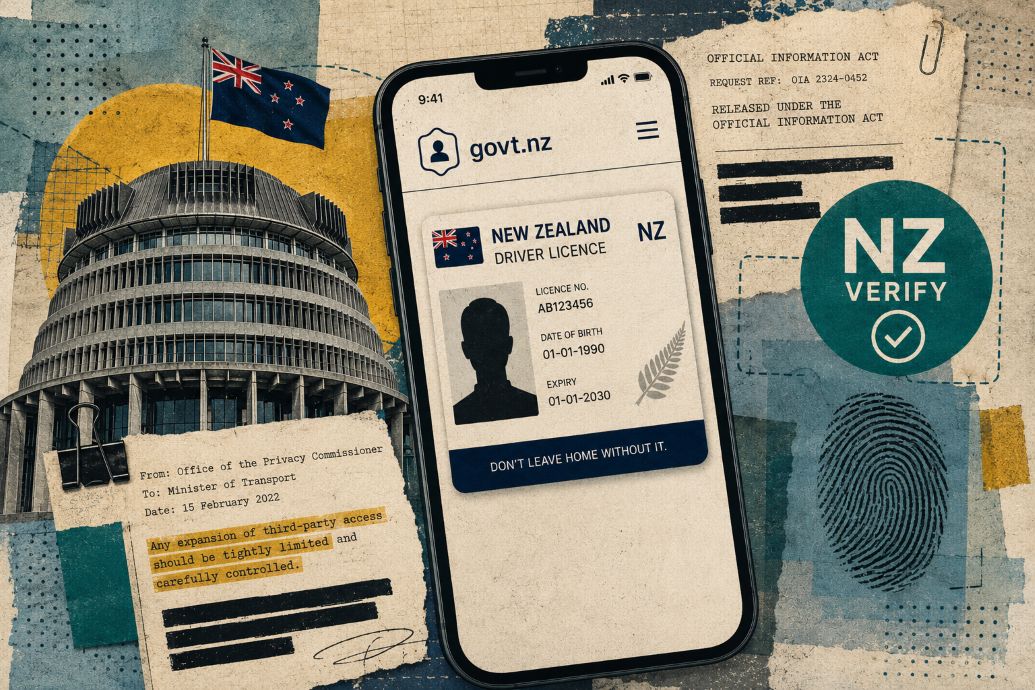
• OIA papers obtained by Centrist show digital driver licence legislation was treated as a major government priority.
• Centrist requested evidence of public demand, polling, consultation feedback and stakeholder pressure driving the reforms.
• The released material showed extensive planning and coordination, but little evidence digital licences were a major voter issue.
• The government cited “busy families” wanting easier services, but not strong public demand for digital ID itself.
• The select committee process generated just 41 submissions on the broader transport bill, and many were not supportive.
A solution looking for public demand
Digital driver licences look less like a response to public demand than the next step in a wider government digitisation push.
Prime Minister Christopher Luxon described digital licences as a “common sense thing”. Transport Minister Chris Bishop described storing a licence on a smartphone alongside bank cards as a “no-brainer”.
But Official Information Act papers obtained by Centrist suggest the urgency came far more from government than from the public.
Centrist previously reported that Bishop’s office said the government was aiming to pass the Regulatory Systems (Transport) Amendment Bill (RSTA) “by mid-year”, despite a crowded legislative agenda. The bill rewrites parts of transport law to allow digital driver licences, electronic notices and wider use of digital transport credentials.
Parliament has now passed the RSTA bill, clearing the legal path for digital driver licences. But the actual system, including rollout, technical standards and verification infrastructure, is still being built.
The released papers confirm digital driver licensing was identified early as a priority within the government’s Land Transport Rules Reform Programme.
The closest thing to a public-demand argument came not from transport officials, but from the Department of Internal Affairs. In an official response prepared for RNZ, the Government Chief Digital Officer said research showed “strong demand for this kind of service,” citing “busy families” dealing with multiple agencies.
But asking people whether they want government services to be easier is a soft test. Most people will say yes to convenience.
That does not mean they were specifically asking for digital driver licences, digital wallets or reusable digital credentials.
In a February 2025 email released under the OIA, Judith Collins’ office said a public announcement on digital driver licences would send “an important signal to the private sector and New Zealanders” about the government’s “priorities to digitise Government.”
Is the public demanding digital driver licenses?
Centrist specifically requested documents relating to “whether digital driver’s licences are a priority for the public,” including polling, consultation feedback, stakeholder requests and evidence of public demand.
The released material showed extensive planning and coordination between the Ministry of Transport, NZTA, DIA and ministerial offices. Internal discussions covered integration with the Govt.nz app, future digital credentials and alignment with the Digital Identity Services Trust Framework.
What the papers did not show was a strong public groundswell demanding digital licences.
The select committee process generated just 41 written submissions on the broader transport bill, which covered far more than digital licences alone.
According to the committee report, “Submissions showed mixed views on the digitisation amendments. Some submitters were concerned that digital driver licences would replace physical licences and opposed the Bill on that basis.”
Bishop’s office says no documents specifically state a goal of passing the legislation before the election. But by March, 1News was already reporting ministers were “committed” to getting the law change in place before voters went to the polls.
For a government often accused of dragging its feet on voter-backed reforms, the bigger question is not whether digital licences are convenient, but why this became such an urgent political and bureaucratic priority.
Loading...