Table of Contents
I haven’t watched free-to-air TV voluntarily for years. After all, I’m not in the least concerned with whichever creep some wannabe Bridezilla is going to bestow her dubious favours on, nor which washed-up never-was is going to eat bugs on the laughingly misnamed I’m a Celebrity… And the ads… ye gods, the ads. ‘We interrupt this commercial stream to bring you a programme break.’ No, thanks.
Consequently, visiting elderly relatives whose only concession to modern entertainment technology is a TV that gets free-to-air in HD is a special kind of hell. Oh, well, it makes for a lot of early nights.
On the other hand, it does deprive us of the pleasant surprise of turning the TV on and serendipitously discovering the occasional gem. One such occurred when our eldest, unable to sleep one night at Grandma’s, sat up late flicking channels – and discovered what soon became one of his favourite movies.
Paul W S Anderson’s 1997 grimdark SF outing, Event Horizon, sank almost without a trace on its initial release. Despite a respectable (for the time) budget and a big-name cast, including Sam Neill, Laurence Fishburne and Jason Isaacs, it bombed at the box office, barely making back its budget, and it was savaged by critics. But, like many critical-failure ‘bombs’, its reputation grew and grew in years following (not that they’re anything alike, but, It’s a Wonderful Life [1946] was a critical and commercial failure that nearly ended Frank Capra’s career) and it became a much-loved cult classic.
Today, a small but fanatic army of cognoscenti regard Event Horizon as a flawed masterpiece and one of the most audacious science-fiction horror films of the 1990s. VHS and DVD partly fuelled its late-blossoming popularity, as did its surprising ties to another well-established SF subculture, the Warhammer 40,000 ‘universe’. Fans also point to its bold visuals and thematic ambition. Decades later, expanded media and potential revivals continue to affirm its place in the genre.
The plot unfolds in 2047. Seven years earlier, the experimental starship Event Horizon vanished en route to Proxima Centauri. Designed by Dr William Weir (Neill) with a revolutionary gravity drive capable of folding spacetime for faster-than-light travel, the vessel reappears in a decaying orbit near Neptune. The rescue ship Lewis and Clark, commanded by Captain Miller (Fishburne), is dispatched with Weir and a small crew – including pilot Smith (Sean Pertwee), technician Peters (Kathleen Quinlan) and technician Cooper (Richard T Jones) – to investigate. Upon boarding, they discover signs of carnage: blood-smeared walls, mutilated remains and a haunting distress signal translating from Latin as “Save yourself from Hell.” The gravity drive, it emerges, tore open a gateway to a chaotic, malevolent dimension: effectively Hell itself.
Fragments of the Event Horizon’s log reveal that the ship’s original crew, driven mad, tore each other apart in orgiastic violence. As the rescue crew begin to reactivate the ship, increasingly bizarre hallucinations plague the crew, manifesting their deepest traumas. Soon, the rescue team are fighting not only for survival but against an ancient evil that now inhabits the vessel. The film climaxes in a desperate confrontation, with Miller sacrificing himself to destroy the drive while survivors escape, though the final jump-scare suggests the horror may persist.
A large part of the film’s problems stem from its then-standard running length of 96 minutes. A few years earlier, David Fincher’s Alien 3 suffered a similar fate. Until Peter Jackson proved that mainstream audiences will sit still for a four-hour movie, the film’s original run-time of over two hours was simply too much for studio execs. As a result, what was released was a palimpsest of the makers’ original vision. Even then, critics savaged it as ‘bloated’. Sometimes, you just can’t win.
But the studio’s razor was just the last gasp of a troubled birth. Paramount rushed production after Titanic’s (1997) delays forced a tighter schedule: principal photography at Pinewood Studios wrapped quickly and editing was slashed from the standard 10 weeks to six. Test screenings of the gory rough cut reportedly caused audience members to faint, prompting heavy cuts. Released against lighter fare like The Full Monty, it vanished from theatres within weeks. Anderson later reflected on studio interference that diluted his vision.
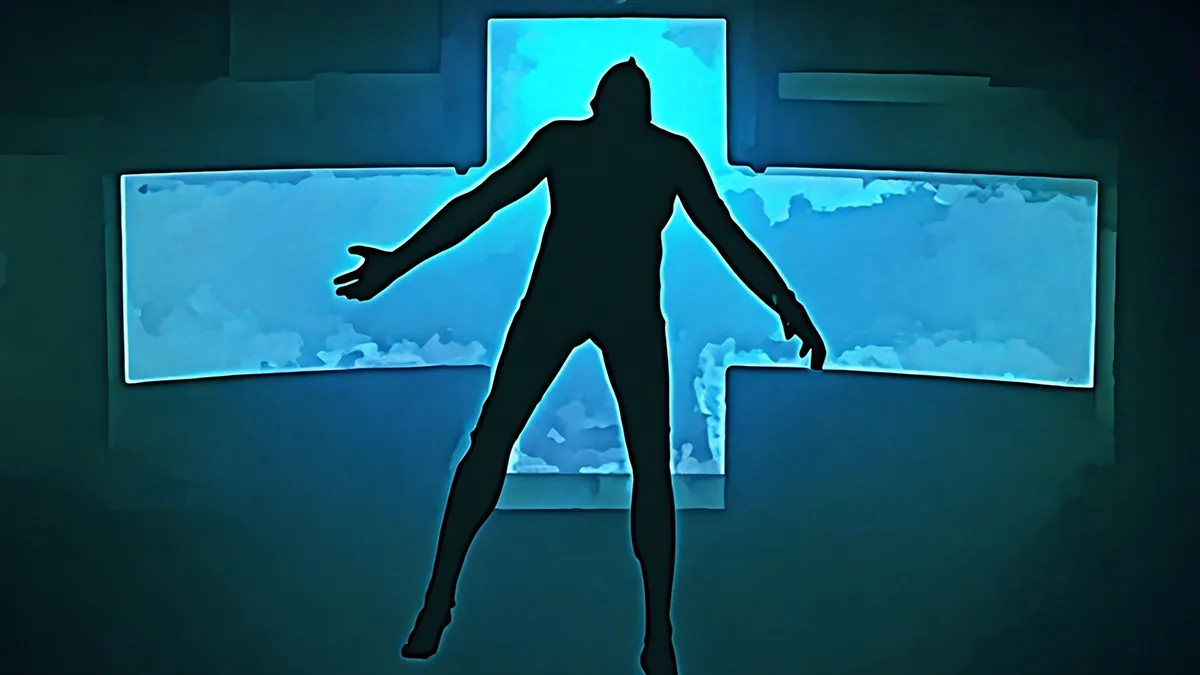
Just as later ‘director’s cuts’ of Fincher’s Alien 3 revealed a completely different and far superior movie to the theatrical release, home video was Event Horizon’s saviour. VHS and early DVD sales were robust, allowing fans to discover its strengths in isolation: the intense performances, the cathedral-like ship design evoking gothic dread – especially its gravity drive interior, which looks like the interior of an iron maiden packed with razors – and practical effects that still unsettle. By the 2000s, it had solidified as a cult classic.
Showing just how full of it mainstream critics really are, the same legacy media shlubs who savaged the film in 1997 were singing its praises when it was released as a 4K Blu-ray for its 25th anniversary in 2022. IGN, Rotten Tomatoes, Fangoria, and Collider all suddenly celebrated its enduring influence on space horror. It inspired video games like the Dead Space series, with their necromorph-infested ships echoing the Event Horizon’s biomechanical terror, and the film was name-checked in Thor: Love and Thunder (2022).
But the fans always knew what was up and still do. They host screenings, debate lore online and champion its unapologetic blend of Alien’s claustrophobia, The Shining’s psychological decay, and Hellraiser’s vision of Hell as an S&M alternative dimension. Truly a Hellfire Club. What critics once sneered at as derivative, fans praise as ambitious synthesis: a haunted-house story set in the void, where technology invites damnation.
Somewhat typically of many of his films, Event Horizon is a pleasant surprise from Paul W S Anderson. The director made his name two years earlier with Mortal Kombat (1995), a stylish and financially successful video-game adaptation that proved he could translate interactive source material into cinematic spectacle, despite critical shrugs. He would later bring video game franchises to the big screen, with uneven success, with films like Alien vs Predator (2004) and Monster Hunter (2020). These two films alone encapsulate Anderson’s general oeuvre: video game adaptations that are either much better than they have any right to be (AvP) or at worst… ‘OK’. Still, Anderson is rarely less than a competent journeyman director whose films may not win awards, but keep audiences entertained. The five films of the Resident Evil franchise (2002–2016), for example, collectively grossed over $1.2 billion despite Rotten Tomatoes scores rarely exceeding 36 per cent.
But if Anderson has a masterpiece, it’s Event Horizon, which reveals what he could achieve when unbound by licensed IP: a bolder and more personal horror vision. It was, in fact, his first major original screenplay project, written by Philip Eisner, with uncredited input from Andrew Kevin Walker. It showcases his signature flair – rapid editing, industrial production design, and practical heavy effects – along with his trademark faults: pacing issues and reliance on jump scares. Still, even compromised as it was by studio meddling, Event Horizon stands as his most successful auteur-driven work.
One of the film’s most enduring fascinations is its connection to the Warhammer 40,000 universe. Eisner, a longtime 40K player, openly acknowledged the tabletop game’s influence, conscious or subconscious, on the screenplay. The gravity drive mirrors the Imperium’s Warp drives, which propel ships through a hellish parallel dimension teeming with daemonic entities and psychic storms. The Event Horizon’s “other side” – a realm of endless torment, blood orgies and self-mutilation – evokes the Immaterium and Chaos Gods. Fans have long theorised the film as an unofficial prequel, set millennia before the 40K era, with Dr Weir’s invention accidentally birthing or revealing humanity’s first encounter with the Warp.
Eisner confirmed in interviews and tweets that he “played the shit out of 40K”, and the ship’s gothic architecture, Latin chants and eye-gouging Captain Echo 40K’s grimdark aesthetic. While no official link exists (Games Workshop and Paramount never collaborated), the overlap fuels memes, fan fiction and discussions on forums like Reddit’s r/40kLore. The 2025 comic prequel Event Horizon: Dark Descent even leans into this by naming the demonic force “Paimon”, a hellish entity that fits Chaos lore seamlessly.
Another central pillar of the film’s mystique are its hours of lost footage, echoing such cinema lore as the lost “Spider Crab” sequence of King Kong (1933) and the even more legendary lost footage of Orson Welles’s The Magnificent Ambersons (1942), or the entirely lost Lon Chaney vehicle, London After Midnight (1927).
The initial assembly ran 130 minutes, packed with extended gore: a fuller ‘blood orgy’ log showing the original crew’s descent (including self-evisceration and worse), prolonged hallucination sequences drawn from Hieronymus Bosch and Pieter Bruegel, alternate endings without the jump scare and deeper character backstories. Studio mandates excised roughly 40 minutes of graphic material after test audiences recoiled. Anderson has described the “hell footage” as disturbingly beautiful.
Tragically, we’ll never know. The deleted reels were stored in a Transylvanian (no kidding) salt mine and became degraded beyond recovery. By the time Anderson sought them for a director’s cut in the early 2000s, they were unusable. A single deleted scene and extended shots appear on the DVD, but the full cut is gone forever. Jason Isaacs later joked that some scenes would be “definitely illegal” to film today, heightening the legend.
Still, Event Horizon’s reputation only continues to grow. In 2025, IDW Publishing expanded the canon through the graphic novel prequel Event Horizon: Dark Descent, which delves into the original crew’s fate, depicting the infamous blood orgy in unflinching detail and rewriting elements of the film’s lore (revealing the ship’s partial rebuilding by demonic forces). This year will see the publication of Event Horizon: The Making of the Classic Film, a glossy, authorised, volume featuring rare archival photos, storyboards, cast/crew interviews and production insights. Also in 2026, a sequel graphic novel series, Event Horizon: Inferno, will relate events 200 years after the original film.
A live-action TV series remains in development. Announced in 2019 by Paramount Television and Amazon Studios, the series is being directed and executive produced by Adam Wingard (Godzilla vs Kong, the Death Note Netflix version). Wingard stated in 2024 that, “It’s definitely in the works… we have a fucking amazing script,” though his Godzilla commitments have delayed traction. Anderson himself has expressed disinterest in sequels to preserve the original’s singularity, but the expanded universe thrives regardless.
Event Horizon occupies a unique niche in modern science fiction and horror. It bridges the practical-effects era of Alien (1979) and the digital-spectacle blockbusters of the 2000s, influencing everything from Pandorum (2009) to The Void (2016) and video games. Its flaws – pacing lurches, on-the-nose dialogue – are outweighed by audacious imagery, a committed cast and profound themes: the hubris of transcending physics invites damnation; technology cannot outrun human darkness. In an age of sanitised franchises and CGI overload, its raw, analogue terror feels refreshingly uncompromising. Once a punchline, it now symbolises redemption: proof that films, like their titular ship, can return from oblivion stronger, carrying legions of fans into the void.
Event Horizon endures because, in the end, some doors to Hell can be left open just a crack, for those brave enough to peer through.