Table of Contents
As I wrote last week, the Punk Explosion of the mid-late ’70s was a simultaneous detonation heard round the world. While everyone associates punk with New York and London, the truth was that a generation of bored and frustrated youngsters all, almost completely independently of each other, hit on the same idea at once. Make rock’n’roll fun again by stripping it back to basics and amping it up.
And there were a lot of them. Literally hundreds of bands sprang up overnight and most disappeared just as quickly. Some never played more than a handful of gigs, most never released anything beyond a demo tape recorded on their dad’s cassette player. It was a literal explosion of creativity.
And it detonated in New Zealand as much as it did anywhere else.
In many ways, the New Zealand punk scene was perhaps more extraordinary than most. As Good Oil readers will likely remember, New Zealand in the ’70s was a remote outpost at the edge of the world. When Karl Popper wanted to get as far away from the war as he could, he moved to Dunedin. Sixty years after Kipling dubbed Auckland the “last, loneliest, loveliest, exquisite, apart”, Keith Richards recalled that Sunday in Dunedin in 1962 was the easily the most boring day of his whole life.
Fifteen years later, New Zealand still seemed an unlikely place to harbour a creative explosion. With a population of just over three million in 1978, the country lacked the urban density, media infrastructure or recording industry of punk’s epicentres in London or New York. But the very things that would seem to mitigate against it, possibly worked in New Zealand’s favour.
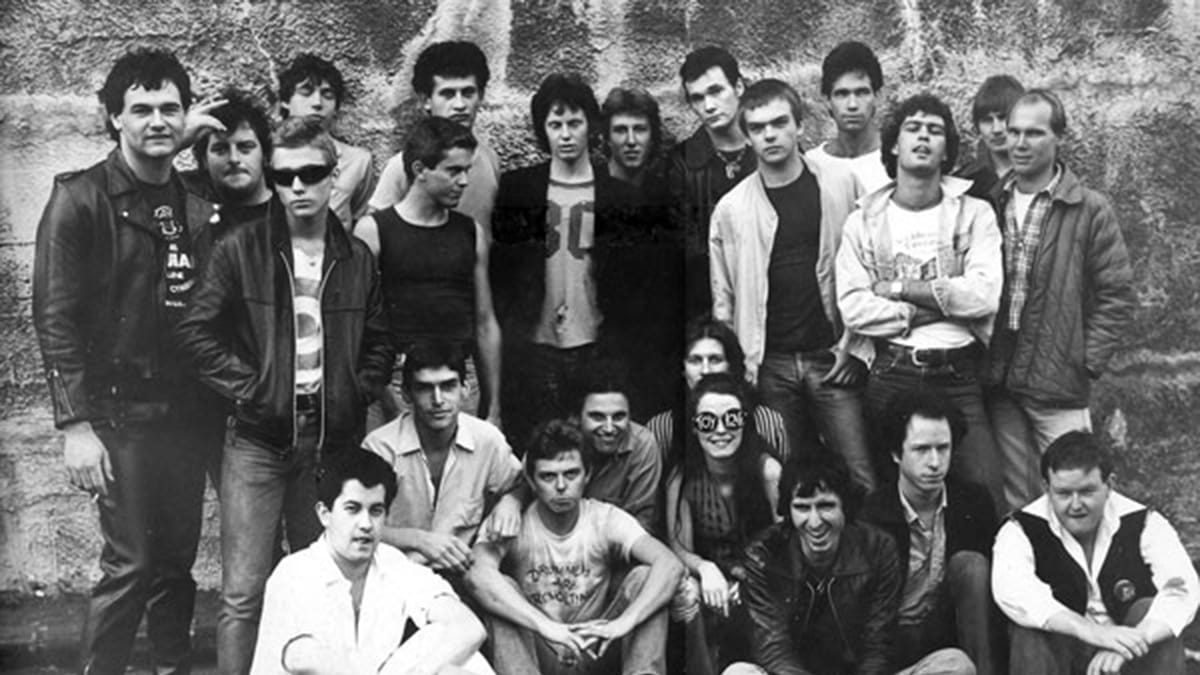
So punk exploded here with remarkable vigour and creativity. Dozens of bands formed in Auckland, Christchurch, Wellington and Dunedin between 1977 and 1981, with many producing raw, idiosyncratic music before fading into obscurity. This scene’s sheer volume relative to the small population underscores a DIY ethos born of isolation: limited access to overseas records and radio forced musicians to invent their own versions of punk, blending UK aggression with local quirks and 1960s’ pop influences. The result was a fertile ground that not only spawned short-lived outfits but also seeded one of the most influential independent music movements of the 1980s – the Dunedin Sound – and sent ripples worldwide.
Just as Australian punk bands from Perth (the Victims, the Scientists, the Hoodoo Gurus) and Brisbane (the Saints) were inevitably forced to move to Melbourne or Sydney (just as America’s the Dead Boys knew that they had to move from Cleveland to New York for even a shot at making it), the scene in New Zealand perhaps inevitably gravitated, at least initially, around Auckland.
The Scavengers (evolving from the 1B Darlings art-school group) and Suburban Reptiles emerged almost simultaneously, followed by a wave at the infamous Zwines club, a derelict warehouse opened in early 1978 that became the scene’s chaotic heart. Bands such as the Masochists, Junk, Rooter, Get Smart, the Aliens, the Stimulators, Zerox, the City Slitz, Terrorways, Proud Scum and Spelling Mistakes played to crowds of art students and working-class kids in ripped clothes and safety pins.
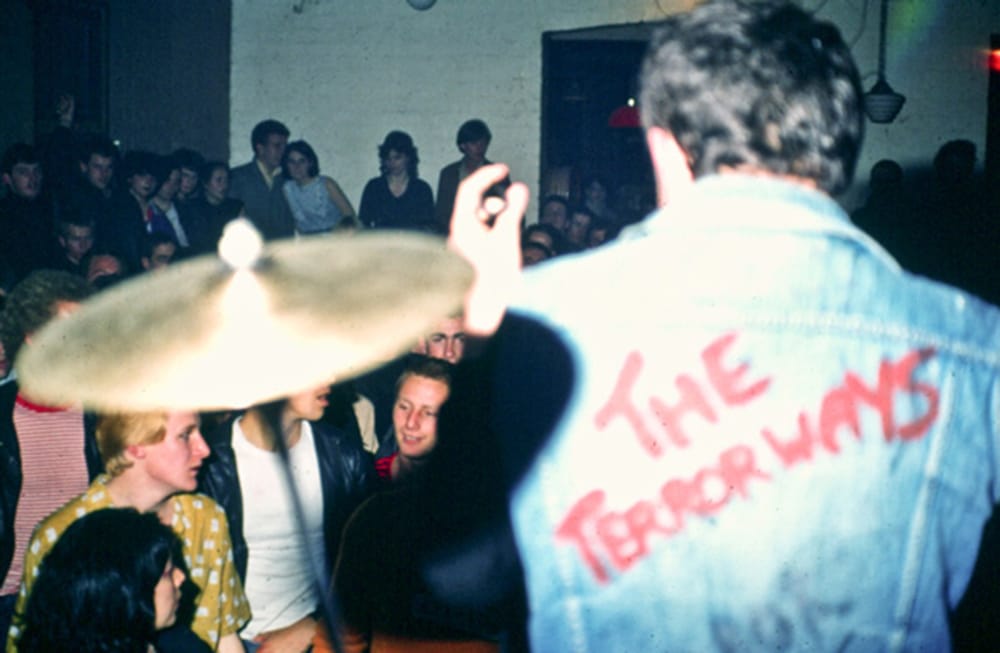
As I witnessed in my own hometown in the early ’80s, when previously isolated pockets of frustrated kids in small communities suddenly discover that there are actually like minds, things combust with almost manic glee and creativity. Performances were interactive and boundary-pushing. Audiences danced on stage, Chris Knox (of the Enemy) slashed himself and the venue’s seedy atmosphere, stolen NME wallpaper, a smashed jukebox of imported singles, fostered a genuine underground playground.
Isolation amplified creativity; without easy access to the Sex Pistols or Clash, NZ punks developed a quirky, arty sound closer in spirit to early Split Enz than straight UK mimicry. (As it happens, similarly to Melbourne’s Skyhooks, the Enz, who began as a quirky hippy cabaret act, were immediately (and falsely) labelled by an over-excited local media as ‘punks’.) Most bands released little or nothing – only a handful of singles on tiny labels like Ripper or Propeller – and many imploded within months – victims of internal drama, police raids or the venue’s mysterious 1979 burning.
That sort of fire, though, once lit, won’t be contained. Punk quickly spread south. In Dunedin, the Enemy – fronted by the provocative Chris Knox – formed in 1977 and evolved into Toy Love by 1978, adding Alec Bathgate, Paul Kean and others. Toy Love’s sharp new-wave edge and theatrical flair briefly courted commercial success with WEA, but the band dissolved in 1980 after an underwhelming Australian tour. Christchurch contributed the Androids and early post-punk acts. Obscure and esoteric groups proliferated everywhere: the brief, chaotic lives of the Hookers, Idle Idols and Citizen Band exemplified the scene’s ephemerality.
Not all laboured in complete obscurity, though. The sheer fire and audacity of the punk explosion meant that there were one or two bands the mainstream had to notice, even if they achieved only fleeting and minor national fame. Blam Blam Blam, formed in Auckland in 1980 from the Plague/Whizz Kids remnants (Tim Mahon, Mark Bell and later Don McGlashan on drums), released the satirical anthem “There Is No Depression in New Zealand” in 1981. The track became an accidental protest song during the divisive Springbok rugby tour, capturing the era’s political tension with deadpan irony. Their 1982 album Luxury Length yielded another hit in “Don’t Fight It Marsha,” but the trio disbanded in 1984 after a brief reunion.
From this punk ferment emerged truly obscure, yet enduring, acts like Tall Dwarfs, the band who made the Residents seem like the Partridge Family. Formed in 1981 by ex-Toy Love members Chris Knox and Alec Bathgate, the duo operated as a lo-fi home-recording project using household objects, handclaps, and cheap keyboards for percussion. Their EPs (Three Songs, 1981; Louis Likes His Daily Dip, 1982) and albums (Weeville, 1990; Fork Songs, 1991) on Flying Nun Records embodied punk’s DIY spirit taken to experimental extremes: jangly, subversive, and defiantly amateurish. Knox’s polymathic career (cartoons, criticism, animation) and Bathgate’s understated partnership kept the project alive until Knox’s 2009 stroke. Tall Dwarfs influenced global lo-fi acts including Guided by Voices, Neutral Milk Hotel and Superchunk, proving that even the most esoteric NZ outfits could resonate far beyond the islands.
It wasn’t just bands who took the DIY ethic and ran with it. As happened elsewhere, a record store became the foundation of an iconic label. Flying Nun Records was founded in 1981 by record store manager Roger Shepherd. It became the home of the scene that put New Zealand on the (indie, at least) musical map in the 1980s: the Dunedin Sound.
Where there’s a university, there’s inevitably a plethora of ‘art school bands’. Dunedin in the 1980s, far removed from Keith Richards’ 1962 ennui, was no different. Many punk veterans transitioned seamlessly into the subsequent rise of the Dunedin Sound. Rooted in the same southern isolation that shaped the Enemy and Toy Love, the Dunedin Sound blended punk’s raw energy with Velvet Underground drones, Stooges aggression and 1960s jangle. Once again, putting New Zealand at the head of similar developments around the world, known as the ‘Paisley Underground’ sound, which dragged its heels in the US a scant year behind New Zealand.
Key bands included the Clean, the Chills, the Verlaines, the Bats (featuring ex-Toy Love bassist Paul Kean), Sneaky Feelings, Straitjacket Fits and Tall Dwarfs. The 1982 Dunedin Double EP crystallised the aesthetic: droning guitars, reverb-soaked vocals and amateur charm recorded cheaply at student radio stations like Radio One. Again, despite rare breakthrough local hits like the Chills’ “Pink Frost”, commercial radio almost entirely ignored them, but the scene thrived on university circuits and independent labels.
Its international breakthrough came via college radio in the US and Europe. Like raw, loud Australian bands such as the Scientists, the Celibate Rifles and feedtime, not many people bought their records, especially overseas, but those who did, pricked up their ears. Kurt Cobain of Nirvana and Mark Arm of Mudhoney both cited the Scientists as foundational to Grunge. Likewise, Pavement, R.E.M. and Mudhoney cited Dunedin bands as influences, while covers by Superchunk and Cat Power cemented its legacy. The sound defined indie rock’s global DNA, proving punk’s NZ variant was no dead end but a foundation.
But every little scene can’t escape the suspicion that the grass is greener over the ditch. Where the more successful Australian punk bands made the almost ritual pilgrimage to London (and discovered how much they hated it), ambitious New Zealand punks were, initially at least, magnetically drawn across the Tasman to Australia to ‘make it’. Larger venues, Countdown TV exposure and connections via Split Enz lured punks seeking escape from conservative NZ.
The Scavengers relocated to Melbourne in 1979, rebranding as Marching Girls and releasing the power-pop single “First in Line” on Au Go Go. Ex-member Brendan Perry (Ronnie Recent) formed Dead Can Dance with Lisa Gerrard, achieving worldwide success on UK label 4AD. Toy Love toured Australia briefly but flopped. The Swingers (featuring ex-Suburban Reptiles’ Buster Stiggs and Bones Hillman, plus Phil Judd) scored a No 1 hit with “Counting the Beat” in 1981. Pop Mechanix and others chased deals but often lost momentum through name disputes or mismatched tours. Most pure punk acts found limited success: the “NZ invasion” of 1979–82 yielded cult footholds rather than stardom. Still, individuals integrated into Australian scenes (e.g., ex-Normals members in the Allniters) and the move accelerated post-punk evolution.
Early Australian punk bands thought they had to move to London. By the mid-’80s a new, more confident wave of indie bands gave London the finger. Similarly, as the Dunedin Sound bands grew in confidence, they decided they were perfectly happy were they were. New Zealand was emerging, creatively, as a more confident, assured place. The same Cultural Cringe that had long plagued Australian creatives was given the flick.
New Zealand’s place in the global punk revolution was that of a quirky, self-contained laboratory. Nick Cave once remarked that being ignored by the ‘big guys’ for so long did him a favour. By the time the wider world took notice, he’d found confident maturity as an artist without making his adolescent mistakes in the glare of the spotlight.
Similarly, far from the media glare and major-label machine, a tiny population produced an outsized wave of creativity: hundreds of bands, most forgotten, yet collectively forging a distinctive voice. The minor hits of Blam Blam Blam and the esoterica of Tall Dwarfs bookend a spectrum that fed directly into Flying Nun’s Dunedin Sound, which exported lo-fi indie ideals worldwide. Members like Chris Knox, Don McGlashan (later of the Front Lawn and the Mutton Birds) and Brendan Perry shaped local and international music long after the safety pins were discarded.
NZ punk was never about chart dominance or revolution in the streets: it was about proving that isolation could breed originality. In the global story of 1977’s “Year Punk Exploded”, New Zealand was not a footnote but a parallel universe: small, remote and improbably influential.