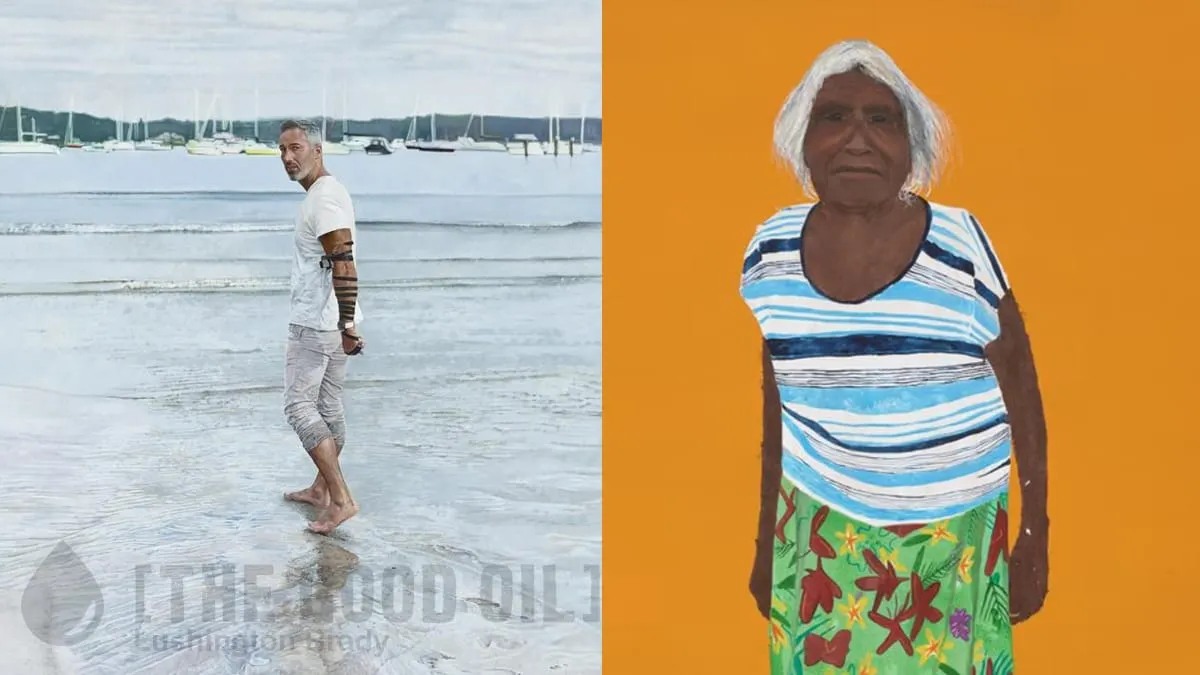
The Archibald used to be the most coveted prize in Australian art. Now, it’s little more than a hundred-thousand dollar joke. A woke circle jerk of the bullshit-artists showering money on the most un-talented artists imaginable. The judges know what is acceptable to the woke left, but the people know what they like – and, like a Rotten Tomatoes review disparity, the people are rarely wrong.
Case in point, the yawning gulf between this year’s official Archibald Prize winner, and the People’s Choice Award.
One is genuinely impressive work of art, by an artist who can actually paint and masterfully uses composition and draftsmanship, in combination with deep and timely symbolic resonance. The other wowed the judges and won the Archibald.
The 2026 Archibald Prize People’s Choice Award has been taken out by high-profile Queensland artist Michael Zavros for his portrait of Jewish advocate and author Alex Ryvchin, whom the painter credits with showing leadership after the Bondi Beach mass shooting “in a way our elected leaders failed to do”.
Zavros, who recently discovered he has Jewish heritage, will receive a $5000 prize decided by visitors to the 2026 Archibald, Wynne and Sulman Prizes exhibition, currently on display at the Art Gallery of NSW.
A seven-time finalist for the main Archibald Prize, Zavros said it “means a great deal” to win the people’s vote, adding that after the Bondi attack, Ryvchin “showed the kind of leadership that many Australians were searching for”.
Ryvchin posed for the portrait just weeks after Bondi, in which one of his closest friends, Rabbi Eli Schlanger, was murdered by Muslim fanatics. The painting titled, Alex with his tefillin in the sea, depicts Ryvchin with the traditional Jewish prayer symbol wrapped tightly around his left arm. Rychin’s sombre look seems to stare across the gulf of years of Jewish persecution.
The Jewish advocate, whose former Sydney home was targeted amid a series of antisemitic attacks in 2025, said: “It’s a time that I think will stay with me for my whole life. Just the feelings and the emotions of that period. Of not sleeping. Of acting on total instinct. Of having to represent the community while being destroyed inside and broken, having lost people who were dear to me.’’
Ryvchin also spoke about how the tefillin, a pair of black leather boxes containing Hebrew parchment scrolls, depicted in Zavros’s painting connects him to Rabbi Schlanger, describing how they had performed the ancient Jewish ritual, wrapping the tefillin around their arms “every time we saw each other’’.
He said: “Rabbi Eli Schlanger was one of my dearest friends. … So when Michael asked me to pose in the tefillin, it immediately resonated with me, connected me to Eli, and I hope in some way he takes pride in this.’’
The public’s endorsement of an unmistakably Jewish subject, at a moment of rising antisemitism, said more about ordinary Australians than any official communiqué ever could.
Meanwhile the $100,000 official prize went to Richard Lewer’s portrait of Pitjantjatjara elder Iluwanti Ken. The judges, as usual, knew precisely which boxes to tick.
This is not new. The Archibald has a long and glorious history of the official taste colliding with reality. In 1944 William Dobell’s portrait of Joshua Smith provoked a full-blown court case when rival artists claimed it was a caricature rather than a portrait; the public, of course, knew a powerful painting when they saw one. Brett Whiteley’s 1978 triptych Art, Life and the Other Thing – complete with a self-portrait photo, a screaming “heroin baboon”, as Whiteley dubbed it, and a syringe – scandalised the respectable while confirming that the only interesting Archibald winners are the ones that make the committee squirm.
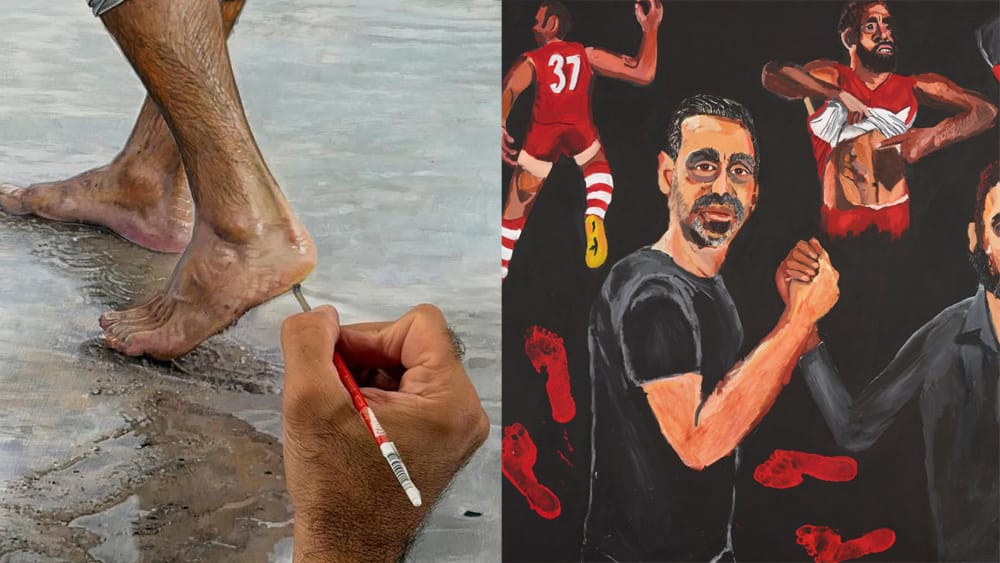
Unlike the judges’ choices of recent years, Zavros can actually draw. His painting combines technical mastery with a subject that still carries real weight in the world outside the gallery. The People’s Choice has once again exposed the gulf between what the progressive art establishment rewards and what people who still look at pictures, rather than theories, actually admire.
The public, bless them, keep voting with their eyes.



![[The Good Oil] Stuff Up of the Day](https://storage.ghost.io/c/31/f4/31f4e20a-0315-499e-83ff-139e8eab53bf/content/images/size/w1304/format/webp/2024/09/Stuff-up-image-1.webp)