Table of Contents
The Dunning-Kruger effect is one of the most misunderstood phenomena in modern psychology. In an unintentionally splendid demonstration of the effect itself, social media types like to claim that it means that ‘stupid people are too stupid to know they’re stupid’, which is a very stupid take.
What Dunning-Kruger effect really is, is the opposite of Imposter Syndrome. That’s the feeling many genuinely competent people have, that they really aren’t as good as everyone thinks they are. Dunning-Kruger is not stupidity, but over-confidence.
Like this:
Motoring and cycling firm Halfords said its study revealed a reversal from previous generations.
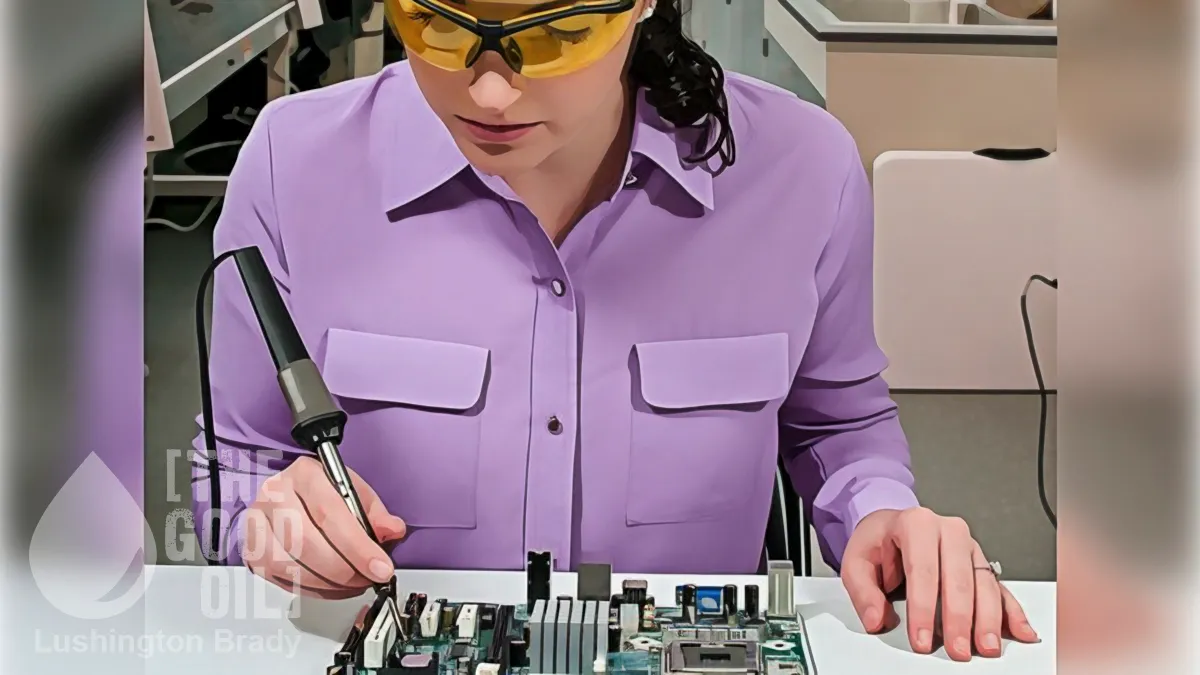
Young women in particular were better at tasks including decorating, putting up shelves and bleeding radiators, and were less confident about cooking, said the report.
Are they better, though? Or just more confident?
A survey of 2,000 adults found that almost half of women said they were confident in painting and decorating, compared with 28 per cent of men.
A third of young women said they would happily put up shelves, compared with one in five young men.
But will the shelves actually stay up?
We see the Dunning-Kruger effect at work all the time in women’s sports. Megan Rapinoe and Angel Reese may think they deserve to be paid as much as Shaquille O’Neal, but the data says otherwise. When WNBA players started demanding ‘pay us what we’re owed’, some smarter cookies did the maths and calculated that, based on receipts, the WNBA players owed the league tens of thousands of dollars.
More to the point, Rapinoe’s team might have been the best women’s team, but they were regularly beaten by high-school boys’ teams. We see the same brutal calculus at work when ‘trans-women’ barge their way into women’s sports: they may be shit male athletes, but they still trounce the girls.
Ah, but that’s just sport, you argue. Physical strength isn’t the same as skill. Well, no, it isn’t, but the same sex-based differences apply. Key skills for home DIY tasks are spatial reasoning and hand-eye co-ordination.
Sorry to break it to you, ladies, but men beat out women in all of those fields. A large meta-study found that “males outperformed females in both large-scale and small-scale spatial ability”. Another found “clear male advantage in hand-tracking accuracy... highly consistent differences in eye-hand coordination were evidenced by a larger temporal lag between hand motion and target motion in women”.
What we seem to be seeing is the outcome of decades of feminist gaslighting. At the same time girls’ egos have been boosted to overestimate their abilities in some traditionally male abilities, boys have been browbeaten into a generational imposter syndrome, most particularly by a feminised, female-dominated education sector that has driven out ‘boy stuff’ like woodwork, metalwork and auto shop, and replaced them with sitting still and pretending to read Margaret Atwood books. At the same time, toys that stimulated boys’ mechanical abilities, like Meccano, have all but disappeared. Even Lego has become the stuff of build-it-once-according-to-the-instructions and leave it at that, with single-use kits, rather than general kits that promote experimentation and spacial exploration.
I vividly recall a nephew who put his Lego Christmas present together, but was dismayed when an older male took it apart again. “You broke it!” No, the older man gently responded – look, you can rebuild it into anything you want. The kid was amazed.
James May, patron saint of practical men, laments the decline of the practical man.
Woodwork and metalwork are disappearing from the curriculum, he said, and the result is a nation of young men who cannot tell one end of a tool kit from another.
“The decline of practical skills, some of them very day-to-day, among a generation of British men is very worrying. They can’t put up a shelf, wire a plug, countersink a screw, iron a shirt. They believe it’s endearing and cute to be useless, whereas I think it’s boring and everyone’s getting sick of it,” said May.
Like many of us, May is the son of a man who worked in industry. His dad worked in the Sheffield foundries, my dad at an aluminium smelter. These were men who could put up a shelf or replace a car engine.
“I’ve since realised that although I haven’t used any of these to make a living, they’re useful mind-training, in the same way that there’s an argument for algebra... it helps develop a bit of your personal brain that might not otherwise be stimulated.”
It’s societal change, all right – but not for the better.
Only one in three young men said they were confident they could change a lightbulb.
Jessica Frame, managing director of retail at Halfords, said: “This research shows a clear generational shift – for the first time, young women are more confident than men when it comes to DIY around the home.”
That doesn’t mean, though, that their confidence is well-placed. Any more than the HR Karen’s confidence that a generation of practically useless men is something to be celebrated.