Table of Contents
Matua Kahurangi
Just a bloke sharing thoughts on New Zealand and the world beyond. No fluff, just honest takes.
You may have seen my article in regard to the Aroha Collective controversy and a bunch of Māori absolutely losing their kaka over an Australian woman using the word aroha in her business name. You can read about it here:
The Aroha Collective backlash exposes a bigger problem
After reading through the outrage, I decided to do a little digging myself. I headed over to Whākiri, a directory of Māori-owned businesses. I only had time to look at Auckland, but the question quickly became obvious. What do these Māori-owned business names have in common?
The Box – CrossFit Waitakere
Trade Jobs NZ
Cover Up
Nexus Electrical Ltd
Trade Credit Customer Management Platform
Property Scouts Manukau
Collaboration House
One Fit Hire
Inside Out Cleaners
Critical
Brandistry
Native Media
Head Cases Hair Salon
Child Advocacy New Zealand
ITraffic
Arc Evolution Steel
Accurate Plasterboards
Rose Makeup and Beauty
Auckland Garden Services
I’ll make it easy for you. They are almost all English names.
These are Māori-owned businesses operating in New Zealand, yet there is hardly any te reo Māori being used in their branding at all. You can look for yourself at https://www.whariki.co.nz/whariki-directory-new and see how many te reo Māori business names jump out at you. It’s not many, if any.
So that raises an obvious question. If the use of Māori words in business names is so sacred, so protected, and apparently so offensive when used by the ‘wrong’ people, why are Māori business owners themselves overwhelmingly choosing English names?
I looked even further and something else stood out.
What do these Māori-owned businesses have in common?
Pizza Presto
Pici Pasta
House of de Loree
Coco’s Cantina
Sweet Azz Hawaiian BBQ
These businesses are borrowing words from other languages altogether. Italian. French. Spanish. Hawaiian. No outrage. No pile-ons. No accusations of cultural theft. No demands for koha or public apologies.
Words travel. They always have. Language is shared, borrowed, adapted and reused. That is how language works. If every culture acted like certain activists do now, half the English language would be off-limits.
After posting my piece, I kept hearing the same phrase over and over again. Māori fatigue. I’m not going to lie. It’s real. When people lose their minds over the use of a single word, especially one as universal and positive as aroha, people tune out. Not because they hate Māori culture, but because the outrage feels selective, performative, and wildly inconsistent.
If Māori business owners can freely choose English, Italian, French, or Hawaiian names without controversy, then an Australian woman choosing the word aroha is not cultural theft. It’s appreciation. And pretending otherwise only pushes more people into that place everyone keeps whispering about, fatigue.
Words are not owned. They are used. And the harder some people try to police them, the less seriously they get taken.
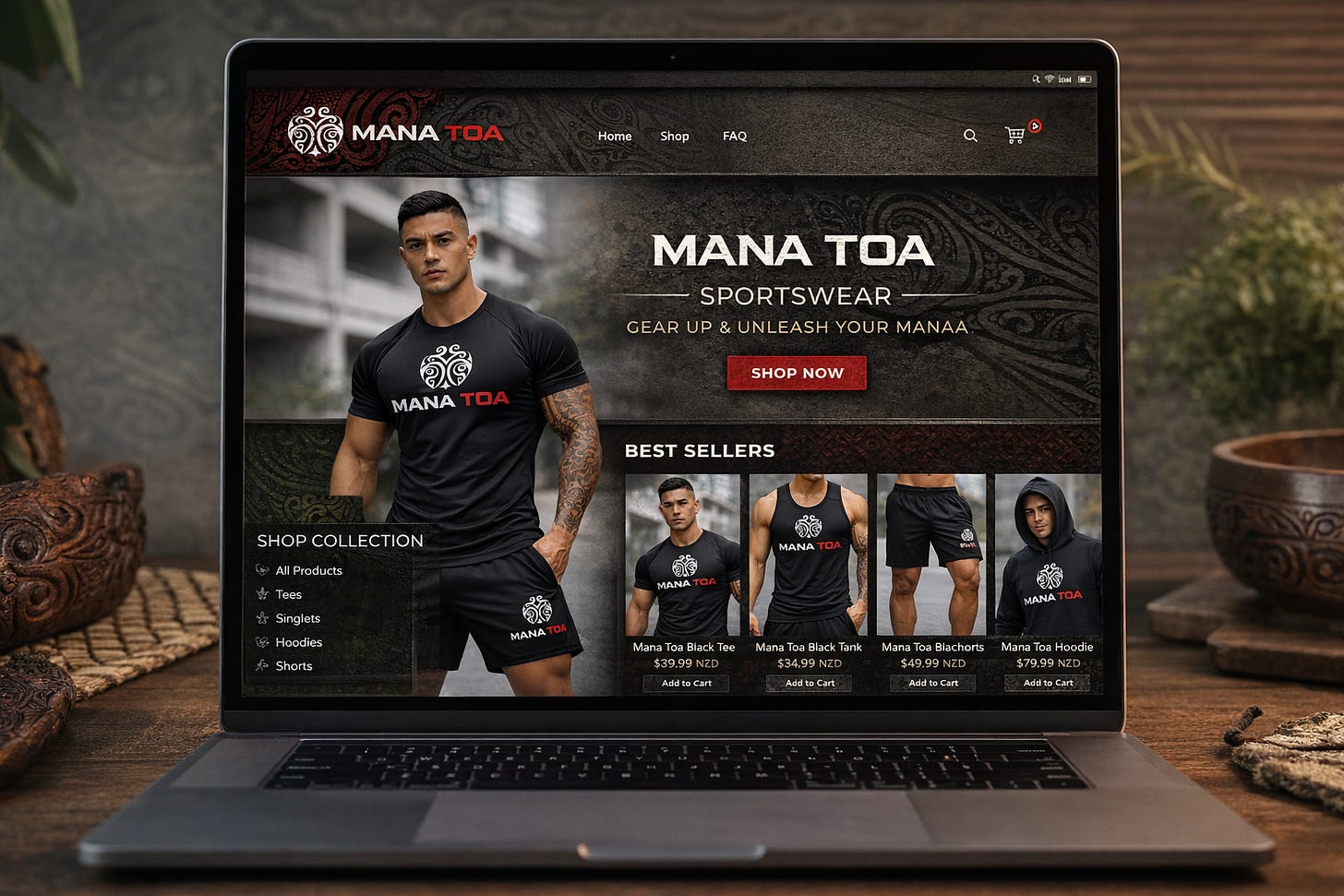
Finally, If anyone still doubts how performative outrage now doubles as free marketing, here’s the perfect example. Start a Shopify store. Call it something vaguely Māori like Mana Toa (champion power). Sell generic men’s sportswear with half-decent branding. Build a following. Then watch what happens when the internet decides you’re not the ‘right’ person to own it. Cue outrage, media attention, pile-ons, and wall-to-wall exposure money can’t buy. In 2026, controversy markets better than ads, and nothing spreads faster than people pretending to be offended. You’re welcome.
This article was originally published on the author’s Substack.