Table of Contents
Ani O’Brien
Like good faith disagreements and principled people. Dislike disingenuousness and Foucault. Care especially about women’s rights, justice, and democracy.
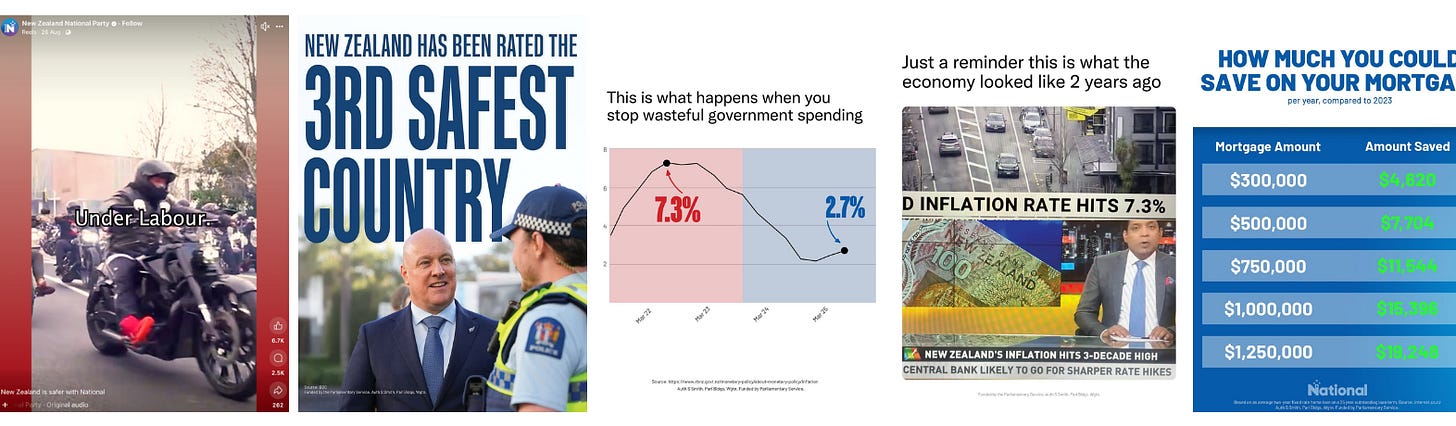
Last week I wrote a more comprehensive assessment of National’s communications which you can read here. I have seen some encouraging signs from them since. They have been directly setting the agenda more frequently and tackling the opposition narrative that New Zealand is worse off. Their video showing gangs under Labour versus National was highly effective. So too was the simple claim that New Zealand is the safest country in the world. They have done well not to engage in the opposition ‘explaining’ about the statistics too. Comparison graphics that remind voters of the reality of the economy under Labour are great and the mortgage savings graphic was fantastic but they should have made it clearer that the amounts are per year.
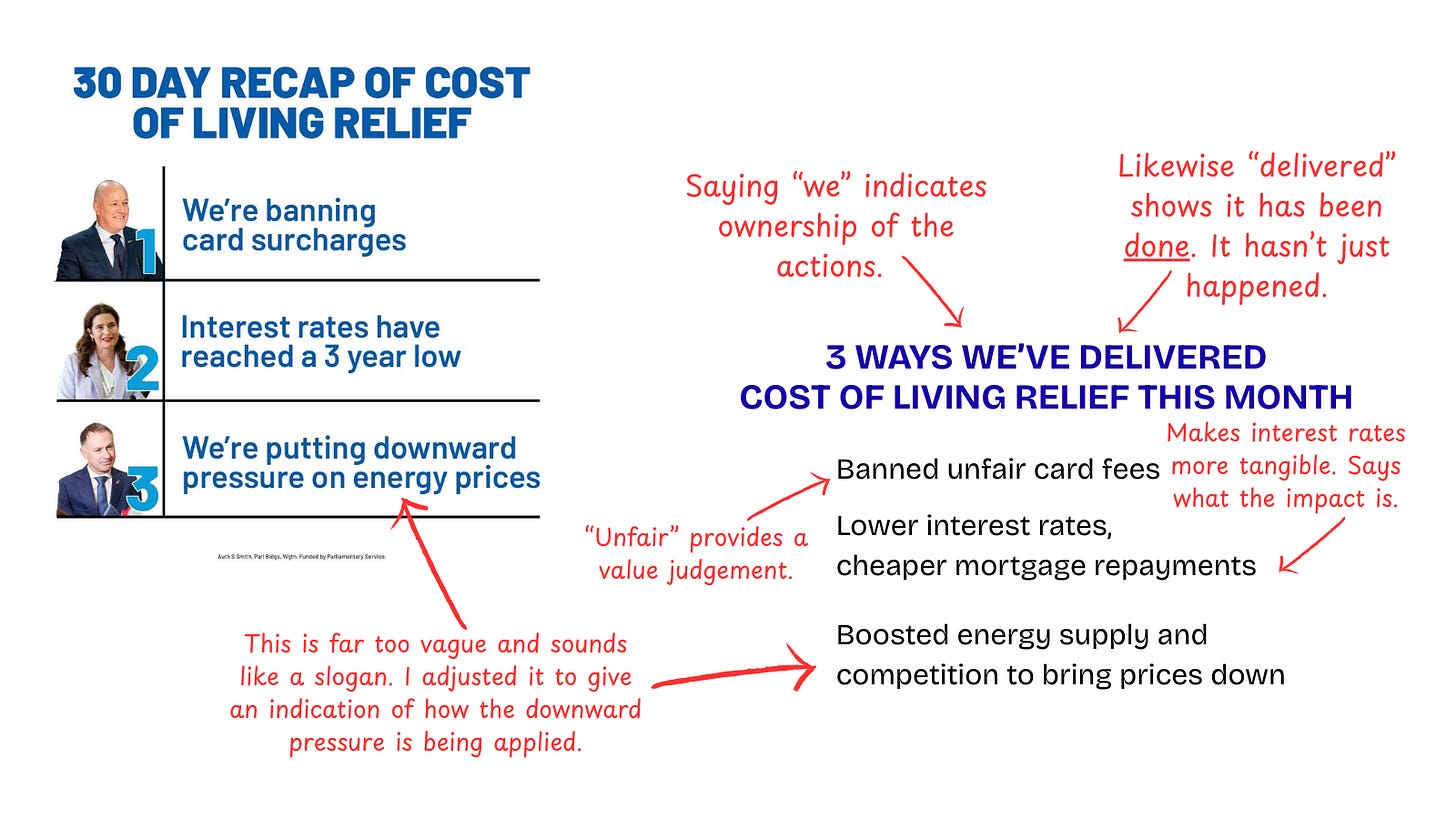
I have chosen one graphic (below) to demonstrate how they could improve the language they use to claim ownership of actions, position themselves as the good guys, and be less wishy-washy.
Today, I have focused this short piece on the prime minister’s social media specifically.
Christopher Luxon’s social media strategy was one of the smarter elements of National’s 2023 election campaign. It stood out because it didn’t look like ‘standard’ political comms. Instead of beige press releases dressed up for Instagram, his channels were clever, on-trend, and often a bit cheeky. In opposition, that worked. He needed attention, and he got it.
But governing is a different ball game.
When you’re leader of the opposition, your job is to throw rocks and make noise. You want to look approachable, energetic, even a bit playful. Relatable. Social media that leans into TikTok trends or pop culture jokes does that job nicely.
As prime minister, though, the stakes have shifted. People aren’t looking for a meme-merchant in the Beehive. They’re looking for someone who can project authority and seriousness while still connecting with the public. The same content that once came across as fresh now risks feeling lightweight and out of place.
There’s a fine line between relatability and cringe and Luxon’s social media has drifted into the latter. The Taylor Swift engagement reactions, the trending templates, the clips that feel more influencer than statesman… they don’t land anymore. Voters want reassurance that he’s focused on the job, not chasing likes.
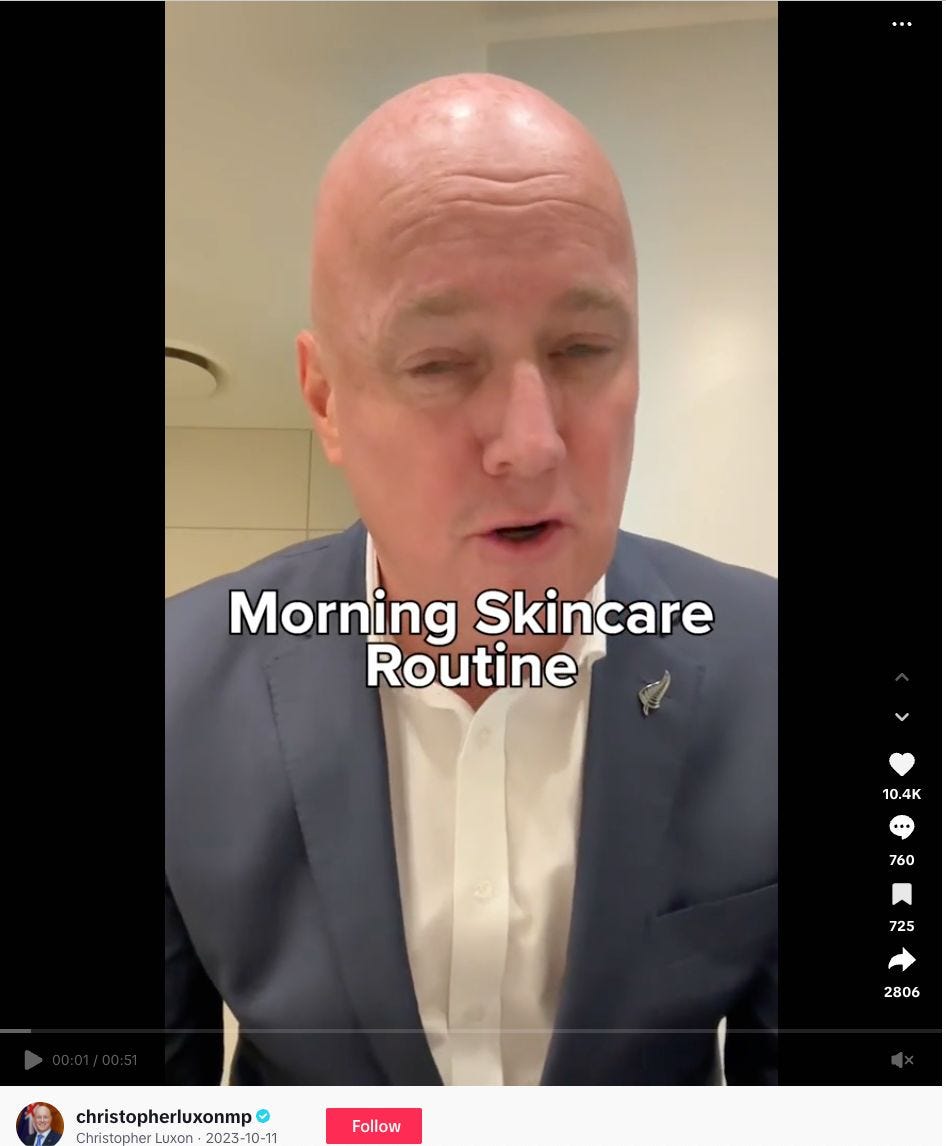
This raises the obvious question: who are these videos for? Young, left-leaning voters already loathe Luxon and nothing he posts on TikTok is going to change that. The young dissenters on the right, the ‘based’ crowd, don’t rate him either. He’s too polished, too corporate, too un-edgy. So what audience is his team chasing with this content?
It looks like a classic case of going after the market you want, rather than the one you actually have or could realistically reach.
If Luxon wants his online presence to help him govern as effectively as it helped him campaign, he needs a refresh:
- Less gimmick, more gravitas: Show New Zealanders what’s being done by his government, not what’s trending online.
- Authentic connection: Relatable doesn’t have to mean silly. A straight-up video update from the PM explaining decisions would be more powerful than a borrowed meme.
- Respect for the office: There’s a dignity to being prime minister. The comms need to reflect that.
- Know your audience: Stop chasing the unreachable demographics. Focus instead on building trust and loyalty with those who already support him and those in the middle who simply want to see competence.
Luxon’s social media helped put him into power, but what wins elections isn’t always what sustains them. Right now, his online strategy looks stuck in opposition mode and aimed at the wrong crowd. If it doesn’t evolve, he risks looking out of step with both the role and the public mood.
It’s time for the refresh.
This article was originally published by Change My Mind.