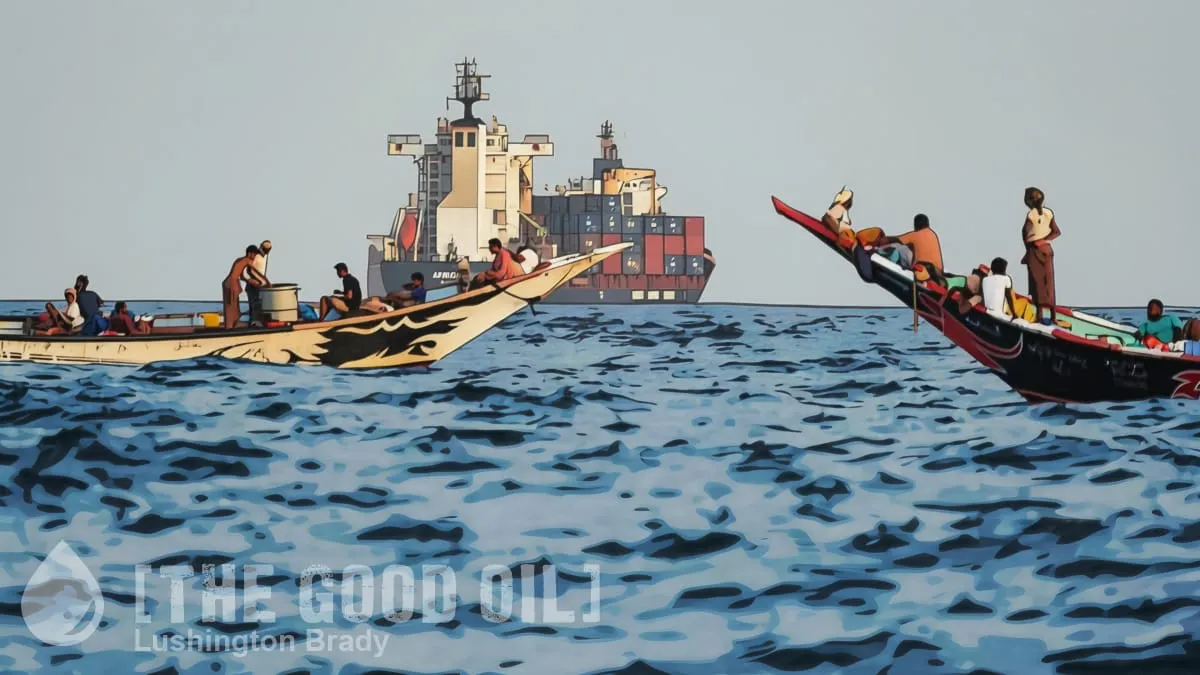
It’s the biggest UNO Reverse card since the Clinton’s scammed millions out of the Nigerians: Somali shippers are having to re-route their goods thanks to terrorists. Funny old thing, life, as Douglas Adams once wrote.
For years the world’s merchant captains treated the waters off Somalia as a hostage lottery with speedboats. Now Mogadishu’s traders are the ones looking for a detour, because the Iran-backed Houthis have grabbed the tap that feeds the Red Sea.
Somalia’s business community is seeking alternative shipping routes due to disruptions and security concerns around the Bab al-Mandab Strait and the Strait of Hormuz after Iran-backed Houthis captured a key port city and an island, sending thousands of Yemenis fleeing to neighbouring Djibouti.
Companies have traditionally imported goods from Asia through Gulf countries, such as the United Arab Emirates, Oman and Saudi Arabia. Now, some are trying a more direct approach.
“The latest tensions in the Bab al-Mandab Strait, as well as those in the Strait of Hormuz, have negatively impacted us,” said Mohamed Ali Nur, director of Mogadishu Seaport. “But we have also taken measures to avoid that disruption.”
The Houthis took Mocha, the old coffee port on Yemen’s Red Sea coast, then rolled south and hoisted their flag over Perim Island in the throat of the Bab al-Mandab and the Hanish islands further north. That strait is the southern gate between the Indian Ocean and the Suez Canal. A third of the planet’s container traffic likes to squeeze through it. When the same crowd that has spent two years shooting at passing ships also owns the shoreline and the mid-channel rock, insurance clerks reach for a bigger calculator. Hormuz is jumpy at the same time. Two chokepoints having a nervous breakdown is more than enough to reroute a sugar boat.
Not good news for a country that lives on what comes off a ship. Longer routes mean dearer rice. Delays mean empty shelves. Ordinary Somalis will pay the surcharge for someone else’s holy war.
What a turn-up for the books.
The Houthis – Ansar Allah to themselves – began as a Zaydi Shia revival in Yemen’s north, with all the familiar slogans they’d copied of their Iranian backers: death to America, death to Israel, curse the Jews. In 2014 they stormed Sanaa, turfed out the recognised government, and started the civil war that has defined the country since. Saudi Arabia, looking at an Iranian proxy on its southern border, led a coalition into the mess in 2015. Iran supplies the missiles, drones, trainers and IRGC advice. The Houthis are the Red Sea franchise of the Axis of Resistance: cheap, deniable and happy to close a shipping lane if Tehran needs a second front.
The shooting paused, more or less, after a 2022 ceasefire. The Houthis kept the populated north. Yemen’s Presidential Leadership Council and its fractious southern allies kept much of the rest. Then came Gaza, then the wider war around Iran in 2026, and the truce was rooted faster than a goat at a Muslim bachelor party.
Twelve years of Saudi-government versus Houthi has killed well over 150,000 and pushed Yemen to the edge of famine more than once. This month alone the IOM counts more than 85,000 newly displaced Yemenis, most of them since 1 September; more than 2,000 have already washed up in Djibouti, next door to Somalia, some after their boats ran out of fuel in the same strait the Houthis now claim. Guess they’re not the captains, now.
The camps they flee make Somalia’s old pirate beaches look almost professional. Entire districts along the west coast emptied. Mocha fell in hours. Government units withdrew. The Houthis now sit on the waterway they used to merely harass.
There is a sour joke in the logistics. Somalia’s name was for a generation shorthand for men with RPGs boarding bulk carriers. Western navies ran task forces. Ransom became an industry. The same region now finds its import bill hostage to a different set of gunmen, better armed, better connected to a revolutionary theocracy, and standing on an island that can see every hull in or out of Suez. The pirates of yesterday are shopping around for a safe passage because the pirates of tomorrow have a state sponsor and a kill-box drawn on a chart.
Nur can find another lane from Colombo. Or he can steam the long way. The shopper in Bakara market will notice the price before any communiqué from Sanaa or Tehran. That is the UNO Reverse: the country that taught the world to fear a skiff off Eyl is now paying extra because someone else’s terrorists took the lighthouse.
Funny old thing, life.