
Matua Kahurangi
Just a bloke sharing thoughts on New Zealand and the world beyond. No fluff, just honest takes.
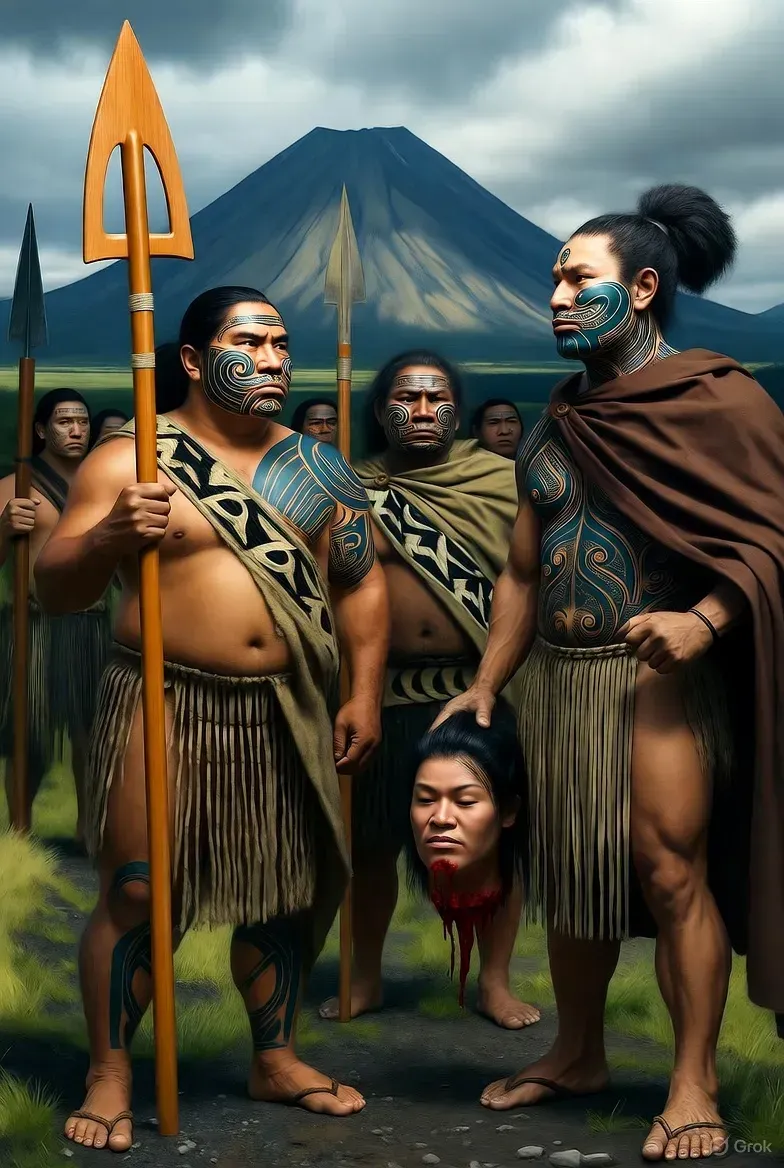
Before European contact, life in New Zealand was dominated by tribal warfare. Entire generations grew up amid battles fought for revenge, ‘mana’, and territory. Captives could be enslaved or killed, and in a lot of cases, eaten. Cannibalism, recorded in both Māori oral histories and early European journals, was a grim reality of pre-colonial existence.
Accounts from the late 1700s through the early 1800s describe battlefield feasts where the bodies of fallen enemies were cooked and consumed. This was not out of necessity: it was ritual. Eating an enemy was the Māori way, a way of asserting dominance and absorbing their strength – that’s what they believed, anyway. It was also a reflection of how brutal life could be in an isolated land with no central authority or rule of law.
European observers such as Captain James Cook, Samuel Marsden, and later missionaries were appalled. Their reports spoke of villages surrounded by palisades, heads displayed as trophies, and raids that wiped out entire communities. It is easy to romanticise pre-colonial times, but the reality was violent and unforgiving.
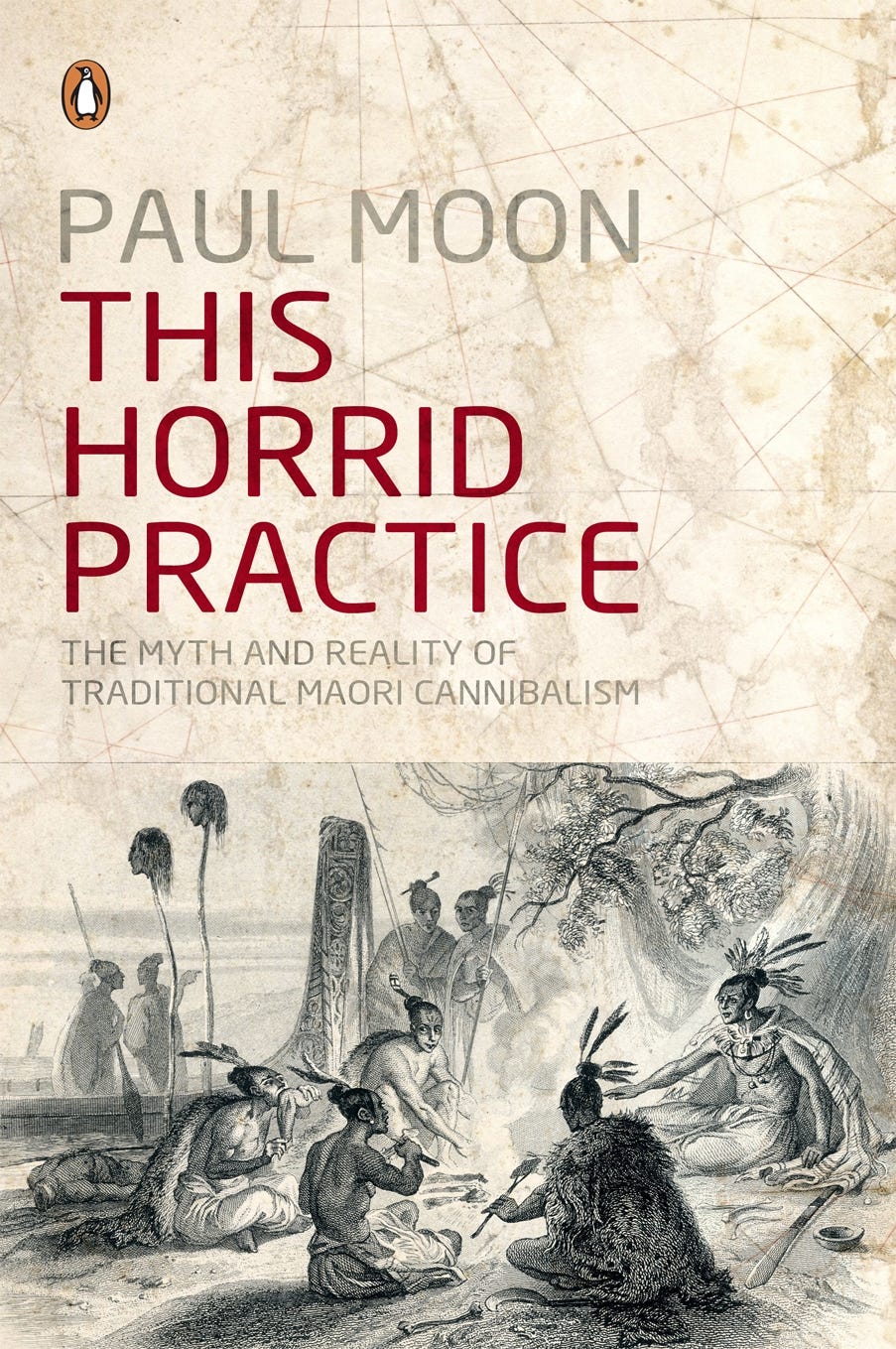
In This Horrid Practice, historian Paul Moon confronts one of the darkest chapters of New Zealand’s past: the reality of cannibalism in pre-colonial Māori society. Drawing on historical accounts and Māori oral history, Moon explores how warfare, ritual, and revenge drove the practice, and how colonisation and Christianity eventually brought it to an end.
Colonisation brought more than muskets and trade: it introduced a system of law and a moral code rooted in Christian teaching. Missionaries challenged practices such as slavery, infanticide, and cannibalism. British governance imposed consequences for murder and warfare. Over time, Māori themselves began to abandon the old ways, converting to Christianity and seeking stability through peace rather than endless utu.
By the mid-19th century, cannibalism had disappeared from Māori society. The shift was not only forced – it was embraced. Many iwi recognised that the world had changed and that survival now depended on education, order, and coexistence under a single legal framework.
Acknowledging this part of history is uncomfortable but necessary. The end of cannibalism in New Zealand marked a turning point, from tribal law to civil society. You can thank colonisation for bringing stability to this country and putting an end to the brutal and barbaric practices that once took place.
This article was originally published on the author’s Substack.




![[The Good Oil] Stuff Up of the Day](https://storage.ghost.io/c/31/f4/31f4e20a-0315-499e-83ff-139e8eab53bf/content/images/size/w1304/format/webp/2024/09/Stuff-up-image-1.webp)


