Table of Contents
Keri Molloy
Artist and concerned citizen of New Zealand with 40 years’ experience as a journalist.
Pandemics are now classified as national security threats and vaccines are now considered a geopolitical tool, so Helen Clark is in a position of tremendous influence.
ChatGPT goes so far as to say, ‘This is one of the most powerful global roles ever held by a New Zealander.’
So the former NZ prime minister will help guide global immunisation efforts. She will oversee billions of dollars in funding plus global pandemic preparedness strategy.
Gavi, the Vaccine Alliance, is based in Geneva, Switzerland. It co-led COVAX, the largest ever vaccine-sharing effort and boasts it has helped immunise more than 1.2 billion children.
Gavi is a global public-private partnership, working with governments to increase access to vaccines. Core partners include the World Health Organisation, the World Bank and the Bill and Melinda Gates Foundation – which is a major funding source. New Zealand contributes through, MFAT (Ministry of Foreign Affairs & Trade).
Guarding open dialogue
Like Bill Gates, Gavi warns about ‘misinformation’, describing it as a destabilising force in its strategy to 2030: “As we enter 2026, the question is whether global health systems are equipped to confront misinformation with the same seriousness as biological threats.”
Gavi admits it has worked with Google to help boost vaccine education through targeted ads that are said to reach some 90 million people. Its partner, the WHO, also works with Google – to analyse data about what it deems to be misinformation.
Gavi and another partner, the Coalition for Epidemic Preparedness Innovations, have launched a ‘100 Days Mission’, which prioritises vaccine and diagnostic platform technologies – such as mRNA – that can be rapidly adapted.
What is the New Zealand government planning?
New Zealand is jostling for position as a high ranking global health security power.
In November 2025, the New Zealand government announced that an Infectious Diseases Research Platform will oversee $75 million of investment over seven years to boost New Zealand’s resilience to infectious diseases and pandemic preparedness.
A ‘Pandemic Response Centre’ is part of its investment into science infrastructure.
Michael Baker, a key member of New Zealand’s Covid-19 strategy, is co-author of a briefing that calls for the establishment of a New Zealand Centre for Disease Control (CDC). The briefing says there are several NZ initiatives and proposals that could contribute to pandemic preparedness.
Baker is a public health physician and Professor in the Department of Public Health, University of Otago. In 2023 he launched the Public Health Communications Centre, where he is its inaugural director.
What would a New Zealand CDC look like?
It would have a strong mandate, with extensive capacities, including surveillance, modelling, public education, policy advocacy and laboratory, and its scope may include veterinary infectious diseases to adopt the WHO’s One Health campaign.
Strategy update
The Ministry of Health released an interim update to the national pandemic plan in late 2025.
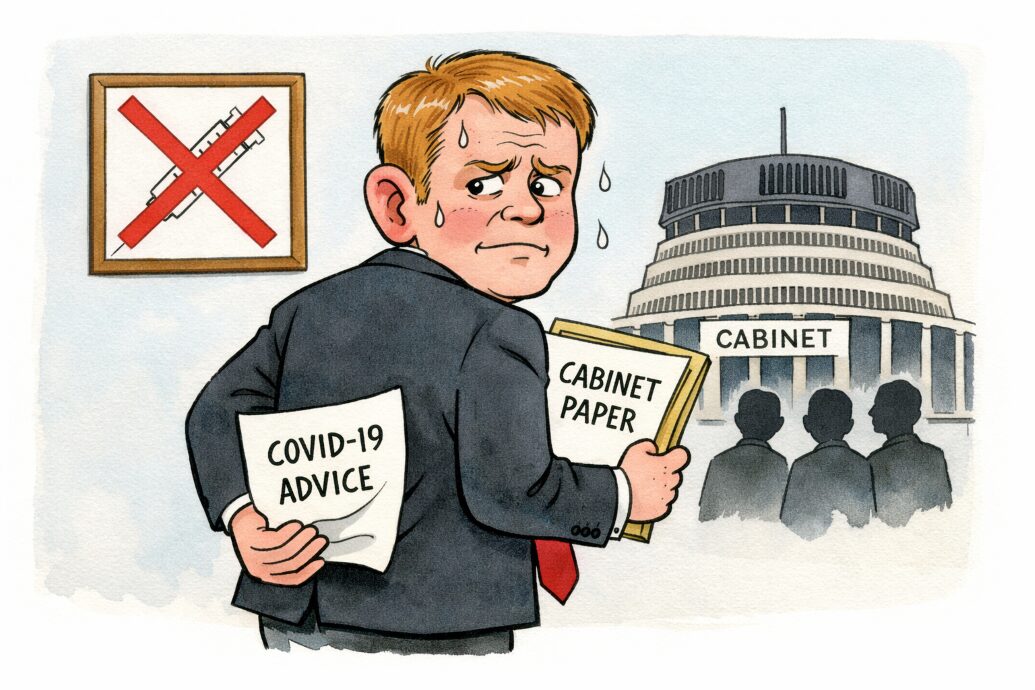
A full, comprehensive review is underway, with further updates expected during 2026 following consideration of the findings of the Royal Commission into New Zealand’s Covid-19 response, completed this month.
New Zealand’s strategic path includes establishing a New Zealand Pandemic and Biosecurity Defence Hub (NZPBDH) and Biosecurity Defence Labs, costing an estimated NZ$2–5 billion over 10 years.
The strategy proposes the construction of a vaccine manufacturing plant and promises creation of 40,000–70,000 high-skill jobs. It may involve the drafting of a Pandemic Security Act, a Vaccine Sovereignty Act and a Biosecurity Data Integration Act.
The establishment of a New Zealand RNA technology platform aims for self‐sufficiency in an end‐to‐end RNA technology platform for New Zealand.
Almost $70m has been invested to ensure New Zealand has the ability to design, develop and manufacture mRNA therapeutics. The project is co-hosted by the University of Auckland and Victoria University of Wellington and supported by the University of Otago and the Malaghan Institute of Medical Research.
In 2023 the government announced it would allocate $450 million in capital funding to create three new research hubs: a Health and Wellbeing Corridor with a new Pandemic Research and Response Institute to prepare the country for future emergencies.
The health and wellbeing hub will share expertise and resources between the University of Otago, Victoria University of Wellington, Massey University, the Institute of Environmental Science and Research (ESR), the Malaghan Institute and Callaghan Innovation.
The mRNA platform is expected to operate within seven years, with a number of homegrown therapeutics and clinical trials underway.
In terms of New Zealand’s pandemic strategy, can we believe ChatGPT when it says that vaccine mandates imposed on the general population are very unlikely and that there will be new legal safeguards for civil liberties, involving the NZ Bill of Rights and the Treaty of Waitangi?
ChatGPT says emergency-style powers cannot be automatically reactivated: “The bottom line is that New Zealand has dismantled its pandemic emergency legal regime and replaced it with stronger civil liberty protections, higher legal thresholds for restrictions and tighter democratic oversight.”
Sources
https://www.gavi.org/governance/gavi-board/members/helen-clark
https://www.gavi.org/sites/default/files/2026/gavi-insight-paper-global-health-threats.pdf
Preparing for future pandemics | Ministry of Health NZ
New Zealand Pandemic Plan: A framework for action
New Zealand Pandemic Plan: A framework for action
Preparing for future pandemics | Ministry of Health NZ
Professor Michael Baker | University of Otago
Why we need an Aotearoa Centre for Disease Control (CDC) | PHCC
The Global Health Security Index: Useful for guiding pandemic preparedness | PHCC
New Zealand pandemic plan | Ministry of Health NZ
New Zealand Pandemic Plan: A framework for action
Budget 2024: COVID-19 and Pandemic Preparedness | Ministry of Health NZ
Govt to wait a year before considering Covid Royal Commission advice – Newsroom
Emergency Management Bill (No 2) 236-1 (2025), Government Bill – New Zealand Legislation
Pandemic legislation | Ministry of Health NZ
The story behind New Zealand’s mRNA platform – University of Auckland
This article was originally published on the author’s Substack and republished by RCR Media.