Back when I was a nerdy teen with a telescope, I eagerly looked forward to Halley’s Comet’s next pass. By the time it did arrive, I was 21, still had a telescope – and a whole lot of bitter disappointment. It was the biggest fizzer since Kohoutek all-too-conspicuously failed to be “the comet of the century”. Oh, well there’s always next time.
Except that, by next time, I’ll be in my 90s – if I’m lucky enough to be still around. After all, a comet with a nearly 80-year orbit is the sort of thing that’ll only crop up on your bucket list once in the average lifetime. Still, some people have been lucky enough to get a second bite of that cometary cherry. Amazingly, even in the notoriously short-life-expectancy of the Middle Ages.
Researchers say the famous comet known as Halley’s Comet may have been identified as a repeating object centuries before British astronomer Edmond Halley gave it his name. According to new research involving Professor Simon Portegies Zwart, an English monk named Eilmer of Malmesbury appears to have recognized that the same comet returned to the skies decades apart during the 11th century.
The discovery comes from accounts written by the 12th century historian William of Malmesbury. Although scholars have long known about the writings, researchers say the significance of the descriptions was overlooked until now. Portegies Zwart and researcher Lewis argue that the monk, also known as Aethelmaer, witnessed the comet during two separate appearances and understood they were connected events.
Eilmer/Aethelmaer (I’ll stick with the latter, it sounding more authentically Anglo-Saxon and all) didn’t have a telescope, but he did have good eyesight, an active mind and, above all, a pretty remarkable longevity for his times. After witnessing a blazing celestial as a young man in 989 AD, on seeing the same heavenly object in 1066, the then-nonagenarian put two and two together.
When he saw the comet return, he reportedly realized he had witnessed the same object decades earlier in 989. As was common during the medieval period, the king was warned that the comet signaled approaching catastrophe.
As it happened, so far as the Anglo-Saxons were concerned, the superstition was bang-on, that time, being 1066.
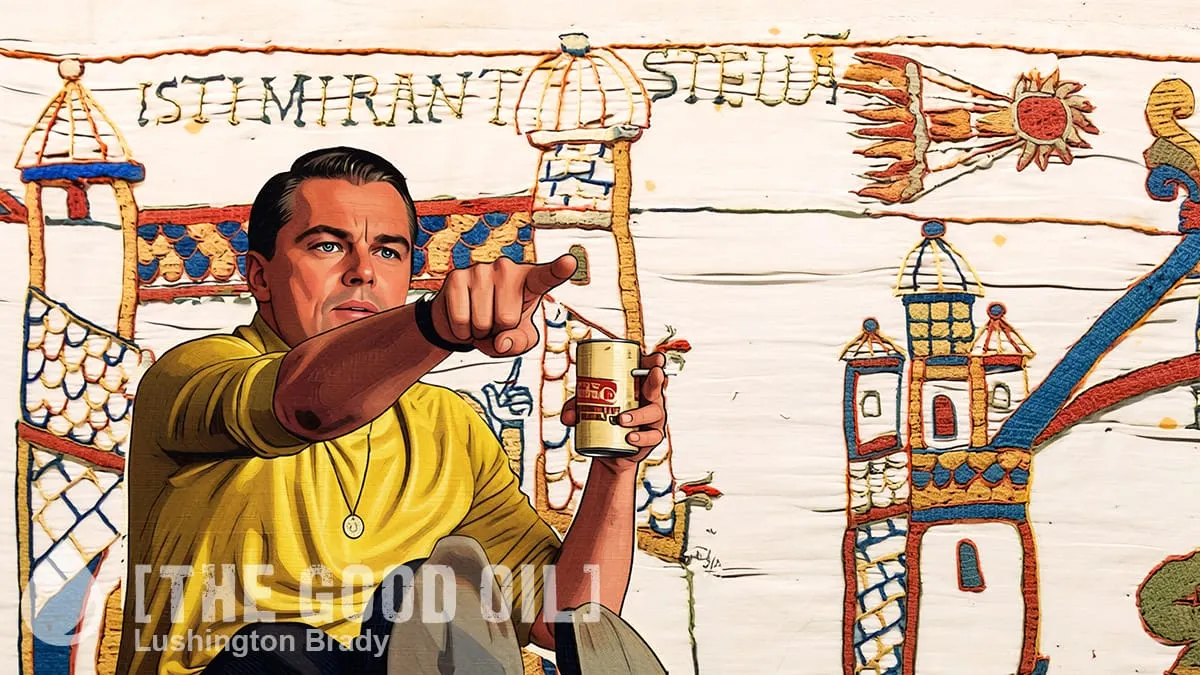
The 1066 appearance was a proper show-stopper. It hung in the sky for weeks, visible even in daylight at one point, and terrified half of Europe right as William the Conqueror was busy invading England. It features prominently in the Bayeux Tapestry, where it’s shown as a bad omen for poor King Harold Godwinson. Comets back then weren’t cool astronomical events: they were celestial Post-it notes from God saying ‘brace yourselves, lads’.
So, nearly 700 years before Edmond Halley crunched the numbers and got the comet named after him, a monk in a draughty Saxon monastery had already joined the dots. Halley gets the immortality, while poor Eilmer rates little more than a footnote.
With their latter-day revisionist zeal – just ask Pluto – some astronomers are asking whether the historical evidence justifies a change of name for the Solar System’s most famous comet.
The researchers believe the comet’s history raises questions about whether it should continue carrying Halley’s name, since earlier observers may already have recognized its repeated appearances centuries before Halley’s work.
Or maybe not. Remember: the same eggheads demoted Pluto from planetary status in 2006. How’s the world worked out, since?
Still, while I’ll probably miss Halley’s next visit, at least I can take comfort knowing that if I’d been born in 980 AD, I might have caught it twice: providing I survived the Vikings, the Normans and whatever passed for medieval dentistry.